

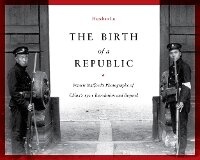
The Birth of a Republic
Published on 23. November 2009
Book
Hardback
240 pages
978-0-295-98940-2 (ISBN)
Description
China's 1911 Revolution ended the rule of both the 267-year-old Manchu Qing dynasty and the more than 2,000-year-old imperial system, establishing Asia's first, if not lasting, republic. Because war correspondence was not an established profession in China and the camera was a rare apparatus in Chinese life at the time, photographs of the revolution are rare. Francis E. Stafford (1884-1938), an American working as a photographer for Asia's largest publishing company, Commercial Press in Shanghai, had unusual access to both sides of the conflict. The Birth of a Republic documents this tumultuous period through Stafford's photographic eye.
Stafford trained his lens on the leaders of the revolutionaries, the imperial court, and the generals and foot soldiers, as well as on the common people. His images thus capture the stock in trade of war correspondents and photo journalists, but he also documented scenes of everyday life, from the streets of China's cities to the muddy lanes of its villages, from paddy rice fields to factory workshops, from open-air food markets to the inner chambers of Buddhist temples and Christian churches. His remarkable photographs reveal sweeping social and political change, as well as the tenacity of tradition.
The 162 photographs presented here are from the collection of Stafford's grandson, Ronald Anderson, and are set in historical and cultural context through an interpretive introduction and extensive captions. This book will appeal to historians and general readers interested in modern China, revolution, and war.
Stafford trained his lens on the leaders of the revolutionaries, the imperial court, and the generals and foot soldiers, as well as on the common people. His images thus capture the stock in trade of war correspondents and photo journalists, but he also documented scenes of everyday life, from the streets of China's cities to the muddy lanes of its villages, from paddy rice fields to factory workshops, from open-air food markets to the inner chambers of Buddhist temples and Christian churches. His remarkable photographs reveal sweeping social and political change, as well as the tenacity of tradition.
The 162 photographs presented here are from the collection of Stafford's grandson, Ronald Anderson, and are set in historical and cultural context through an interpretive introduction and extensive captions. This book will appeal to historians and general readers interested in modern China, revolution, and war.
Reviews / Votes
"Historian Hanchao Lu provides basic contextual information about each image, and together they offer rich detail on Chinese life and death in the years before and after 1911 . . . [The book] provides a thought-provoking entree to this period in Chinese history."- Kristin Stapleton (Journal of Asian Studies) "The scenes Stafford recorded as he travelled between Wuhan and Shanghai are indispensable to the study of the 1911 Revolution . . ."
- Sheila Corr (HistoryToday) "Other people might have been walking around taking photos during the heady early days of the Revolution, but few of their photographs have surfaced and no assemblage of those photos is as comprehensive or important as Stafford's.... This is no mere coffee-table book but one that makes a significant contribution to our understanding of the 1911 revolution: a visual complement to the written record."
(Hong Kong Economic Journal) "Offers a dramatic visual narrative of the Wuchang and Shanghai uprisings in late 1911 that is in turn framed-with portraits such as that of the empress dowager as well as a child pauper-within a panoramic presentation of the many walks of Chinese society out in the public at the beginning of the last century. . . a great addition to the undergraduate syllabus on the birth of the Chinese Republic."
(Pacific Affairs) "Seeks to enhance our understanding of the political and social background of the Republican Revolution through a visual record of key aspects of Chinese everyday life from 1905, which saw the abolition of the civil service examinations, to 1916, which witnessed the death of the first Republican President Yuan Shikai."
(The Chinese Historical Review)
More details
Series
Language
English
Place of publication
Seattle
United States
Illustrations
162 illus.
Dimensions
Height: 254 mm
Width: 203 mm
Weight
839 gr
ISBN-13
978-0-295-98940-2 (9780295989402)
Copyright in bibliographic data and cover images is held by Nielsen Book Services Limited or by the publishers or by their respective licensors: all rights reserved.
Schweitzer Classification
Other editions
Additional editions

Hanchao Lu
The Birth of a Republic
E-Book
06/2016
1st Edition
University of Washington Press
€38.99
Available for download
Person
Hanchao Lu , professor of Asian history at the Georgia Institute of Technology, is the author of Beyond the Neon Lights: Everyday Shanghai in the Early Twentieth Century and Street Criers: A Cultural History of Chinese Beggars.
Content
Acknowledgments
Map of China in 1911
Map of Wuhan during the 1911 Revolution
Introduction
1. On the Eve of the Revolution
2. The Wuchang Uprising
3. The Politics of Chaos
4. A Society in Transition
5. Stafford in China
Timeline of Chinese History
A Chronology of the 1911 Revolution
Glossary
Further Readings
Index
Map of China in 1911
Map of Wuhan during the 1911 Revolution
Introduction
1. On the Eve of the Revolution
2. The Wuchang Uprising
3. The Politics of Chaos
4. A Society in Transition
5. Stafford in China
Timeline of Chinese History
A Chronology of the 1911 Revolution
Glossary
Further Readings
Index