

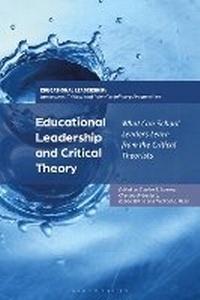
Educational Leadership and Critical Theory
What Can School Leaders Learn from the Critical Theorists
Published on 20. March 2025
Book
Paperback/Softback
272 pages
978-1-350-35346-6 (ISBN)
Description
This book shows how critical theory can help school leaders and administrators to prepare students for the ever-changing political, cultural, economic, and societal conditions of the world. The contributors use ideas from critical theorists including Adorno, Fromm, Marcuse and Habermas and connect them with contemporary theories and debates in educational leadership from moral education to critical
theories on race, to culturally relevant practice.
Educational Leadership and Critical Theory challenges the misconceptions of many present-day educators about the analytical lens offered by the Frankfurt School theorists which is often dismissed by policymakers and practitioners. Written by leading scholars based in the UK, USA, and Canada, the contributors emphasize and explain the importance of educational aesthetics, dialectics, education and civilization, the structural transformation of education's place in the public sphere, and education as revolution and enlightenment.
theories on race, to culturally relevant practice.
Educational Leadership and Critical Theory challenges the misconceptions of many present-day educators about the analytical lens offered by the Frankfurt School theorists which is often dismissed by policymakers and practitioners. Written by leading scholars based in the UK, USA, and Canada, the contributors emphasize and explain the importance of educational aesthetics, dialectics, education and civilization, the structural transformation of education's place in the public sphere, and education as revolution and enlightenment.
Reviews / Votes
Often personal perspectives guide our decisions as leaders. This personal perspective is often exclusive rather than inclusive and fails to consider the input of those around us. Excellent leadership requires an open mind interested in exploring as many options to address issues as possible in order to make more informed and better decisions. The primary message of this work tells us why inclusive thinking is of paramount importance and provides a pathway (critical theory) to promote the type of quality leadership needed in an ever changing environment. -- Cornell Thomas, Professor of Higher Education Leadership, Texas Christian University, USAMore details
Series
Language
English
Place of publication
London
United Kingdom
Publishing group
Bloomsbury Publishing PLC
Target group
Professional and scholarly
Illustrations
10 bw illus
Dimensions
Height: 232 mm
Width: 154 mm
Thickness: 18 mm
Weight
420 gr
ISBN-13
978-1-350-35346-6 (9781350353466)
Copyright in bibliographic data and cover images is held by Nielsen Book Services Limited or by the publishers or by their respective licensors: all rights reserved.
Schweitzer Classification
Other editions
Additional editions
Charles L. Lowery | Chetanath Gautam | Robert White
Educational Leadership and Critical Theory
What Can School Leaders Learn from the Critical Theorists
E-Book
11/2023
1st Edition
Bloomsbury Academic
€31.99
Available for download
Charles L. Lowery | Chetanath Gautam | Robert White
Educational Leadership and Critical Theory
What Can School Leaders Learn from the Critical Theorists
E-Book
11/2023
1st Edition
Bloomsbury Academic
€31.99
Available for download
Persons
Charles L. Lowery is Associate Professor of Educational Leadership at Virginia Tech, USA.
Chetanath Gautam is Associate Professor of Educational Leadership at Delaware State University, USA.
Robert White is Endowed Professor at Elizabeth City State University, North Carolina, USA.
Michael E. Hess is Associate Professor of Educational Studies at Ohio University, USA.
Chetanath Gautam is Associate Professor of Educational Leadership at Delaware State University, USA.
Robert White is Endowed Professor at Elizabeth City State University, North Carolina, USA.
Michael E. Hess is Associate Professor of Educational Studies at Ohio University, USA.
Content
Series Editors' Foreword
List of Contributors
Introduction: Why Critical Theory and Educational Leadership?, Charles L. Lowery (Virginia Tech, USA)
Part 1 Critical Educational Leadership for Understanding School and Society through the Theoretical and Reflective Lenses, Chetanath Gautam (Delaware State University, USA), Robert White (Elizabeth City State University, USA), and Michael E. Hess (Ohio University, USA) with insights from contributors
1. Educational Leadership through the Lens of Critical Theory, Chetanath Gautam (Delaware State University, USA)
2. Understanding the Role of Education in Emancipation, Liberation, and True Democracy, Robert White (Elizabeth City State University, USA)
3. Educational Leadership as a (Consumer) Culture Industry, Richard Niesche (University of New South Wales, Australia)
4. Is Transformational Leadership One-Dimensional?, Robert E. Kirsch (Arizona State University, USA)
5. Cultivating Relations of Freedom through Education Leadership by Drawing from the Critical Theory of Herbert Marcuse, Patrick M. Jenlink (Stephen F. Austin State University, USA)
6. How Educational Leaders Make Better Decisions through a Frankfurt School Understanding of Rational Decision-Making, Chris Brown (Durham University, UK)
Part 2 Critical Educational Leadership for Improving School and Society through the Pragmatic and Active Lenses, Charles L. Lowery (Virginia Tech, USA) with insights from contributors
7. Competitive Character in Education and the Frankfurt School's Theory of a New Anthropological Type, Taylor Hines (Arizona State University, USA)
8. Marcuse's Critical Theory for the Educational Practice of Critical Media Literacy, Steve Gennaro (York University, Canada) and Douglas Kellner (UCLA, USA)
9. Perspectives of the Relationship as an Enduring Message of Hope through Dialogue, Reflection, and Action in Freire's Pedagogy of the Oppressed, Betty J. Alford (CalPolyPomona, USA), Rene Levario (CalPolyPomona, USA), Sergio Chavez (CalPolyPomona, USA), and Alberto Medina (CalPolyPomona, USA)
10. Unpacking the Intersections of Habermas's Critical Theory and Ladson-Billings's Culturally Relevant Practice, Anthony Walker (Tarrant Count College District, USA)
11. A New Critical Theory and the Black Divide, Rhonda T. Humphries (George Washington University, USA)
12. African American Education for Liberation in Twenty-First-Century America: From Critical Theory to Black Power, Bakari K. Lumumba (Ohio University, USA)
Conclusion: Fromm's Productive Love as a Syndrome of Attitudes for a Moral Care and Ethical Respect in Educational Leadership, Charles L. Lowery (Virginia Tech, USA)
Index
List of Contributors
Introduction: Why Critical Theory and Educational Leadership?, Charles L. Lowery (Virginia Tech, USA)
Part 1 Critical Educational Leadership for Understanding School and Society through the Theoretical and Reflective Lenses, Chetanath Gautam (Delaware State University, USA), Robert White (Elizabeth City State University, USA), and Michael E. Hess (Ohio University, USA) with insights from contributors
1. Educational Leadership through the Lens of Critical Theory, Chetanath Gautam (Delaware State University, USA)
2. Understanding the Role of Education in Emancipation, Liberation, and True Democracy, Robert White (Elizabeth City State University, USA)
3. Educational Leadership as a (Consumer) Culture Industry, Richard Niesche (University of New South Wales, Australia)
4. Is Transformational Leadership One-Dimensional?, Robert E. Kirsch (Arizona State University, USA)
5. Cultivating Relations of Freedom through Education Leadership by Drawing from the Critical Theory of Herbert Marcuse, Patrick M. Jenlink (Stephen F. Austin State University, USA)
6. How Educational Leaders Make Better Decisions through a Frankfurt School Understanding of Rational Decision-Making, Chris Brown (Durham University, UK)
Part 2 Critical Educational Leadership for Improving School and Society through the Pragmatic and Active Lenses, Charles L. Lowery (Virginia Tech, USA) with insights from contributors
7. Competitive Character in Education and the Frankfurt School's Theory of a New Anthropological Type, Taylor Hines (Arizona State University, USA)
8. Marcuse's Critical Theory for the Educational Practice of Critical Media Literacy, Steve Gennaro (York University, Canada) and Douglas Kellner (UCLA, USA)
9. Perspectives of the Relationship as an Enduring Message of Hope through Dialogue, Reflection, and Action in Freire's Pedagogy of the Oppressed, Betty J. Alford (CalPolyPomona, USA), Rene Levario (CalPolyPomona, USA), Sergio Chavez (CalPolyPomona, USA), and Alberto Medina (CalPolyPomona, USA)
10. Unpacking the Intersections of Habermas's Critical Theory and Ladson-Billings's Culturally Relevant Practice, Anthony Walker (Tarrant Count College District, USA)
11. A New Critical Theory and the Black Divide, Rhonda T. Humphries (George Washington University, USA)
12. African American Education for Liberation in Twenty-First-Century America: From Critical Theory to Black Power, Bakari K. Lumumba (Ohio University, USA)
Conclusion: Fromm's Productive Love as a Syndrome of Attitudes for a Moral Care and Ethical Respect in Educational Leadership, Charles L. Lowery (Virginia Tech, USA)
Index