

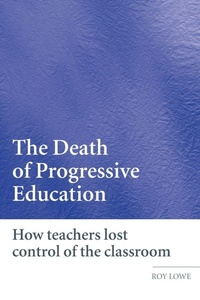
The Death of Progressive Education
How Teachers Lost Control of the Classroom
1st Edition
Published on 5. July 2007
Book
Paperback/Softback
192 pages
978-0-415-35972-6 (ISBN)
Description
The first authoritative survey of the changing politics of the classroom since the Second World War. It charts the process by which society moved away from being one in which teachers decided both the content of the school curriculum and how it would be taught towards the present situation in which a host of external influences dictate the nature of the educational experience.
The book identifies the key social and political developments which made this transformation inevitable and, at the same time, raises the question of how far the loss of control by teachers has also meant a shift away from progressive, child-centred education. Key issues covered include:
The post-war debate on the school curriculum as well as the extent to which it was fiercely contested
The Black Paper Movement of the early 1970s
The ways in which radical right rhetoric has come to dominate the politics of education and the educational press
How the term 'progressive education' has been subtly reworked, so that those claiming to reform education now focus on measurable outcomes and the answerability of schools to parental and government pressure
An historical analysis of the ways in which the 'Thatcher revolution' in schools has been taken forward and developed under both John Major and Tony Blair.
This ground-breaking analysis of how we have arrived at the present situation in our schools will be of interest to all students of education and to all those who wish to learn more about the changes that have taken place in our education system over the past sixty years. It helps us understand why they happened and, in so doing, raises profound questions about the aspirations of modern society and the role of the schools in shaping it.
The book identifies the key social and political developments which made this transformation inevitable and, at the same time, raises the question of how far the loss of control by teachers has also meant a shift away from progressive, child-centred education. Key issues covered include:
The post-war debate on the school curriculum as well as the extent to which it was fiercely contested
The Black Paper Movement of the early 1970s
The ways in which radical right rhetoric has come to dominate the politics of education and the educational press
How the term 'progressive education' has been subtly reworked, so that those claiming to reform education now focus on measurable outcomes and the answerability of schools to parental and government pressure
An historical analysis of the ways in which the 'Thatcher revolution' in schools has been taken forward and developed under both John Major and Tony Blair.
This ground-breaking analysis of how we have arrived at the present situation in our schools will be of interest to all students of education and to all those who wish to learn more about the changes that have taken place in our education system over the past sixty years. It helps us understand why they happened and, in so doing, raises profound questions about the aspirations of modern society and the role of the schools in shaping it.
More details
Language
English
Place of publication
London
United Kingdom
Publishing group
Taylor & Francis Ltd
Target group
College/higher education
Postgraduate and Undergraduate
Dimensions
Height: 234 mm
Width: 156 mm
Thickness: 11 mm
Weight
304 gr
ISBN-13
978-0-415-35972-6 (9780415359726)
Copyright in bibliographic data and cover images is held by Nielsen Book Services Limited or by the publishers or by their respective licensors: all rights reserved.
Schweitzer Classification
Other editions
Additional editions
E-Book
08/2007
Routledge
€68.49
Available for download
E-Book
08/2007
Routledge
€68.49
Available for download

Book
07/2007
1st Edition
Routledge
€231.40
Shipment within 15-20 days
Person
Content
1. Popular Education in England: The Historical Legacy 2. The Post-War Educational Settlement: A Conservative Revolution 3. A Golden Age? The Sixties and Early Seventies 4. 1974-1979: The Teachers Lose Control 5. 1979-1989: A Decade of Change 6. 'Forging a New Consensus in Education': The Implementation of the Education Reform Act 7. 1989-1997 New Labour and the Curriculum since 1997