

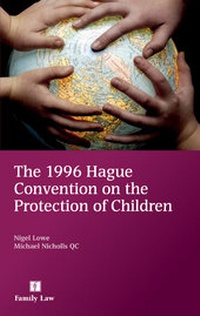
1996 Hague Convention on the Protection of Children, The
Published on 22. November 2012
Book
Paperback/Softback
1 pages
978-1-84661-531-3 (ISBN)
Description
The 1996 Hague Convention came into force in the United Kingdom on 1 November 2012 and is intended to improve the protection of children in international situations.
It provides for the recognition and enforcement of orders and other measures intended to protect a child or a child's property in all the Contracting States, and the co-operation between them necessary to achieve its purposes. The Convention covers a wide range of orders about children, including parental responsibility orders, the appointment of guardians and special guardians, residence, contact, specific issue and prohibited steps orders and injunctions, as well as care and supervision orders.
This book provides a comprehensive guide to the complexities of the 1996 Convention, including detailed coverage of the relationship with other international instruments such as the 1980 Hague Abduction Convention and the revised Brussels II Regulation. The Appendices contain all relevant source material including the full text of the Convention.
It provides for the recognition and enforcement of orders and other measures intended to protect a child or a child's property in all the Contracting States, and the co-operation between them necessary to achieve its purposes. The Convention covers a wide range of orders about children, including parental responsibility orders, the appointment of guardians and special guardians, residence, contact, specific issue and prohibited steps orders and injunctions, as well as care and supervision orders.
This book provides a comprehensive guide to the complexities of the 1996 Convention, including detailed coverage of the relationship with other international instruments such as the 1980 Hague Abduction Convention and the revised Brussels II Regulation. The Appendices contain all relevant source material including the full text of the Convention.
More details
Edition
New edition
Language
English
Place of publication
Bristol
United Kingdom
Publishing group
LexisNexis UK
Target group
Professional and scholarly
Edition type
New edition
Dimensions
Height: 246 mm
Width: 156 mm
ISBN-13
978-1-84661-531-3 (9781846615313)
Copyright in bibliographic data and cover images is held by Nielsen Book Services Limited or by the publishers or by their respective licensors: all rights reserved.
Schweitzer Classification
Other editions
New editions

Book
08/2025
2nd Edition
Jordans
€326.83
Shipment within 3-4 weeks
Persons
Content
INTRODUCTION, HISTORY AND OVERVIEW:
Introduction
Origins of the Convention
Objectives and Framework of the Convention
Interpreting the Convention The application of the Vienna Convention on the Law of Treaties
Important aids to interpretation
Travaux préparatoires and the explanatory report
Handbook
The Contracting States The distinction between ratifications and accessions
Lack of competence of individual EU States to ratify/accede
The position in the United Kingdom
The position in Australia Implementing legislation
The Australian experience of the 1996 Convention
Reservations
Denunciations
Convention not retrospective
The Relationship of the 1996 Convention to Other International Instruments The application of the revised Brussels II Regulation Applicable law
Jurisdiction
THE SCOPE OF THE CONVENTION:
The children to whom the Convention applies Non application to unborn children
Application to children up to the age of 18
No requirement that children be habitually resident in a Contracting State
The measures of protection covered by the Convention The meaning of 'measures'
The matters covered by the Convention The attribution, exercise, termination, restriction and delegation of parental responsibility
Rights of custody and access
Guardianship, curatorship and analogous institutions
The designation and functions of any person or body having charge of the child's person or property, representing or assisting the child
Placing a child in foster or institutional care or the provision of care by Kafala or analogous institution
Public authority supervision of the care of a child by any person having charge of the child
The administration, conservation or disposal of the child's property
The matters not covered by the Convention Establishing or contesting a parent-child relationship
Decisions on adoption, measures preparatory to adoption or the annulment or revocation of adoption
Names and forenames of the child
Emancipation
Maintenance obligations
Trusts or succession
Social security
General public measures on education or health
Measures taken as a result of penal offences committed by children
Decisions on the right of asylum and immigration
The application of the Convention in the United Kingdom
THE JURISDICTIONAL RULES:
Introduction
Pre-eminence accorded to courts of the child's habitual residence The meaning of 'habitual residence'
The position where the child's habitual residence changes
Commentary
Jurisdictions based on presence Refugee and displaced children etc
Jurisdiction to take measures in cases of urgency The general power
Meaning of 'urgency'
What measures of protection may be taken
Jurisdiction to take provisional measures
The interplay between Articles 11 and 12
The position in the UK where time for appealing has not expired etc
Transferring Jurisdiction The general power of transfer
The procedure in England and Wales
Some practical issues
Commentary
Jurisdiction of authority seised of matrimonial proceedings
Duration of Measures
APPLICABLE LAW:
The general position
The position with regard to parental responsibility The Convention scheme
Attribution and extinction of parental responsibility The basic position
The position upon a change of habitual residence
The exercise of parental responsibility
Termination and modification
The application of public policy
Protecting third parties
The application of private international law
Illustrative examples of applying the parental responsibility provisions
Application of Articles 16-18 in the UK context
Commentary
RECOGNITION AND ENFORCEMENT:
The basic scheme
Recognition or enforcement Recognition
Advance recognition
Enforcement The Convention scheme
Commentary
Refusing recognition or enforcement
The position in England and Wales Applications for recognition, non recognition and enforcement
Court orders
Appeals
CO-OPERATION:
Central Authorities Designation and establishment
Mandatory duties of co-operation and provision of information Contemplating placement of a child abroad
Provision of information where a child is in serious danger
Discretionary duties Requests for reports and information
Safeguarding rights of access
Personal data
Costs
The position in the United Kingdom The designated Central Authorities
Requests for information received under Article 31(c)
Power to request a report on a child's situation
Requirement to provide a report
Power to respond to an Article 34 request
Power of court in Northern Ireland to authorise disclosure
Services under Article 35
THE IMPACT OF THE 1996 CONVENTION ON INTERNATIONAL CHILD ABDUCTION:
Introduction
The application of the 1996 Convention where no other international instrument applies
The inter-relationship with the 1980 Hague Abduction Convention The impact in the context of return applications The applicable law provisions
The impact of Articles 7 and 13 of the 1996 Convention
The use of protective orders
The pros and cons on invoking the 1996 Convention rather then the 1980 Convention
The impact in the context of access applications
The inter-relationship with the revised Brussels II Regulation
OVERALL CONCLUSION
Introduction
Origins of the Convention
Objectives and Framework of the Convention
Interpreting the Convention The application of the Vienna Convention on the Law of Treaties
Important aids to interpretation
Travaux préparatoires and the explanatory report
Handbook
The Contracting States The distinction between ratifications and accessions
Lack of competence of individual EU States to ratify/accede
The position in the United Kingdom
The position in Australia Implementing legislation
The Australian experience of the 1996 Convention
Reservations
Denunciations
Convention not retrospective
The Relationship of the 1996 Convention to Other International Instruments The application of the revised Brussels II Regulation Applicable law
Jurisdiction
THE SCOPE OF THE CONVENTION:
The children to whom the Convention applies Non application to unborn children
Application to children up to the age of 18
No requirement that children be habitually resident in a Contracting State
The measures of protection covered by the Convention The meaning of 'measures'
The matters covered by the Convention The attribution, exercise, termination, restriction and delegation of parental responsibility
Rights of custody and access
Guardianship, curatorship and analogous institutions
The designation and functions of any person or body having charge of the child's person or property, representing or assisting the child
Placing a child in foster or institutional care or the provision of care by Kafala or analogous institution
Public authority supervision of the care of a child by any person having charge of the child
The administration, conservation or disposal of the child's property
The matters not covered by the Convention Establishing or contesting a parent-child relationship
Decisions on adoption, measures preparatory to adoption or the annulment or revocation of adoption
Names and forenames of the child
Emancipation
Maintenance obligations
Trusts or succession
Social security
General public measures on education or health
Measures taken as a result of penal offences committed by children
Decisions on the right of asylum and immigration
The application of the Convention in the United Kingdom
THE JURISDICTIONAL RULES:
Introduction
Pre-eminence accorded to courts of the child's habitual residence The meaning of 'habitual residence'
The position where the child's habitual residence changes
Commentary
Jurisdictions based on presence Refugee and displaced children etc
Jurisdiction to take measures in cases of urgency The general power
Meaning of 'urgency'
What measures of protection may be taken
Jurisdiction to take provisional measures
The interplay between Articles 11 and 12
The position in the UK where time for appealing has not expired etc
Transferring Jurisdiction The general power of transfer
The procedure in England and Wales
Some practical issues
Commentary
Jurisdiction of authority seised of matrimonial proceedings
Duration of Measures
APPLICABLE LAW:
The general position
The position with regard to parental responsibility The Convention scheme
Attribution and extinction of parental responsibility The basic position
The position upon a change of habitual residence
The exercise of parental responsibility
Termination and modification
The application of public policy
Protecting third parties
The application of private international law
Illustrative examples of applying the parental responsibility provisions
Application of Articles 16-18 in the UK context
Commentary
RECOGNITION AND ENFORCEMENT:
The basic scheme
Recognition or enforcement Recognition
Advance recognition
Enforcement The Convention scheme
Commentary
Refusing recognition or enforcement
The position in England and Wales Applications for recognition, non recognition and enforcement
Court orders
Appeals
CO-OPERATION:
Central Authorities Designation and establishment
Mandatory duties of co-operation and provision of information Contemplating placement of a child abroad
Provision of information where a child is in serious danger
Discretionary duties Requests for reports and information
Safeguarding rights of access
Personal data
Costs
The position in the United Kingdom The designated Central Authorities
Requests for information received under Article 31(c)
Power to request a report on a child's situation
Requirement to provide a report
Power to respond to an Article 34 request
Power of court in Northern Ireland to authorise disclosure
Services under Article 35
THE IMPACT OF THE 1996 CONVENTION ON INTERNATIONAL CHILD ABDUCTION:
Introduction
The application of the 1996 Convention where no other international instrument applies
The inter-relationship with the 1980 Hague Abduction Convention The impact in the context of return applications The applicable law provisions
The impact of Articles 7 and 13 of the 1996 Convention
The use of protective orders
The pros and cons on invoking the 1996 Convention rather then the 1980 Convention
The impact in the context of access applications
The inter-relationship with the revised Brussels II Regulation
OVERALL CONCLUSION