

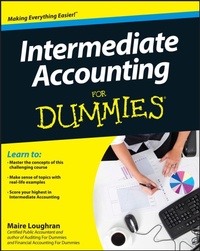
Intermediate Accounting For Dummies
1st Edition
Published on 19. April 2012
Book
Paperback/Softback
384 pages
978-1-118-17682-5 (ISBN)
Description
The easy way to master an intermediate accounting course Intermediate accounting courses are required for students seeking bachelor's degrees in accounting and often for degrees in finance, business administration, and management. Intermediate Accounting For Dummies provides you with a deeper and broader level of accounting theory, serving as an excellent course supplement and study guide to help you master the concepts of this challenging program.
With easy-to-understand explanations and realworld examples, Intermediate Accounting For Dummies covers all the topics you'll encounter in an intermediate accounting course: the conceptual framework of Generally Accepted Accounting Principles (GAAP), International Financial Reporting Standards (IFRS), financial ratio analysis, equity accounting, investment strategies, financial statement preparation, and more
Tracks to a typical intermediate accounting curriculum
Expert information and real-world examples
Other titles from Loughran: Financial Accounting For Dummies and Auditing For Dummies
With the help of Intermediate Accounting For Dummies, you'll discover the fast and easy way to take the confusion out of the complex theories and methods associated with a typical intermediate accounting course.
With easy-to-understand explanations and realworld examples, Intermediate Accounting For Dummies covers all the topics you'll encounter in an intermediate accounting course: the conceptual framework of Generally Accepted Accounting Principles (GAAP), International Financial Reporting Standards (IFRS), financial ratio analysis, equity accounting, investment strategies, financial statement preparation, and more
Tracks to a typical intermediate accounting curriculum
Expert information and real-world examples
Other titles from Loughran: Financial Accounting For Dummies and Auditing For Dummies
With the help of Intermediate Accounting For Dummies, you'll discover the fast and easy way to take the confusion out of the complex theories and methods associated with a typical intermediate accounting course.
More details
Language
English
Place of publication
United States
Publishing group
John Wiley & Sons Inc
Target group
College/higher education
Dimensions
Height: 233 mm
Width: 189 mm
Thickness: 21 mm
Weight
558 gr
ISBN-13
978-1-118-17682-5 (9781118176825)
Copyright in bibliographic data and cover images is held by Nielsen Book Services Limited or by the publishers or by their respective licensors: all rights reserved.
Schweitzer Classification
Other editions
Additional editions
Maire Loughran
Intermediate Accounting For Dummies
E-Book
03/2012
Wiley
from
€19.99
Available for download
Person
Maire Loughran is a certified public accountant who has prepared compilation, review, and audit reports for fifteen years. A member of the American Institute of Certified Public Accountants, she is a full adjunct professor who teaches graduate and undergraduate auditing and accounting classes.
Content
Introduction 1
Part I: Introducing Financial Accounting and Standards 7
Chapter 1: Seeing the Big Picture of Financial Accounting 9
Chapter 2: Walking Through the Conceptual Framework of Financial Accounting 23
Chapter 3: Invaluable Valuation 43
Chapter 4: Reviewing the Accounting System 51
Part II: Preparing and Using Financial Statements 65
Chapter 5: Posting Income Statement Profit and Loss 67
Chapter 6: Reporting Assets and Claims: Keeping Your Balance (Sheet) 83
Chapter 7: Follow the Money! Studying Cash Flow 101
Chapter 8: Time Is Money: Looking at the Time Value of Money 115
Part III: Homing in on Current and Noncurrent Assets 127
Chapter 9: Assessing Cash and Receivables 129
Chapter 10: Inventory Cost Flow Assumptions 145
Chapter 11: Buying and Selling Property, Plant, and Equipment (PP&E) 167
Chapter 12: Recognizing Depreciation, Impairments, and Depletion 183
Chapter 13: Keeping Track of Other Noncurrent Assets 197
Part IV: Analyzing Debt and Equity 207
Chapter 14: Tracking Current Liabilities and Contingencies 209
Chapter 15: Planning for Long-Term Obligations 227
Chapter 16: Letting Owners Know Where They Stand: The Equity Section 241
Part V: Accounting for Advanced Intermediate Issues 257
Chapter 17: Accounting for Income Taxes 259
Chapter 18: Accounting for Leases 277
Chapter 19: Fessing Up: Correcting Errors
and Reporting Changes in Methods 295
Chapter 20: Is That You, Revenue? Revenue Recognition Concepts 313
Part VI: The Part of Tens 327
Chapter 21: Ten Common Notes to the Financial Statements 329
Chapter 22: Ten Ratios for Financial Statement Analysis 337
Index 343
Part I: Introducing Financial Accounting and Standards 7
Chapter 1: Seeing the Big Picture of Financial Accounting 9
Chapter 2: Walking Through the Conceptual Framework of Financial Accounting 23
Chapter 3: Invaluable Valuation 43
Chapter 4: Reviewing the Accounting System 51
Part II: Preparing and Using Financial Statements 65
Chapter 5: Posting Income Statement Profit and Loss 67
Chapter 6: Reporting Assets and Claims: Keeping Your Balance (Sheet) 83
Chapter 7: Follow the Money! Studying Cash Flow 101
Chapter 8: Time Is Money: Looking at the Time Value of Money 115
Part III: Homing in on Current and Noncurrent Assets 127
Chapter 9: Assessing Cash and Receivables 129
Chapter 10: Inventory Cost Flow Assumptions 145
Chapter 11: Buying and Selling Property, Plant, and Equipment (PP&E) 167
Chapter 12: Recognizing Depreciation, Impairments, and Depletion 183
Chapter 13: Keeping Track of Other Noncurrent Assets 197
Part IV: Analyzing Debt and Equity 207
Chapter 14: Tracking Current Liabilities and Contingencies 209
Chapter 15: Planning for Long-Term Obligations 227
Chapter 16: Letting Owners Know Where They Stand: The Equity Section 241
Part V: Accounting for Advanced Intermediate Issues 257
Chapter 17: Accounting for Income Taxes 259
Chapter 18: Accounting for Leases 277
Chapter 19: Fessing Up: Correcting Errors
and Reporting Changes in Methods 295
Chapter 20: Is That You, Revenue? Revenue Recognition Concepts 313
Part VI: The Part of Tens 327
Chapter 21: Ten Common Notes to the Financial Statements 329
Chapter 22: Ten Ratios for Financial Statement Analysis 337
Index 343