

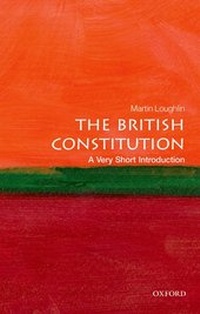
The British Constitution: A Very Short Introduction
A Very Short Introduction
Published on 25. April 2013
Book
Paperback/Softback
160 pages
978-0-19-969769-4 (ISBN)
Description
The British constitution is regarded as unique among the constitutions of the world. What are the main characteristics of Britain's peculiar constitutional arrangements? How has the British constitution altered in response to the changing nature of its state - from England, to Britain, to the United Kingdom? What impact has the UK's developing relations with the European Union caused?
These are some of the questions that Martin Loughlin addresses in this Very Short Introduction. As a constitution, it is one that has grown organically in response to changes in the economic, political, and social environment, and which is not contained in a single authoritative text.
By considering the nature and authority of the current British constitution, and placing it in the context of others, Loughlin considers how the traditional idea of a constitution came to be retained, what problems have been generated as a result of adapting a traditional approach in a modern political world, looking at what the future prospects for the British constitution are.
ABOUT THE SERIES: The Very Short Introductions series from Oxford University Press contains hundreds of titles in almost every subject area. These pocket-sized books are the perfect way to get ahead in a new subject quickly. Our expert authors combine facts, analysis, perspective, new ideas, and enthusiasm to make interesting and challenging topics highly readable.
These are some of the questions that Martin Loughlin addresses in this Very Short Introduction. As a constitution, it is one that has grown organically in response to changes in the economic, political, and social environment, and which is not contained in a single authoritative text.
By considering the nature and authority of the current British constitution, and placing it in the context of others, Loughlin considers how the traditional idea of a constitution came to be retained, what problems have been generated as a result of adapting a traditional approach in a modern political world, looking at what the future prospects for the British constitution are.
ABOUT THE SERIES: The Very Short Introductions series from Oxford University Press contains hundreds of titles in almost every subject area. These pocket-sized books are the perfect way to get ahead in a new subject quickly. Our expert authors combine facts, analysis, perspective, new ideas, and enthusiasm to make interesting and challenging topics highly readable.
Reviews / Votes
Oxford has managed to get one of the most sophisticated British scholars of modern public law to produce a brief and readable account. * London Review of Books *More details
Series
Language
English
Place of publication
Oxford
United Kingdom
Target group
College/higher education
Professional and scholarly
Illustrations
4 black and white illustrations
Dimensions
Height: 174 mm
Width: 114 mm
Thickness: 9 mm
Weight
143 gr
ISBN-13
978-0-19-969769-4 (9780199697694)
Copyright in bibliographic data and cover images is held by Nielsen Book Services Limited or by the publishers or by their respective licensors: all rights reserved.
Schweitzer Classification
Other editions
New editions
Book
10/2023
2nd Edition
Oxford University Press
€13.00
Shipment within 15-20 days
Person
Martin Loughlin is Professor of Public Law at the London School of Economics. He previously held professorial appointments at the Universities of Glasgow and Manchester. His publications include Sword and Scales (2000), The Idea of Public Law (2003), and Foundations of Public Law (2010). He is a Fellow of the British Academy. In 2012-13, he is the Martin and Kathleen Crane Fellow in the Law and Public Affairs Program and Visiting Professor at Princeton University.
Content
Introduction ; 1. What constitution? ; 2. Writing the constitution ; 3. Parliamentary government ; 4. The expansion and contraction of the English state ; 5. Civil liberty ; 6. Whiter the constitution? ; References and further reading