

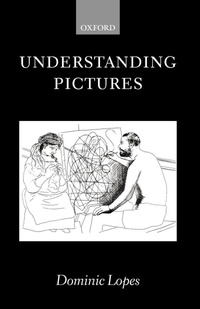
Understanding Pictures
Published on 27. May 2004
Book
Paperback/Softback
248 pages
978-0-19-927203-7 (ISBN)
Description
There are many ways to picture the world - Australian `x-ray' pictures, cubist collages, Amerindian split-style figures, and pictures in two-point perspective each draw attention to different features of what they represent. The premise of Understanding Pictures is that this diversity is the central fact with which a theory of figurative pictures must reckon.
Lopes argues that identifying pictures' subjects is akin to recognizing objects whose appearances have changed over time. He develops a schema for categorizing the different ways pictures represent--the different kinds of meaning they have--and he contends that depiction's epistemic value lies in its representational diversity. He also offers a novel account of the phenomenology of pictorial experience, comparing pictures to visual prostheses like mirrors and binoculars.
The book concludes with a discussion of works of art which have made pictorial meaning their theme, demonstrating the importance of the issues this book raises for understanding the aesthetics of pictures.
Lopes argues that identifying pictures' subjects is akin to recognizing objects whose appearances have changed over time. He develops a schema for categorizing the different ways pictures represent--the different kinds of meaning they have--and he contends that depiction's epistemic value lies in its representational diversity. He also offers a novel account of the phenomenology of pictorial experience, comparing pictures to visual prostheses like mirrors and binoculars.
The book concludes with a discussion of works of art which have made pictorial meaning their theme, demonstrating the importance of the issues this book raises for understanding the aesthetics of pictures.
Reviews / Votes
Review from previous edition This is among the most subtle and carefully developed books on the topic of depiction to have hit the philosophical world since the great triumvirate of texts by Ernst Gombrich, Nelson Goodman, and Richard Wollheim defined the subject for analytical audiences. * Daniel Herwitz, The Journal of Aesthetics and Art Criticism * Understanding Pictures has been a pleasure to read, full of riches and agreeably good-humoured. Among other things it shows how pictures enlarge our recognitional capacities, it discusses various non-basic ways in which pictures refer to their sources, it offers extended treatment of fictional pictures and provides original reflection on what makes one picture a variation of another. I have learnt a good deal from it and confidently expect it to become a part of the standard literature of this absorbing topic. * Anthony Savile, Mind * Understanding Pictures is a rich, interesting, and suggestive book ... Those seriously interested in depiction will certainly find much here to ponder. * Robert Hopkins, British Journal of Aesthetics * Lopes writes in a very engaging and accessible way ... those much less versed than he can expect to come away with a better understanding of what he shows to be an interesting subject. This is philosophical writing of a very high order, to my mind. Lopes is a master of simple, intriguing and compelling arguments ... [he] is to be congratulated on producing a first-class work in philosophical aesthetics. * Gordon Graham, The Philosophical Quarterly *More details
Series
Language
English
Place of publication
Oxford
United Kingdom
Target group
Professional and scholarly
Illustrations
numerous halftones and lime drawings
Dimensions
Height: 216 mm
Width: 140 mm
Thickness: 15 mm
Weight
360 gr
ISBN-13
978-0-19-927203-7 (9780199272037)
Copyright in bibliographic data and cover images is held by Nielsen Book Services Limited or by the publishers or by their respective licensors: all rights reserved.
Schweitzer Classification
Other editions
Additional editions
Person
Content
I PICTURES AS PERCEPTUAL; II PICTURES AS SYMBOLS; III ASPECT RECOGNITION; IV APPLICATIONS