

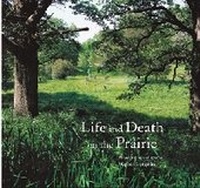
Life and Death on the Prairie
Published on 30. October 2011
Book
Hardback
160 pages
978-0-9834978-0-6 (ISBN)
Description
Iowa's Rochester Cemetery is one of the most unusual and biodiverse prairies left in America, boasting more than 400 species of plants - 337 of them native to the region - on its thirteen-and-a-half acres. Among them are fifteen massive white oaks that stood watch as the surrounding landscape was converted into farmland after Euro-American settlers arrived in the 1830s. The cemetery is the last resting place of these pioneers and their descendants, down to the present. Graves and wildflowers are scattered across the hills that geologists consider sand dunes; these are held in place by the deep roots of the plants and people.
Pioneer cemeteries have been recognized as important prairie remnants and seed banks ever since Aldo Leopold, another Iowa native, called attention to them in his landmark essays of the 1940s, as he developed the new field of ecological restoration. At Rochester Cemetery, the drama of the prairie's survival continues to this day, in a controversy that flares up as reliably as spring's shooting stars. To botanists across the country, this place is a pilgrimage site. To local residents, it is either a source of pride or a shameful weed lot (some feel regular mowing would show more respect for the dead). To the photographer and writer Stephen Longmire, it is a place where the stories of the rural Midwest are written on the land - a long exposure, extending back to the days when Meskwaki Indians camped nearby and wildfire held back the forest.
In the creative tension between people and place, Rochester's prairie holds its native ground. Historic cemetery plantings grow wild among the native wildflowers, and bright plastic flowers decorate modern graves. In compelling photographs and prose, Longmire shows this patch of original Iowa to be a living record of all the land's uses since its settlement.
Pioneer cemeteries have been recognized as important prairie remnants and seed banks ever since Aldo Leopold, another Iowa native, called attention to them in his landmark essays of the 1940s, as he developed the new field of ecological restoration. At Rochester Cemetery, the drama of the prairie's survival continues to this day, in a controversy that flares up as reliably as spring's shooting stars. To botanists across the country, this place is a pilgrimage site. To local residents, it is either a source of pride or a shameful weed lot (some feel regular mowing would show more respect for the dead). To the photographer and writer Stephen Longmire, it is a place where the stories of the rural Midwest are written on the land - a long exposure, extending back to the days when Meskwaki Indians camped nearby and wildfire held back the forest.
In the creative tension between people and place, Rochester's prairie holds its native ground. Historic cemetery plantings grow wild among the native wildflowers, and bright plastic flowers decorate modern graves. In compelling photographs and prose, Longmire shows this patch of original Iowa to be a living record of all the land's uses since its settlement.
Reviews / Votes
This moving and sensitive photo essay captures both the beauty of Rochester Cemetery - one of the finest surviving prairie savannas in the whole United States - and its powerful meaning to the people of this tiny township in eastern Iowa as the resting place of their ancestors."" - Robert F. Sayre, editor of Recovering the Prairie""There are places in our landscapes, and in our experience, where we have unique opportunities to connect - across generations and boundary lines, across perspectives and ideas. Rochester Cemetery, tucked away quietly within the great but vanquished landscape of the American tallgrass prairie, is one of those special places. Through his words and images, Stephen Longmire takes us to Rochester Cemetery. We come to see that, even if we never visit this rare piece of native Iowa, of native America, something deep inside us still rests, and grows, and renews itself there."" - Curt Meine, author of Aldo Leopold: His Life and Work
More details
Language
English
Place of publication
VA
United States
Target group
Professional and scholarly
Dimensions
Height: 229 mm
Width: 241 mm
Thickness: 20 mm
Weight
1070 gr
ISBN-13
978-0-9834978-0-6 (9780983497806)
Copyright in bibliographic data and cover images is held by Nielsen Book Services Limited or by the publishers or by their respective licensors: all rights reserved.
Schweitzer Classification