


Skills in the Age of Over-Qualification
Comparing Service Sector Work in Europe
Published on 13. October 2016
Book
Hardback
276 pages
978-0-19-967235-6 (ISBN)
Description
Across the developed world, most of us who work now earn our living in the service sector. However, the issue of what kind of service economy is sustainable and desirable, both in economic and social terms, is rarely debated.
This book argues that this needs to change. National governments have emphasised the role of skills in achieving international competitiveness, higher living standards, and social inclusion. However, even prior to the 2008 financial crisis, problems of over-qualification, skills wastage, and poor job quality were becoming difficult to ignore. This raises important questions about what kind of service sector jobs will be on offer to meet the aspirations of an increasingly qualified workforce and what role can governments play in raising the skills required in jobs and the quality of jobs and services? Work organisation and job design are key factors shaping the skill content of work and the opportunities workers have to deploy their skills and capabilities.
Through cross-national comparative research, this book examines whether and why service sector jobs vary across countries. Drawing upon detailed empirical research, the jobs of vocational teacher, fitness instructor, and cafe worker in the UK, Norway, and France are compared, allowing an exploration of the role of national institutions, sectors, and organisations in shaping work organisation and job quality. The findings contribute to the comparative study of work organisation, the relationship between skills and performance, the role and purpose of education and the prospects for better jobs in 'the age of over-qualification'.
This book argues that this needs to change. National governments have emphasised the role of skills in achieving international competitiveness, higher living standards, and social inclusion. However, even prior to the 2008 financial crisis, problems of over-qualification, skills wastage, and poor job quality were becoming difficult to ignore. This raises important questions about what kind of service sector jobs will be on offer to meet the aspirations of an increasingly qualified workforce and what role can governments play in raising the skills required in jobs and the quality of jobs and services? Work organisation and job design are key factors shaping the skill content of work and the opportunities workers have to deploy their skills and capabilities.
Through cross-national comparative research, this book examines whether and why service sector jobs vary across countries. Drawing upon detailed empirical research, the jobs of vocational teacher, fitness instructor, and cafe worker in the UK, Norway, and France are compared, allowing an exploration of the role of national institutions, sectors, and organisations in shaping work organisation and job quality. The findings contribute to the comparative study of work organisation, the relationship between skills and performance, the role and purpose of education and the prospects for better jobs in 'the age of over-qualification'.
Reviews / Votes
This is a book for policy makers, academics and students alike. The immense scope and depth of the research contained in this book provides valuable contributions and opens up important new policy avenues and research agendas capable of pushing theoretical developments forward. * Work, Employment and Society *More details
Language
English
Place of publication
Oxford
United Kingdom
Target group
College/higher education
Professional and scholarly
Dimensions
Height: 240 mm
Width: 161 mm
Thickness: 19 mm
Weight
581 gr
ISBN-13
978-0-19-967235-6 (9780199672356)
Copyright in bibliographic data and cover images is held by Nielsen Book Services Limited or by the publishers or by their respective licensors: all rights reserved.
Schweitzer Classification
Other editions
Additional editions
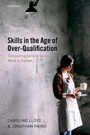
Caroline Lloyd | Jonathan Payne
Skills in the Age of Over-Qualification
Comparing Service Sector Work in Europe
E-Book
11/2016
1st Edition
OUP eBook
€80.49
Available for download
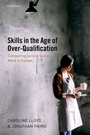
Caroline Lloyd | Jonathan Payne
Skills in the Age of Over-Qualification
Comparing Service Sector Work in Europe
E-Book
10/2016
1st Edition
OUP eBook
€80.49
Available for download
Persons
Caroline Lloyd is Professor at the School of Social Sciences, Cardiff University and an Associate Fellow at the centre on Skills, Knowledge and Organisational Performance. Her research focuses on the relationships between product markets, labour markets, work organisation and skills. She has published widely on issues related to the political economy of skill and the causes and consequences of low wage work, including co-editing Low-Wage Work in the United Kingdom (Russell Sage Foundation). Current research interests include international comparisons of skill and work organisation; job quality; industrial policy and skill utilisation.
Jonathan Payne is Reader in Employment Studies in the Department of Human Resource Management at Leicester Business School, De Montfort University, and a member of the research group on Contemporary Research on Organisations, Work and Employment (CROWE). Prior to this, he was a researcher with the Economic and Social Research Council's centre on Skills, Knowledge and Organisational Performance (SKOPE). His research interests and publications encompass the political economy of skill, vocational education and training policy, the changing meaning of 'skill', workplace innovation, and international comparative studies of work organisation and job quality.
Jonathan Payne is Reader in Employment Studies in the Department of Human Resource Management at Leicester Business School, De Montfort University, and a member of the research group on Contemporary Research on Organisations, Work and Employment (CROWE). Prior to this, he was a researcher with the Economic and Social Research Council's centre on Skills, Knowledge and Organisational Performance (SKOPE). His research interests and publications encompass the political economy of skill, vocational education and training policy, the changing meaning of 'skill', workplace innovation, and international comparative studies of work organisation and job quality.
Content
1: Skills, Jobs and Services: A Challenge for Europe in the Age of Over-qualification
2: Work and Skills in Contemporary Capitalism
3: National Institutions, Sectors and Work Organisation: A Theoretical Framework
4: Industrial Relations, Skill Formation Systems and Workplace Development: Continuity and Change in the UK, Norway and France
5: Professional Work, Autonomy and Performance: Vocational Teachers
6: Regulating the Middle: Fitness Instructors
7: Raising the Bottom: Cafe Workers
8: Towards Better Jobs: Possibilities and Prospects in the Age of Over-qualification
2: Work and Skills in Contemporary Capitalism
3: National Institutions, Sectors and Work Organisation: A Theoretical Framework
4: Industrial Relations, Skill Formation Systems and Workplace Development: Continuity and Change in the UK, Norway and France
5: Professional Work, Autonomy and Performance: Vocational Teachers
6: Regulating the Middle: Fitness Instructors
7: Raising the Bottom: Cafe Workers
8: Towards Better Jobs: Possibilities and Prospects in the Age of Over-qualification