

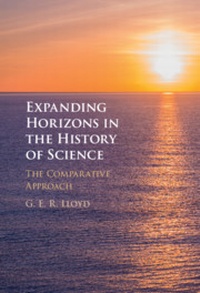
Expanding Horizons in the History of Science
The Comparative Approach
Book
Paperback/Softback
978-1-009-01406-9 (ISBN)
Unfortunately, price unknown
The article will not be published
Description
This book challenges the common assumption that the predominant focus of the history of science should be the achievements of Western scientists since the so-called Scientific Revolution. The conceptual frameworks within which the members of earlier societies and of modern indigenous groups worked admittedly pose severe problems for our understanding. But rather than dismiss them on the grounds that they are incommensurable with our own and to that extent unintelligible, we should see them as offering opportunities for us to revise many of our own preconceptions. We should accept that the realities to be accounted for are multi-dimensional and that all such accounts are to some extent value-laden. In the process insights from current anthropology and the study of ancient Greece and China especially are brought to bear to suggest how the remit of the history of science can be expanded to achieve a cross-cultural perspective on the problems.
More details
Other editions
Additional editions
Book
08/2021
Cambridge University Press
€107.70
Shipment within 15-20 days
Person
Author
Needham Research Institute, Cambridge
G. E. R. Lloyd is Emeritus Professor of Ancient Philosophy and Science at the University of Cambridge and Senior Scholar in Residence at the Needham Research Institute. He has authored or edited more than thirty books and won numerous international prizes and medals (Dan David Prize, Fyssen prize, Sarton medal, Kenyon medal) for pioneering studies in the comparative history of science.
G. E. R. Lloyd is Emeritus Professor of Ancient Philosophy and Science at the University of Cambridge and Senior Scholar in Residence at the Needham Research Institute. He has authored or edited more than thirty books and won numerous international prizes and medals (Dan David Prize, Fyssen prize, Sarton medal, Kenyon medal) for pioneering studies in the comparative history of science.
Content
Introduction; 1. On aspects of the status quaestionis; 2. Translatability, intelligibility, revisability; 3. Demystifying the Greek miracle; 4. The question of causal factors; 5. The criteria of theories, simplicity for instance; 6. Definitions and the problems of foreclosure; 7. The challenge of 'mythology'; 8. Elements, processes, substances, stuff; 9. Health and disease, illness and well-being; 10. Mind, body, heart, brain, soul, spirit; Conclusions.