

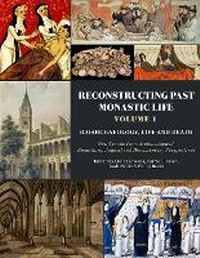
Reconstructing Past Monastic Life: Volume 1: Bioarchaeology, Life and Death
New Trends from Archaeological, Bioanthropological and Documentary Perspectives
Published on 31. May 2025
Book
Paperback/Softback
192 pages
979-8-88857-173-6 (ISBN)
Description
Monasticism is a form of religious life in which participants renounce worldly activities to dedicate themselves primarily to spiritual matters, living in small communities subject to a set of rules and isolated from the secular world. Christian monasticism, which originated at the end of the 3rd century in Egypt and North Africa, spread to different parts of Europe in the 6th century. However, it was not until the Middle Ages that monastic communities became one of the most powerful institutions in Europe. Monasteries and convents played a very important role not only as centers of spirituality but also as focal points of economic, technological and cultural activity. This multiplicity of activities carried out alongside their religious, social and political roles make monasteries spaces that can be studied from very different perspectives and that unfailingly provide essential information about our history.
This first of two titles originates from an international conference that took place in Barcelona in January 2024, which sought to examine different aspects related to monastic life in the past and to promote and disseminate the results obtained in the latest studies undertaken within the framework of monastic complexes and their environments. These include contributions and multidisciplinary studies from archaeological, bioanthropological and/or documentary perspectives. Specialists from different disciplines present developments on the topic of monasticism from different fields of study, such as zooarchaeology, bioanthropology, palaeopathology, archaeology, history, documentary disciplines, archives, cultural heritage, etc.
Volume 1 concentrates on health and lifeways within monastic communities, focusing on palaeopathological information providing insights into physical wellbeing and, in particular, the presence and significance of disabled individuals and evidence for longterm health and dental issues. A variety of scientific methods of analysis are applied to cemetery populations from monasteries and nunneries of different periods to examine both causes of and contributions to the death of individuals, the composition of communities and the treatment of the dead. Studies of assemblages of faunal remains from monastic complexes consider how faunal analysis can help interpret the role of domestic species.
This first of two titles originates from an international conference that took place in Barcelona in January 2024, which sought to examine different aspects related to monastic life in the past and to promote and disseminate the results obtained in the latest studies undertaken within the framework of monastic complexes and their environments. These include contributions and multidisciplinary studies from archaeological, bioanthropological and/or documentary perspectives. Specialists from different disciplines present developments on the topic of monasticism from different fields of study, such as zooarchaeology, bioanthropology, palaeopathology, archaeology, history, documentary disciplines, archives, cultural heritage, etc.
Volume 1 concentrates on health and lifeways within monastic communities, focusing on palaeopathological information providing insights into physical wellbeing and, in particular, the presence and significance of disabled individuals and evidence for longterm health and dental issues. A variety of scientific methods of analysis are applied to cemetery populations from monasteries and nunneries of different periods to examine both causes of and contributions to the death of individuals, the composition of communities and the treatment of the dead. Studies of assemblages of faunal remains from monastic complexes consider how faunal analysis can help interpret the role of domestic species.
More details
Language
English
Place of publication
United States
Target group
Professional and scholarly
Illustrations
75 b/w photos and line illustrations
Dimensions
Height: 215 mm
Width: 280 mm
Thickness: 11 mm
Weight
720 gr
ISBN-13
979-8-88857-173-6 (9798888571736)
Copyright in bibliographic data and cover images is held by Nielsen Book Services Limited or by the publishers or by their respective licensors: all rights reserved.
Schweitzer Classification
Persons
Lluis Lloveras is a researcher in the department of Archaeology and History at the University of Barcelona, from which he obtained a PhD. He is a specialist in zooarchaeology and taphonomy, focusing on the procurement of animal foods, past animal hunting and husbandry economies and examining the role of animals in past societies beyond serving as food, employing, in particular, neotaphonomic research, geometric morphometrics, isotopic analysis, animal palaeopathological and forensic taphonomic analysis. Carme Rissech is a senior lecturer in the Department of Basic Medical Sciences, Universitat Rovira i Virgili, Reus, Spain and holds a PhD from the University Autonomous of Barcelona. She is an expert in the fields of palaeoanthropology and forensic anthropology, employing interdisciplinary approaches combining human bone analysis with documentary sources, histological and biomolecular analysis and medicine. Jordi Nadal is a reader in History and Archaeology at the University of Barcelona, from which he obtained his PhD. He specializes in zooarchaeology and taphonomy, focusing on various aspects of past humananimal relationship. He is also interested in the application of neotaphonomic models to better understand the origin of small prey accumulations in prehistoric archaeological sites. Philip Banks is a retired lecturer in English as a Foreign Language at the University of Barcelona, now an independent researcher in medieval history. He obtained a PhD in archaeology and history from Nottingham University, where he studied urban transformations between the 4th and 13th centuries in Catalonia, especially the city of Barcelona. He has translated archaeological and historical texts from Spanish and Catalan to English and collaborated with museums and archaeological services on projects concerning medieval documents and the archaeological interpretation of historical sources, especially as regards townscapes and the periurban zones of medieval cities.
Content
List of contributors
List of reviewers
Introduction by the editors
Part 1: State of health and human remains
1. Unusual and exuberant dental calculus in an 18-19th-century nun from Santa Catalina de Siena, Belmonte (Cuenca, Spain): oral/joint dysfunction or facial paralysis?
Laura Gonzalez-Garrido, Alvaro M. Monge Calleja, Natasa Sarkic, Sofia Zdral, Antonio Pereira Coutinho, Lidia Catarino, Jesus Herrerin Lopez, Ana Luisa Santos
2. Disabled individuals in a Belgian medieval Cistercian monastic community: a palaeopathological perspective
Mathilde Daumas, Caroline Polet, Stephane Louryan
3. A high-ranking cleric with arterial calcification: vascular disease in medieval England.
David Bennett-Jones, Louise Loe
Part 2: Life pathways in monastic contexts
4. Unveiling the past. Bioanthropological insights into life and death at the friary of Santa Caterina (Barcelona) in the 13th to15th centuries
Andrea Sanz, Andreu Falco, Lluis Lloveras, Carme Rissech
5. The early medieval necropolis of the Former Municipal Courts of Barcelona: a unique discovery
Marta Merino, Carme Rissech
6. Bioanthropological study of human remains from funerary unit UF228 (14th to 15th centuries) at the archaeological site of the friary of Santa Caterina (Barcelona)
Carme Rissech, Marina Gasca, Anna Llaurado
7. The cloister of the monastery of Santa Maria de Roses in the early modern period Study of a secular funerary space in a religious centre.
Marc Bouzas, Neus Coromina, Lluis Palahi, Jordi Vivo
8. Life and death of the Poor Clare nuns of the Holy Trinity in Monte Sant'Angelo (Puglia, Southern Italy): archaeological, anthropological, pathological, botanical, entomological, textile, chemical and documentary data
Ginevra Panzarino, Elena Varotto, Francesco Maria Galassi, Agustin Pastor, Gianni Gallello, Stefano Vanin, Giuseppina Carta, Francesco Breglia, Annalisa Biselli, Donatella Pian, Elena Dellu
9. The tomb of Prioress Jeronima de Gort (1586-1601). An interdisciplinary approach to the female Hospitaller Monastery of Santa Maria d'Alguaire.
Maria Soler, Walter Alegria, Izaskun Ambrosio, Silvia Marin, Araceli Coll
10. 'The Greatest Evil is Physical Pain.' An Exploration of Suffering from a Medieval Austin Friary in Cambridge, UK using an 'Avatar Model'.
Benjamin Neil
11. The ossuary of the Teutonic monastery of San Leonardo di Siponto in Manfredonia (Puglia, Southern Italy): anthropological and palaeopathological data for the reconstruction of the monastic community.
Ginevra Panzarino, Elena Varotto, Francesco Maria Galassi, Donatella Pian, Elena Dellu
12. The everyday life of a female religious community from a multidisciplinary approach: the convent of Santa Clara (Pontevedra, Spain).
Maria Martin-Seijo, Carlos Fernandez-Rodriguez, Eduardo Gonzalez Gomez de Agueero, Rafael M. Rodriguez Martinez, Israel Picon Platas
Part 3: Animals in the monastic environment
13. Paw prints in the cloister. The study of ichnites on tiles from the Monastery of Santa Maria de Pedralbes (Barcelona, Spain)
Jordi Nadal, Philip Banks, Anna Castellano-Tresserra, Santiago Riera, Marina Fernandez-Liarte, Lluis Lloveras.
14. Bilateral skull asymmetries in two ancient semi-feral horse breeds and their implications for archaeological equine studies. How can help us in monastic contexts?
Pere M. Pares-Casanova, Nuno Carolino, Jose V. Leite, Ruy Dantas, Susana Lopes, Abu B. Siddiq
15. Estimating the withers height and body length of domestic cattle from head values. Its applications to archaeological samples.
Arcesio Salamanca-Carreno, Pere M. Pares-Casanova, German Martinez Correal, Mauricio Velez-Terranova, David Eduardo Rangel, Abu B. Siddiq
List of reviewers
Introduction by the editors
Part 1: State of health and human remains
1. Unusual and exuberant dental calculus in an 18-19th-century nun from Santa Catalina de Siena, Belmonte (Cuenca, Spain): oral/joint dysfunction or facial paralysis?
Laura Gonzalez-Garrido, Alvaro M. Monge Calleja, Natasa Sarkic, Sofia Zdral, Antonio Pereira Coutinho, Lidia Catarino, Jesus Herrerin Lopez, Ana Luisa Santos
2. Disabled individuals in a Belgian medieval Cistercian monastic community: a palaeopathological perspective
Mathilde Daumas, Caroline Polet, Stephane Louryan
3. A high-ranking cleric with arterial calcification: vascular disease in medieval England.
David Bennett-Jones, Louise Loe
Part 2: Life pathways in monastic contexts
4. Unveiling the past. Bioanthropological insights into life and death at the friary of Santa Caterina (Barcelona) in the 13th to15th centuries
Andrea Sanz, Andreu Falco, Lluis Lloveras, Carme Rissech
5. The early medieval necropolis of the Former Municipal Courts of Barcelona: a unique discovery
Marta Merino, Carme Rissech
6. Bioanthropological study of human remains from funerary unit UF228 (14th to 15th centuries) at the archaeological site of the friary of Santa Caterina (Barcelona)
Carme Rissech, Marina Gasca, Anna Llaurado
7. The cloister of the monastery of Santa Maria de Roses in the early modern period Study of a secular funerary space in a religious centre.
Marc Bouzas, Neus Coromina, Lluis Palahi, Jordi Vivo
8. Life and death of the Poor Clare nuns of the Holy Trinity in Monte Sant'Angelo (Puglia, Southern Italy): archaeological, anthropological, pathological, botanical, entomological, textile, chemical and documentary data
Ginevra Panzarino, Elena Varotto, Francesco Maria Galassi, Agustin Pastor, Gianni Gallello, Stefano Vanin, Giuseppina Carta, Francesco Breglia, Annalisa Biselli, Donatella Pian, Elena Dellu
9. The tomb of Prioress Jeronima de Gort (1586-1601). An interdisciplinary approach to the female Hospitaller Monastery of Santa Maria d'Alguaire.
Maria Soler, Walter Alegria, Izaskun Ambrosio, Silvia Marin, Araceli Coll
10. 'The Greatest Evil is Physical Pain.' An Exploration of Suffering from a Medieval Austin Friary in Cambridge, UK using an 'Avatar Model'.
Benjamin Neil
11. The ossuary of the Teutonic monastery of San Leonardo di Siponto in Manfredonia (Puglia, Southern Italy): anthropological and palaeopathological data for the reconstruction of the monastic community.
Ginevra Panzarino, Elena Varotto, Francesco Maria Galassi, Donatella Pian, Elena Dellu
12. The everyday life of a female religious community from a multidisciplinary approach: the convent of Santa Clara (Pontevedra, Spain).
Maria Martin-Seijo, Carlos Fernandez-Rodriguez, Eduardo Gonzalez Gomez de Agueero, Rafael M. Rodriguez Martinez, Israel Picon Platas
Part 3: Animals in the monastic environment
13. Paw prints in the cloister. The study of ichnites on tiles from the Monastery of Santa Maria de Pedralbes (Barcelona, Spain)
Jordi Nadal, Philip Banks, Anna Castellano-Tresserra, Santiago Riera, Marina Fernandez-Liarte, Lluis Lloveras.
14. Bilateral skull asymmetries in two ancient semi-feral horse breeds and their implications for archaeological equine studies. How can help us in monastic contexts?
Pere M. Pares-Casanova, Nuno Carolino, Jose V. Leite, Ruy Dantas, Susana Lopes, Abu B. Siddiq
15. Estimating the withers height and body length of domestic cattle from head values. Its applications to archaeological samples.
Arcesio Salamanca-Carreno, Pere M. Pares-Casanova, German Martinez Correal, Mauricio Velez-Terranova, David Eduardo Rangel, Abu B. Siddiq