

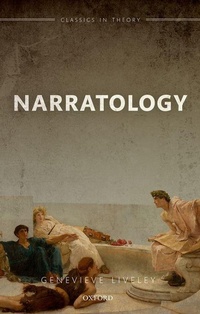
Narratology
Published on 4. April 2019
Book
Hardback
300 pages
978-0-19-968770-1 (ISBN)
Description
This volume explores the extraordinary contribution that classical poetics has made to twentieth and twenty-first century theories of narrative, aiming not to argue that modern narratologies simply present 'old wine in new wineskins', but rather to identify the diachronic affinities shared between ancient and modern stories about storytelling. By recognizing that modern narratologists bring a particular expertise to bear upon ancient literary theory, and by interrogating ancient and modern narratologies through the mutually imbricating dynamics of their reception, it seeks to arrive at a better understanding of both.
Each chapter selects a key moment in the history of narratology on which to focus, providing an overview of significant phases before offering detailed analyses of core theories and texts, from the Russian formalists and Chicago school neo-Aristotelians, through the prestructuralists, structuralists, and poststructuralists, up to the latest unnatural and antimimetic narratologists. The reception history that thus unfolds offers some remarkable plot twists and yields valuable insights into the interpretation of some notoriously difficult ancient works. Plato in the Republic is unmasked as an unreliable narrator and theorist, while Aristotle's On Poets reveals a rare glimpse of the philosopher putting narrative theory into practice in the role of storyteller. Horace's Ars Poetica and the works of ancient scholia by critics and commentators evince a rhetorically conceived poetics and sophisticated reader-response-based narratology which indicate a keen interest in audience affect and cognition - anticipating the cognitive turn in narratology's most recent postclassical phase.
Each chapter selects a key moment in the history of narratology on which to focus, providing an overview of significant phases before offering detailed analyses of core theories and texts, from the Russian formalists and Chicago school neo-Aristotelians, through the prestructuralists, structuralists, and poststructuralists, up to the latest unnatural and antimimetic narratologists. The reception history that thus unfolds offers some remarkable plot twists and yields valuable insights into the interpretation of some notoriously difficult ancient works. Plato in the Republic is unmasked as an unreliable narrator and theorist, while Aristotle's On Poets reveals a rare glimpse of the philosopher putting narrative theory into practice in the role of storyteller. Horace's Ars Poetica and the works of ancient scholia by critics and commentators evince a rhetorically conceived poetics and sophisticated reader-response-based narratology which indicate a keen interest in audience affect and cognition - anticipating the cognitive turn in narratology's most recent postclassical phase.
Reviews / Votes
Liveley provides a rich and historically nuanced understanding of some of the key concepts and concerns in the field. ... Summing up: Recommended * J. J. Donahue, CHOICE * Liveley makes accessible a number of complicated theoretical issues and presents narratological terminology in an intelligible way and in a brilliant style, both of which render this study a useful guide both for classicists and narratologists as well as for non-specialized readers. This is the first systematic study of the reception of ancient narrative poetics by narratologists, and its originality as well as the general quality of its insights make it a landmark in its field. * Vasileios Liotsakis, Bryn Mawr Classical Review * This is an important book that will hopefully open up the debate between mainstream narratologists and narratologists whoare experts in earlier historical periods (or in non-Western cultures, for that matter, or in both) in order to help us see more clearly when and why narrative practices emerged,which functions they fulfilled and how these practices may have shaped our modern notionsof narrative, in both practical and theoretical terms * Eva Von Contzen, The Classical Review *More details
Series
Language
English
Place of publication
Oxford
United Kingdom
Target group
Professional and scholarly
Product notice
sewn/stitched
Cloth over boards
With dust jacket
Dimensions
Height: 222 mm
Width: 145 mm
Thickness: 20 mm
Weight
524 gr
ISBN-13
978-0-19-968770-1 (9780199687701)
Copyright in bibliographic data and cover images is held by Nielsen Book Services Limited or by the publishers or by their respective licensors: all rights reserved.
Schweitzer Classification
Other editions
Additional editions
Person
Genevieve Liveley is Senior Lecturer in Classics at the University of Bristol. Her research interests focus on ancient (especially Augustan) narratives and on narrative theories, both ancient and modern. She is the author of two books on Ovid - Ovid's Metamorphoses: A Reader's Guide (Bloomsbury, 2011) and Ovid: Love Songs (Bloomsbury, 2005) - and co-editor with Patricia Salzman-Mitchell of Latin Elegy and Narratology: Fragments of Story (Ohio State University Press, 2008).
Content
1: Introduction
2: Ancient Narrative Theory before Aristotle - Plato
2.1: Arche
2.2: Plato's Ion
2.3: Plato's Republic
2.4: Teleute
3: Aristotle
3.1: Arche
3.2: Aristotle and Plato
3.3: Muthos
3.4: Katholou and idion
3.5: Ethos
3.6: Dianoia
3.7: Diegetic mimesis
3.8: Teleute
4: Ancient Narrative Theory after Aristotle - Horace
4.1: Arche
4.2: Horace 'Letter to the Pisones' or Ars poetica
4.3: Teleute
5: Ancient Narrative Theory in Practice
5.1: Arche
5.2: Ancient narratological terms and concepts in the Homeric scholia
5.3: Modern narratological terms and concepts in the Homeric scholia
5.4: Ancient commentaries
5.5: Ancient narratological terms and concepts in the Servius commentaries
5.6: Modern narratological terms and concepts in the Servius commentaries
5.7: Teleute
6: Russian Formalism
6.1: Arche
6.2: Victor Shklovsky
6.3: Mikhail Petrovsky
6.4: Boris Tomashevsky
6.5: Vladimir Propp
6.6: Epeisodion (On translation)
6.7: Teleute
7: Neo-Aristotelianism
7.1: Arche
7.2: Ronald Crane
7.3: Wayne Booth
7.4: David Richter, Peter Rabinowitz, and James Phelan
7.5: Teleute
8: Prestructuralism
8.1: Arche
8.2: Henry James
8.3: Percy Lubbock
8.4: E.M. Forster
8.5: Norman Friedman
8.6: Franz Stanzel
8.7: Teleute
9: Structuralism
9.1: Arche
9.2: Roland Barthes
9.3: Tzvetan Todorov
9.4: Gerard Genette
9.4.1: Diegesis as mimesis (Plato and Aristotle)
9.4.2: Diegesis as histoire (Benveniste)
9.4.3: Diegesis as narrative pure and simple (Todorov)
9.4.4: Diegesis as diegese (Metz and Souriau)
9.4.5: Diegesis as diegesis (Plato and Aristotle revisited)
9.5: Mieke Bal
9.6: Epeisodion (On translation)
9.7: Teleute
10: Poststructuralism
10.1: Arche
10.2: Seymour Chatman
10.3: Susan Lanser
10.4: Peter Brooks
10.5: Teleute
11: Postclassicism
11.1: Arche
11.2: Monika Fludernik
11.3: David Herman
11.4: Jan Alber and Brian Richardson
11.5: Teleute
Endmatter
Glossary
Bibliography
Index
2: Ancient Narrative Theory before Aristotle - Plato
2.1: Arche
2.2: Plato's Ion
2.3: Plato's Republic
2.4: Teleute
3: Aristotle
3.1: Arche
3.2: Aristotle and Plato
3.3: Muthos
3.4: Katholou and idion
3.5: Ethos
3.6: Dianoia
3.7: Diegetic mimesis
3.8: Teleute
4: Ancient Narrative Theory after Aristotle - Horace
4.1: Arche
4.2: Horace 'Letter to the Pisones' or Ars poetica
4.3: Teleute
5: Ancient Narrative Theory in Practice
5.1: Arche
5.2: Ancient narratological terms and concepts in the Homeric scholia
5.3: Modern narratological terms and concepts in the Homeric scholia
5.4: Ancient commentaries
5.5: Ancient narratological terms and concepts in the Servius commentaries
5.6: Modern narratological terms and concepts in the Servius commentaries
5.7: Teleute
6: Russian Formalism
6.1: Arche
6.2: Victor Shklovsky
6.3: Mikhail Petrovsky
6.4: Boris Tomashevsky
6.5: Vladimir Propp
6.6: Epeisodion (On translation)
6.7: Teleute
7: Neo-Aristotelianism
7.1: Arche
7.2: Ronald Crane
7.3: Wayne Booth
7.4: David Richter, Peter Rabinowitz, and James Phelan
7.5: Teleute
8: Prestructuralism
8.1: Arche
8.2: Henry James
8.3: Percy Lubbock
8.4: E.M. Forster
8.5: Norman Friedman
8.6: Franz Stanzel
8.7: Teleute
9: Structuralism
9.1: Arche
9.2: Roland Barthes
9.3: Tzvetan Todorov
9.4: Gerard Genette
9.4.1: Diegesis as mimesis (Plato and Aristotle)
9.4.2: Diegesis as histoire (Benveniste)
9.4.3: Diegesis as narrative pure and simple (Todorov)
9.4.4: Diegesis as diegese (Metz and Souriau)
9.4.5: Diegesis as diegesis (Plato and Aristotle revisited)
9.5: Mieke Bal
9.6: Epeisodion (On translation)
9.7: Teleute
10: Poststructuralism
10.1: Arche
10.2: Seymour Chatman
10.3: Susan Lanser
10.4: Peter Brooks
10.5: Teleute
11: Postclassicism
11.1: Arche
11.2: Monika Fludernik
11.3: David Herman
11.4: Jan Alber and Brian Richardson
11.5: Teleute
Endmatter
Glossary
Bibliography
Index