

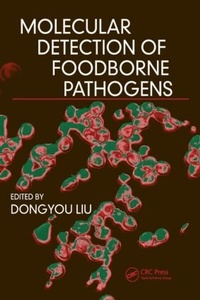
Molecular Detection of Foodborne Pathogens
1st Edition
Published on 28. July 2009
Book
Hardback
906 pages
978-1-4200-7643-1 (ISBN)
Description
While the vast majority of our food supplies are nutritious and safe, foodborne pathogen-related illness still affects millions of people each year. Large outbreaks of foodborne diseases - such as the recent salmonella outbreak linked to various peanut butter products - continue to be reported with alarming frequency.
All-Encompassing Guide to Detection Techniques
One of the most effective ways to control and prevent human foodborne infections is to implement a pathogen surveillance system. Addressing the biology, epidemiology, and pathogenesis of more than 60 microorganisms, Molecular Detection of Foodborne Pathogens demonstrates how to implement a surveillance system that uses state-of-the-art molecular techniques to quickly detect and identify bacterial, fungal, viral, and parasitic pathogens concerned.
Included in each chapter:
Concise review of the selected pathogen in respect to its biology, epidemiology, and pathogenesis
Summary of molecular detection methods available
Description of clinical/food sample collection and preparation procedures
Selection of robust, effective, step-by-step detection protocols
Discussion of the current challenges and ongoing research needs to further extend utility and performance of molecular diagnostic methods
With proven, ready-to-use protocols (including commercial kits), this globally pertinent resource demonstrates how speedy and effective detection methods can lead to more lives saved and a consistently safe, quality, and trustworthy food supply.
All-Encompassing Guide to Detection Techniques
One of the most effective ways to control and prevent human foodborne infections is to implement a pathogen surveillance system. Addressing the biology, epidemiology, and pathogenesis of more than 60 microorganisms, Molecular Detection of Foodborne Pathogens demonstrates how to implement a surveillance system that uses state-of-the-art molecular techniques to quickly detect and identify bacterial, fungal, viral, and parasitic pathogens concerned.
Included in each chapter:
Concise review of the selected pathogen in respect to its biology, epidemiology, and pathogenesis
Summary of molecular detection methods available
Description of clinical/food sample collection and preparation procedures
Selection of robust, effective, step-by-step detection protocols
Discussion of the current challenges and ongoing research needs to further extend utility and performance of molecular diagnostic methods
With proven, ready-to-use protocols (including commercial kits), this globally pertinent resource demonstrates how speedy and effective detection methods can lead to more lives saved and a consistently safe, quality, and trustworthy food supply.
Reviews / Votes
... destined to be a reference text of the future.-International Food Hygiene ... destined to be a reference text of the future.
-International Food Hygiene
More details
Series
Language
English
Place of publication
Bosa Roca
United States
Publishing group
Taylor & Francis Inc
Target group
Professional and scholarly
Professional
Product notice
Paper over boards
Illustrations
74 s/w Abbildungen, 157 s/w Tabellen
157 Tables, black and white; 74 Illustrations, black and white
Dimensions
Height: 280 mm
Width: 210 mm
Weight
2245 gr
ISBN-13
978-1-4200-7643-1 (9781420076431)
Copyright in bibliographic data and cover images is held by Nielsen Book Services Limited or by the publishers or by their respective licensors: all rights reserved.
Schweitzer Classification
Other editions
Additional editions
Dongyou Liu
Molecular Detection of Foodborne Pathogens
E-Book
07/2009
1st Edition
CRC Press
€364.99
Available for download
Dongyou Liu
Molecular Detection of Foodborne Pathogens
E-Book
07/2009
1st Edition
CRC Press
€364.99
Available for download
Person
Dongyou Liu, Ph.D., is currently a research scientist at Human Genetic Signatures, North Ryde, NSW, Australia. Previously, he graduated in 1982 with a veterinary science degree from Hunan Agricultural University, China, and then completed his postgraduate study on immunological diagnosis of human hydatid disease in 1989 at the University of Melbourne, Australia. During the past two decades, he has worked in several research and clinical laboratories in Australia and the United States of America, with emphases on the molecular mechanisms of bacterial pathogenicity and the development of nucleic acid-based assays for species- and virulence-specific determination of microbial pathogens such as ovine footrot bacterium (Dichelobacter nodosus), dermatophyte fungi (Trichophyton, Microsporum and Epidermophyton) and listeriae (Listeria species). He is the editor of Handbook of Listeria monocytogenes and Handbook of Nucleic Acid Purification, both of which are published by CRC Press.
Content
Molecular Detection: Principles and Methods. Adenoviruses. Astroviruses. Avian Influenza Virus. Hepatitis A and E Viruses. Noroviruses. Rotaviruses. Sapoviruses. Slow Viral Diseases. Bacillus. Clostridium. Enterococcus. Helicobacter. Kocuria. Listeria. Micrococcus. Mycobacterium Avium Subspecies Paratuberculosis. Staphylococcus Aureus. Streptococcus. Aeromonas. Arcobacter. Enterotoxigenic Bacteriodes Fragilis. Brucella. Burkholderia. Campylobacter Jejuni. Enterobacter. Escherichia Coli O157:H7. Klebsiella. Plesiomonas Shigelloides. Proteus. Pseudomonas Aeruginosa. Salmonella. Serratia Marcescens. Shigella. Vibrio. Yersinia. Alternaria. Aspergillus. Candida. Debaryomyces. Fusarium. Penicillium. Rhodotorula. Saccharomyces Cerevisiae. Acanthamoeba. Cryptosporidium. Cyclospora. Entamoeba. Microsporidia. Giardia. Isospora Belli. Sarcocystis. Toxoplasma Gondii. Anisakis. Clonorchis Sinensis. Diphyllobothrium. Fasciola. Heterophyidae. Metagonimus. Opisthorchis. Paragonimus. Taenia. Trichinella.