

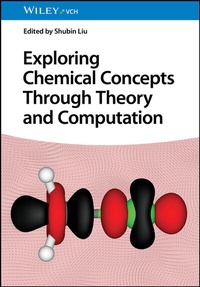
Exploring Chemical Concepts Through Theory and Computation
1st Edition
Published on 12. June 2024
Book
Hardback
592 pages
978-3-527-35248-7 (ISBN)
Description
Deep, theoretical resource on the essence of chemistry, explaining a variety of important concepts including redox states and bond types
Exploring Chemical Concepts Through Theory and Computation provides a comprehensive account of how the three widely used theoretical frameworks of valence bond theory, molecular orbital theory, and density functional theory, along with a variety of important chemical concepts, can between them describe and efficiently and reliably predict key chemical parameters and phenomena. By comparing the three main theoretical frameworks, readers will become competent in choosing the right modeling approach for their task.
The authors go beyond a simple comparison of existing algorithms to show how data-driven theories can explain why chemical compounds behave the way they do, thus promoting a deeper understanding of the essence of chemistry. The text is contributed to by top theoretical and computational chemists who have turned computational chemistry into today?s data-driven and application-oriented science.
Exploring Chemical Concepts Through Theory and Computation discusses topics including:
* Orbital-based approaches, density-based approaches, chemical bonding, partial charges, atoms in molecules, oxidation states, aromaticity and antiaromaticity, and acidity and basicity
* Electronegativity, hardness, softness, HSAB, sigma-hole interactions, charge transport and energy transfer, and homogeneous and heterogeneous catalysis
* Electrophilicity, nucleophilicity, cooperativity, frustration, homochirality, and energy decomposition
* Chemical concepts in solids, excited states, spectroscopy and machine learning, and catalysis and machine learning, as well as key connections between related concepts
Aimed at both novice and experienced computational, theoretical, and physical chemists, Exploring Chemical Concepts Through Theory and Computation is an essential reference to gain a deeper, more advanced holistic understanding of the field of chemistry as a whole.
Exploring Chemical Concepts Through Theory and Computation provides a comprehensive account of how the three widely used theoretical frameworks of valence bond theory, molecular orbital theory, and density functional theory, along with a variety of important chemical concepts, can between them describe and efficiently and reliably predict key chemical parameters and phenomena. By comparing the three main theoretical frameworks, readers will become competent in choosing the right modeling approach for their task.
The authors go beyond a simple comparison of existing algorithms to show how data-driven theories can explain why chemical compounds behave the way they do, thus promoting a deeper understanding of the essence of chemistry. The text is contributed to by top theoretical and computational chemists who have turned computational chemistry into today?s data-driven and application-oriented science.
Exploring Chemical Concepts Through Theory and Computation discusses topics including:
* Orbital-based approaches, density-based approaches, chemical bonding, partial charges, atoms in molecules, oxidation states, aromaticity and antiaromaticity, and acidity and basicity
* Electronegativity, hardness, softness, HSAB, sigma-hole interactions, charge transport and energy transfer, and homogeneous and heterogeneous catalysis
* Electrophilicity, nucleophilicity, cooperativity, frustration, homochirality, and energy decomposition
* Chemical concepts in solids, excited states, spectroscopy and machine learning, and catalysis and machine learning, as well as key connections between related concepts
Aimed at both novice and experienced computational, theoretical, and physical chemists, Exploring Chemical Concepts Through Theory and Computation is an essential reference to gain a deeper, more advanced holistic understanding of the field of chemistry as a whole.
More details
Edition
1. Auflage
Language
English
Place of publication
Berlin
Germany
Target group
Professional and scholarly
Illustrations
18
18 s/w Tabellen
18 schwarz-weiße Tabellen
Dimensions
Height: 248 mm
Width: 176 mm
Thickness: 36 mm
Weight
1240 gr
ISBN-13
978-3-527-35248-7 (9783527352487)
Schweitzer Classification
Other editions
Additional editions
E-Book
05/2024
1st Edition
Wiley-VCH
€156.99
Available for download
E-Book
05/2024
1st Edition
Wiley-VCH
€156.99
Available for download
Person
Dr. Shubin Liu is a Senior Computational Scientist at the Research Computing Center, University of North Carolina at Chapel Hill. He obtained his Ph.D. degree with Robert G. Parr in 1996 and postdoctoral training with Weitao Yang of Duke University. He has been an independent researcher since 2000, focusing on developing a chemical reactivity theory using density functional theory language. Dr. Shubin Liu has authored over 200 peer-reviewed publications and is recognized in the field by various scientific awards including the Wiley-IJQC Young Investigator Award.
Content
1. Chemical Concepts from Molecular Orbital Theory
2. Chemical Concepts from Ab Initio Valence Bond Theory
3. Chemical Concepts from Conceptual Density Functional Theory
4. Chemical Concepts from Density-Based Approaches in Density Functional Theory
5. Chemical Bonding
6. Partial Charges
7. Atoms in Molecules
8. Effective Oxidation States Analysis
9. Aromaticity and Antiaromaticity
10. Acidity and Basicity
11. Sigma Hole Supported Interactions: Qualitative Features, Various Incarnations, and Disputations
12. On the Generalization of Marcus Theory for Two-State Photophysical Processes
13. Computational Modeling of CO2 Reduction and Conversion via Heterogeneous and Homogeneous Catalysis
14. Excited States in Conceptual DFT
15. Modeling the Photophysical Processes of Organic Molecular Aggregates with Inclusion of Intermolecular Interactions and Vibronic Couplings
16. Duality of Conjugated ¿¿ Electrons
17. Energy Decomposition Analysis and Its Applications
18. Chemical Concepts in Solids
19. Toward Interpretable Machine Learning Models for Predicting Spectroscopy, Catalysis, and Reactions
20. Learning Design Rules for Catalysts Through Computational Chemistry and Machine Learning
1. Chemical Concepts from Molecular Orbital Theory
2. Chemical Concepts from Ab Initio Valence Bond Theory
3. Chemical Concepts from Conceptual Density Functional Theory
4. Chemical Concepts from Density-Based Approaches in Density Functional Theory
5. Chemical Bonding
6. Partial Charges
7. Atoms in Molecules
8. Effective Oxidation States Analysis
9. Aromaticity and Antiaromaticity
10. Acidity and Basicity
11. Sigma Hole Supported Interactions: Qualitative Features, Various Incarnations, and Disputations
12. On the Generalization of Marcus Theory for Two-State Photophysical Processes
13. Computational Modeling of CO2 Reduction and Conversion via Heterogeneous and Homogeneous Catalysis
14. Excited States in Conceptual DFT
15. Modeling the Photophysical Processes of Organic Molecular Aggregates with Inclusion of Intermolecular Interactions and Vibronic Couplings
16. Duality of Conjugated ¿¿ Electrons
17. Energy Decomposition Analysis and Its Applications
18. Chemical Concepts in Solids
19. Toward Interpretable Machine Learning Models for Predicting Spectroscopy, Catalysis, and Reactions
20. Learning Design Rules for Catalysts Through Computational Chemistry and Machine Learning
2. Chemical Concepts from Ab Initio Valence Bond Theory
3. Chemical Concepts from Conceptual Density Functional Theory
4. Chemical Concepts from Density-Based Approaches in Density Functional Theory
5. Chemical Bonding
6. Partial Charges
7. Atoms in Molecules
8. Effective Oxidation States Analysis
9. Aromaticity and Antiaromaticity
10. Acidity and Basicity
11. Sigma Hole Supported Interactions: Qualitative Features, Various Incarnations, and Disputations
12. On the Generalization of Marcus Theory for Two-State Photophysical Processes
13. Computational Modeling of CO2 Reduction and Conversion via Heterogeneous and Homogeneous Catalysis
14. Excited States in Conceptual DFT
15. Modeling the Photophysical Processes of Organic Molecular Aggregates with Inclusion of Intermolecular Interactions and Vibronic Couplings
16. Duality of Conjugated ¿¿ Electrons
17. Energy Decomposition Analysis and Its Applications
18. Chemical Concepts in Solids
19. Toward Interpretable Machine Learning Models for Predicting Spectroscopy, Catalysis, and Reactions
20. Learning Design Rules for Catalysts Through Computational Chemistry and Machine Learning
1. Chemical Concepts from Molecular Orbital Theory
2. Chemical Concepts from Ab Initio Valence Bond Theory
3. Chemical Concepts from Conceptual Density Functional Theory
4. Chemical Concepts from Density-Based Approaches in Density Functional Theory
5. Chemical Bonding
6. Partial Charges
7. Atoms in Molecules
8. Effective Oxidation States Analysis
9. Aromaticity and Antiaromaticity
10. Acidity and Basicity
11. Sigma Hole Supported Interactions: Qualitative Features, Various Incarnations, and Disputations
12. On the Generalization of Marcus Theory for Two-State Photophysical Processes
13. Computational Modeling of CO2 Reduction and Conversion via Heterogeneous and Homogeneous Catalysis
14. Excited States in Conceptual DFT
15. Modeling the Photophysical Processes of Organic Molecular Aggregates with Inclusion of Intermolecular Interactions and Vibronic Couplings
16. Duality of Conjugated ¿¿ Electrons
17. Energy Decomposition Analysis and Its Applications
18. Chemical Concepts in Solids
19. Toward Interpretable Machine Learning Models for Predicting Spectroscopy, Catalysis, and Reactions
20. Learning Design Rules for Catalysts Through Computational Chemistry and Machine Learning