

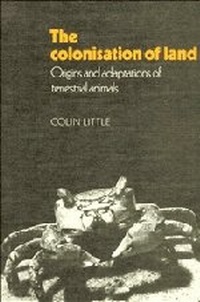
The Colonisation of Land
Origins and Adaptations of Terrestrial Animals
Published on 15. December 1983
Book
Hardback
308 pages
978-0-521-25218-8 (ISBN)
Description
The book traces the ways in which terrestrial animals have evolved from aquatic ancestors and discusses the means by which they are adapted to life on land. The most important physiological adaptations are those involving salt and water balance, the excretion of nitrogen, reproductive mechanisms and the sense organ and these are given priority. Evidence from fossil history is combined with that from the ecology and physiology of present-day species to assess the probable routes along which various evolutionary lines had moved on to land. Individual chapters are concerned with specific animal groups and emphasis is placed on comparisons of physiological mechanisms between closely related animals before attempting wider generalisations. The book closes with a brief account of the recolonisation of the sea and fresh waters by terrestrial animals.
More details
Language
English
Place of publication
Cambridge
United Kingdom
Target group
College/higher education
Dimensions
Height: 210 mm
Width: 297 mm
Thickness: 23 mm
Weight
1090 gr
ISBN-13
978-0-521-25218-8 (9780521252188)
Copyright in bibliographic data and cover images is held by Nielsen Book Services Limited or by the publishers or by their respective licensors: all rights reserved.
Schweitzer Classification
Other editions
New editions
Book
04/2009
Cambridge University Press
€53.10
Shipment within 15-20 days
Additional editions
Book
04/2009
Cambridge University Press
€53.10
Shipment within 15-20 days
Content
Preface; 1. Introduction; 2. Flatworms, nemertines and nematodes; 3. Annelids; 4. Molluscs; 5. Crustaceans and the evolution of arthropods; 6. Chelicerates; 7. Onychophornas and myriapods; 8. Hexapods; 9. Vertebrates; 10. Comparative discussion: the evolution of terrestrial ecosystems; References; Indexes.