

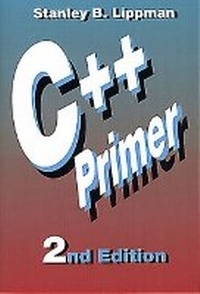
The C++ Primer
2nd Edition
Published on 2. October 1991
Book
Paperback/Softback
512 pages
978-0-201-54848-8 (ISBN)
Description
Third Edition now available! C++ Primer was widely regarded as the most effective introduction to the C++ programming language. The new edition covers C++ as reflected in its latest release, Release 3.0, and the ANSI base document, The Annotated C++ Reference Manual, by Ellis and Stroustrup. As a leading member of the team working on the implementation of Realease 3.0, Lippman provides invaluable insights into the new language features. The most important new addition to the C++ language is the template facility, a feature that facilitates the development of extensive class and algorithmic libraries. Lippman provides comprehensive coverage of this new feature, including a rich variety of examples showing how templates can be used effectively. Features *Includes a new chapter on object-oriented design, using as an example the implementation of a template facility in a C++ compiler. *Covers exception handling, now a formal part of the C++ language. *Discusses the differences betweeen the Realease 2.0 and Release 3.0 language definition. C++ PRIMER, SECOND EDITION is useful both as a learning tool and as a reference to C++.
It assumes only an understanding of the basic constructs of a programming language. Experienced programmers will appreciate the comprehensive coverage of language features recently introduced into C++. Visit the ftp site for the book 0201548488B04062001
It assumes only an understanding of the basic constructs of a programming language. Experienced programmers will appreciate the comprehensive coverage of language features recently introduced into C++. Visit the ftp site for the book 0201548488B04062001
More details
Other editions
New editions
Stanley Lippman | Stanley B. Lippman | Josée Lajoie
C++ Primer
Book
08/2012
5th Edition
Addison Wesley
€65.99
Available immediately
Stanley B. Lippman | Josee Lajoie
C++ Primer
Book
04/1998
3rd Edition
Addison Wesley
€47.03
Article exhausted; check for reprint
Person
Stanley B. Lippman is Architect with the Visual C++ development team at Microsoft. Previously, he served as a Distinguished Consultant at the Jet Propulsion Laboratories (JPL). Stan spent more than twelve years at Bell Laboratories, where he worked with Bjarne Stroustrup on the original C++ implementation and the Foundation research project. After Bell Laboratories, Stan worked at Disney Feature Animation, originally as principal software engineer, then as software technical director on Fantasia 2000.
0
0
Content
Getting Started.
Problem Solving.
The C++ Program.
A First Look at Input/Output.
A Word About Comments.
Preprocessor Directives.
1. The C++ Data Types.
Constant Values.
Symbolic Variables.
Pointer Types.
Constant Types.
Reference Types.
Enumeration Types.
Array Types.
Class Types.
Typedef Names.
Volatile Objects.
2. Expressions And Statements.
What is an Expression?
Arithmetic Operators.
Equality, Relational and Logical Operators.
Assignment Operators.
Increment and Decrement Operators.
The sizeof Operator.
The Arithmetic if Operator.
Comma Operator.
The Bitwise Operator.
Precedence.
Type Conversion.
Statements.
Statement Flow Control.
The if Statement.
The switch Statement.
The while Statement.
The for Statement.
The do Statement.
The break Statement.
The continue Statement.
The goto Statement.
3. Functions, Scope, and the Free Store.
Recursion.
Inline Functions.
Strong Type Checking.
Returning a Value.
The Function Argument List.
Argument Passing.
A Reference Argument.
An Array Argument.
Program Scope.
Local Scope.
Free Store Allocation.
A Linked List Example.
4. Overloaded and Template Functions.
Overloaded Function Names.
Template Functions.
Pointers to Functions.
Type-Safe Linkage.
5. The C++ Class.
The Class Definition.
Class Objects.
Class Member Functions.
The Implicit this Pointer.
Friends to a Class.
Static Class Members.
Class Member Pointer.
Class Scope.
Unions. A Space-Saving Class.
Bit Field. A Space-Saving Member.
6. Class Member Functions.
Class Initialization.
Memberwise Initialization.
Operator Overloading.
A BitVector Class Example.
User-Defined Conversions.
7. Class Templates.
Template Class Definition.
Queue and QueueItem Class Definition.
Template Class Instantiation.
Template Class Specialization.
Template Class Static Members.
Template Constant Expression Parameters.
Template Class Nested Types.
Template Class Friend Declarations.
A Template Array Class.
8. Class Derivation And Inheritance.
Object-Oriented Programming.
The Zoo Animal Representation.
Derivation Specification.
Information Hiding Under Derivation.
Public, Protected, and Private Base Classes.
Standard Conversions Under Derivation.
Class Scope Under Derivation.
Initialization and Assignment Under Derivation.
Initialization Order Under Derivation.
Overloaded Functions with Class Arguments.
Inheriting Operator Functions.
9. Object-Oriented Programming.
Virtual Functions.
Virtual Base Classes.
Template Classes Under Inheritance.
10. Object-Oriented Design.
Identifying the Classes.
Defining the Interface.
Living in a Multi-Paradigm Universe.
Appendix A. The C++ I/O Library.
Output.
Input.
Additional I/O Operators.
Overloading Operator.
Overloading Operator.
File Input and Output.
Condition States.
Incore Formatting.
Format State.
A Strongly Typed Library.
Appendix B. Exception Handling.
The Try Block.
The Catch Handler and Throw Cause.
The Function Throw List.
Summary.
Appendix C. Compatibility Of C++ with C.
The C++ Function Prototype.
Where C++ and C Differ.
Linkage Between C++ and C.
Moving from C to C++.
Appendix D. Compatibility with Release 2.0.
Changes to Class Inheritance.
Changes to Classes.
Changes to the Basic Language. 0201548488T04062001
Problem Solving.
The C++ Program.
A First Look at Input/Output.
A Word About Comments.
Preprocessor Directives.
1. The C++ Data Types.
Constant Values.
Symbolic Variables.
Pointer Types.
Constant Types.
Reference Types.
Enumeration Types.
Array Types.
Class Types.
Typedef Names.
Volatile Objects.
2. Expressions And Statements.
What is an Expression?
Arithmetic Operators.
Equality, Relational and Logical Operators.
Assignment Operators.
Increment and Decrement Operators.
The sizeof Operator.
The Arithmetic if Operator.
Comma Operator.
The Bitwise Operator.
Precedence.
Type Conversion.
Statements.
Statement Flow Control.
The if Statement.
The switch Statement.
The while Statement.
The for Statement.
The do Statement.
The break Statement.
The continue Statement.
The goto Statement.
3. Functions, Scope, and the Free Store.
Recursion.
Inline Functions.
Strong Type Checking.
Returning a Value.
The Function Argument List.
Argument Passing.
A Reference Argument.
An Array Argument.
Program Scope.
Local Scope.
Free Store Allocation.
A Linked List Example.
4. Overloaded and Template Functions.
Overloaded Function Names.
Template Functions.
Pointers to Functions.
Type-Safe Linkage.
5. The C++ Class.
The Class Definition.
Class Objects.
Class Member Functions.
The Implicit this Pointer.
Friends to a Class.
Static Class Members.
Class Member Pointer.
Class Scope.
Unions. A Space-Saving Class.
Bit Field. A Space-Saving Member.
6. Class Member Functions.
Class Initialization.
Memberwise Initialization.
Operator Overloading.
A BitVector Class Example.
User-Defined Conversions.
7. Class Templates.
Template Class Definition.
Queue and QueueItem Class Definition.
Template Class Instantiation.
Template Class Specialization.
Template Class Static Members.
Template Constant Expression Parameters.
Template Class Nested Types.
Template Class Friend Declarations.
A Template Array Class.
8. Class Derivation And Inheritance.
Object-Oriented Programming.
The Zoo Animal Representation.
Derivation Specification.
Information Hiding Under Derivation.
Public, Protected, and Private Base Classes.
Standard Conversions Under Derivation.
Class Scope Under Derivation.
Initialization and Assignment Under Derivation.
Initialization Order Under Derivation.
Overloaded Functions with Class Arguments.
Inheriting Operator Functions.
9. Object-Oriented Programming.
Virtual Functions.
Virtual Base Classes.
Template Classes Under Inheritance.
10. Object-Oriented Design.
Identifying the Classes.
Defining the Interface.
Living in a Multi-Paradigm Universe.
Appendix A. The C++ I/O Library.
Output.
Input.
Additional I/O Operators.
Overloading Operator.
Overloading Operator.
File Input and Output.
Condition States.
Incore Formatting.
Format State.
A Strongly Typed Library.
Appendix B. Exception Handling.
The Try Block.
The Catch Handler and Throw Cause.
The Function Throw List.
Summary.
Appendix C. Compatibility Of C++ with C.
The C++ Function Prototype.
Where C++ and C Differ.
Linkage Between C++ and C.
Moving from C to C++.
Appendix D. Compatibility with Release 2.0.
Changes to Class Inheritance.
Changes to Classes.
Changes to the Basic Language. 0201548488T04062001