

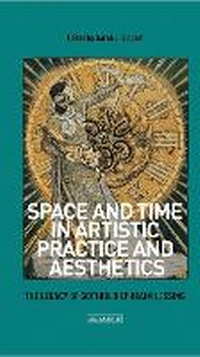
Space and Time in Artistic Practice and Aesthetics
The Legacy of Gotthold Ephraim Lessing
Published on 22. August 2024
Book
Paperback/Softback
272 pages
978-1-350-43804-0 (ISBN)
Description
When the Enlightenment thinker Gotthold Ephraim Lessing wrote his treatise Laocoon: An Essay on the Limits of Painting and Poetry in 1766, he outlined the strengths and weaknesses of each art. Painting was assigned to the realm of space; poetry to the realm of time. Space and Time in Artistic Practice and Aesthetics explores how artists since the eighteenth century up to the present day have grappled with the consequences of Lessing's theory and those that it spawned. As the book reveals, many artists have been - and continue to be - influenced by Lessing-like theories, which have percolated into the art education and art criticism. Artists from Jean Raoux to Willem de Kooning and Frances Bacon, and art critics such as Clement Greenberg, have felt the weight of Lessing's theories in their modes of creation, whether consciously or not. Should we sound the death knell for the theories of Lessing and his kind? Or will conceptions of temporality, spatiality and artistic competition continue to unfold? This book - the first to consider how Lessing's writings connect to visual art's production - brings these questions to the fore.
More details
Language
English
Place of publication
London
United Kingdom
Publishing group
Bloomsbury Publishing PLC
Target group
College/higher education
Illustrations
16 integrated bw
Dimensions
Height: 214 mm
Width: 138 mm
Thickness: 18 mm
Weight
360 gr
ISBN-13
978-1-350-43804-0 (9781350438040)
Copyright in bibliographic data and cover images is held by Nielsen Book Services Limited or by the publishers or by their respective licensors: all rights reserved.
Schweitzer Classification
Other editions
Additional editions
Sarah Lippert
Space and Time in Artistic Practice and Aesthetics
The Legacy of Gotthold Ephraim Lessing
E-Book
06/2017
1st Edition
I.B. Tauris
€32.99
Available for download
Person
Sarah Lippert is Associate Professor of Art History in the Visual Arts Program at the University of Michigan-Flint, as well as the Director of the Society for Paragone Studies. Her research on nineteenth century visual culture has been published in the journals Artibus et Historiae and Dix-Neuf.
Content
Introduction: The Tenets of Lessing and his Legacy by Sarah Lippert
Chapter 1: Drawing the Line: Jean Raoux's painted Virgins and Gotthold Ephraim Lessing's written Theories by Gabriela Jasin
Chapter 2: After Lessing: Beauty and the Unreality of Artistic Space and Time by Franco Cirulli
Chapter 3: E. H. Toelken's Addendum to Lessing's Laocooen (1822) by Eric Garberson
Chapter 4: The Temporality of Imitation in the Work of Moreau and Gerome by Sarah Lippert
Chapter 5: Painterly Myopia and the Main Ingredient: Flesh: A Look at the Work of Soutine, Bacon, Dubuffet, and de Kooning by Chad Airhart
Chapter 6: Almost: Greenberg and Lessing by Thomas Morgan Evans
Chapter 7: In the Body's Space, the Body's Time: Feeling Your Way Through Richard Serra's The Matter of Time by Rob Marks
Chapter 8: Time, Space and Film: The Symbiosis of Pull My Daisy by Timothy Hiles
Conclusion: Limit-Imposing Systems by Sarah Lippert
Chapter 1: Drawing the Line: Jean Raoux's painted Virgins and Gotthold Ephraim Lessing's written Theories by Gabriela Jasin
Chapter 2: After Lessing: Beauty and the Unreality of Artistic Space and Time by Franco Cirulli
Chapter 3: E. H. Toelken's Addendum to Lessing's Laocooen (1822) by Eric Garberson
Chapter 4: The Temporality of Imitation in the Work of Moreau and Gerome by Sarah Lippert
Chapter 5: Painterly Myopia and the Main Ingredient: Flesh: A Look at the Work of Soutine, Bacon, Dubuffet, and de Kooning by Chad Airhart
Chapter 6: Almost: Greenberg and Lessing by Thomas Morgan Evans
Chapter 7: In the Body's Space, the Body's Time: Feeling Your Way Through Richard Serra's The Matter of Time by Rob Marks
Chapter 8: Time, Space and Film: The Symbiosis of Pull My Daisy by Timothy Hiles
Conclusion: Limit-Imposing Systems by Sarah Lippert