

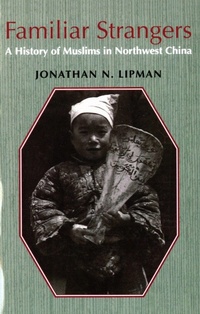
Familiar Strangers
A History of Muslims in Northwest China
Published on 1. January 1998
Book
Paperback/Softback
318 pages
978-0-295-97644-0 (ISBN)
Description
Open-access edition: DOI 10.6069/9780295800554
The Chinese-speaking Muslims have for centuries been an inseparable but anomalous part of Chinese society--Sinophone yet incomprehensible, local yet outsiders, normal but different. Long regarded by the Chinese government as prone to violence, they have challenged fundamental Chinese conceptions of "self" and "other" and denied the totally transforming power of Chinese civilization by tenaciously maintaining connections with Central and West Asia as well as some cultural differences from their non-Muslim neighbors.
Familiar Strangers narrates a history of the Muslims of northwest China, at the intersection of the frontiers of the Mongolian-Manchu, Tibetan, Turkic, and Chinese cultural regions. Based on primary and secondary sources in a variety of languages, Familiar Strangers examines the nature of ethnicity and periphery, the role of religion and ethnicity in personal and collective decisions in violent times, and the complexity of belonging to two cultures at once. Concerning itself with a frontier very distant from the core areas of Chinese culture and very strange to most Chinese, it explores the influence of language, religion, and place on Sino-Muslim identity.
The Chinese-speaking Muslims have for centuries been an inseparable but anomalous part of Chinese society--Sinophone yet incomprehensible, local yet outsiders, normal but different. Long regarded by the Chinese government as prone to violence, they have challenged fundamental Chinese conceptions of "self" and "other" and denied the totally transforming power of Chinese civilization by tenaciously maintaining connections with Central and West Asia as well as some cultural differences from their non-Muslim neighbors.
Familiar Strangers narrates a history of the Muslims of northwest China, at the intersection of the frontiers of the Mongolian-Manchu, Tibetan, Turkic, and Chinese cultural regions. Based on primary and secondary sources in a variety of languages, Familiar Strangers examines the nature of ethnicity and periphery, the role of religion and ethnicity in personal and collective decisions in violent times, and the complexity of belonging to two cultures at once. Concerning itself with a frontier very distant from the core areas of Chinese culture and very strange to most Chinese, it explores the influence of language, religion, and place on Sino-Muslim identity.
Reviews / Votes
"Jonathan N. Lipman appeals for such a new approach with a warning against the conceptual pitfalls of 'hegemonic narrative' and the 'errors of universalism and overgeneralization that plague the dominant paradigms,' especially in the study of Chinese history."- James D. Frankel (Religious Studies Review) "This book lays the foundation for future studies of Chinese Muslims . . . and demonstrates the far-reaching impact Chinese Muslims have had upon Chinese society and history."
(Journal of Asian and African Studies)
More details
Series
Language
English
Place of publication
Seattle
United States
Target group
Professional and scholarly
Product notice
Paperback (trade)
Illustrations
318 pages, 24 illus
Dimensions
Height: 228 mm
Width: 153 mm
Thickness: 25 mm
Weight
442 gr
ISBN-13
978-0-295-97644-0 (9780295976440)
Copyright in bibliographic data and cover images is held by Nielsen Book Services Limited or by the publishers or by their respective licensors: all rights reserved.
Schweitzer Classification
Other editions
Additional editions
E-Book
07/2011
University of Washington Press
€0.00
Available for download
Person
Jonathan N. Lipman is professor emeritus of history at Mount Holyoke College. He is the author of Familiar Strangers: A History of Muslims in Northwest China (University of Washington Press, 1998); coauthor of Modern East Asia: An Integrated History (Pearson, 2012); and coeditor of Islamic Thought in China: Sino-Muslim Intellectual Evolution from the 17th to the 21st Century (Edinburgh University Press, 2016) and Violence in Chinese Society: Studies in Culture and Counterculture (SUNY, 1990).
Content
List of Maps
List of Illustrations
Acknowledgments
Preface
Introduction: Purposes and Form of a Muslim History in China
1. The Frontier Ground and Peoples of Northwest China
2. Acculturation and Accommodation: China's Muslims to the 17th Century
3. Connections: Muslims in the Early Qing, 1644-1781
4. Strategies of Resistance: Integration by Violence
5. Strategies of Integration: Muslims in New China
Conclusion: Familiar Strangers
Chinese Character Glossary
Bibliography
Index
List of Illustrations
Acknowledgments
Preface
Introduction: Purposes and Form of a Muslim History in China
1. The Frontier Ground and Peoples of Northwest China
2. Acculturation and Accommodation: China's Muslims to the 17th Century
3. Connections: Muslims in the Early Qing, 1644-1781
4. Strategies of Resistance: Integration by Violence
5. Strategies of Integration: Muslims in New China
Conclusion: Familiar Strangers
Chinese Character Glossary
Bibliography
Index