

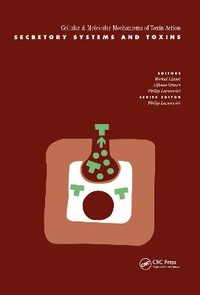
Secretory Systems and Toxins
1st Edition
Will be published approx. on 20. October 1998
Book
Hardback
492 pages
978-90-5702-335-4 (ISBN)
Description
This volume deals with the relationships between toxins and one of the most fundamental processes in any living cell - the secretory cycle. The reader will find up-to-date information on secretion, generated by experts in this fast evolving field. In the last decade extensive molecular and cellular studies have exposed the molecular similarity among most known secretory systems. In this book secretion is discussed from its basic mode found in yeast up to its most sophisticated version in neurotransmitter release in nerve terminals. A comprehensive view on the mode of action of toxins which block secretion but also those which cause hyper-activation of exocytosis is provided. This book addresses the issue of toxin action by deciphering the molecular and cellular basis of exocytosis in various organisms and cellular contents.
More details
Series
Language
English
Place of publication
London
United Kingdom
Target group
College/higher education
Professional and scholarly
Dimensions
Height: 246 mm
Width: 174 mm
Weight
1242 gr
ISBN-13
978-90-5702-335-4 (9789057023354)
Copyright in bibliographic data and cover images is held by Nielsen Book Services Limited or by the publishers or by their respective licensors: all rights reserved.
Schweitzer Classification
Other editions
Additional editions

Michal Linial | Alfonso Grasso | Phillip Lazarovici
Secretory Systems and Toxins
Other
09/2003
CRC Press
€249.20
Article exhausted; check different version
Michal Linial | Alfonso Grasso | Phillip Lazarovici
Secretory Systems and Toxins
E-Book
09/2003
1st Edition
CRC Press
€364.99
Available for download
Michal Linial | Alfonso Grasso | Phillip Lazarovici
Secretory Systems and Toxins
E-Book
09/2003
CRC Press
€364.99
Available for download
Persons
Michal Linial, Alfonso Grasso, Phillip Lazarovici
Content
1. Synaptic Vesicle Proteins - A Molecular Study 2. Dissection of the Secretory Machinery 3. Regulatory Roles for Lipids in Vesicle Trafficking and Secretion 4. Fusion Proteins and the Fusion Events 5. Chromaffin Cells as a Secretory System - The Use of Neurotoxins 6. Botulinum Neurotoxins and Their Substrates 7. Purification, Function and Selectivity in a-Latrotoxin 8. The Synapsins and Neurotransmission 9. Morphological Studies of the Secretory Machinery Using Neurotoxin Probes 10. Molecular Mechanisms of the Action of Clostridium botulinum Type B Neurotoxin 11. Neurotoxins and Safety-Latches of the Secretory Process