

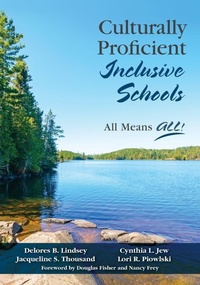
Culturally Proficient Inclusive Schools
All Means ALL!
1st Edition
Published on 16. October 2017
Book
Paperback/Softback
320 pages
978-1-5063-5624-2 (ISBN)
Description
Create inclusive educational environments that benefit ALL learners!
As schools become more diverse with students of differing abilities and needs, this self-reflective and action-oriented guide helps you create and support more inclusive schools and classrooms that intentionally educate all students. Using the Five Essential Elements of Cultural Proficiency as a roadmap, this book presents:
Students' learning differences as just that - differences rather than deficits
Strategies that show you how to break though the common barriers to culturally proficient and inclusive schooling
Assessments that gauge your awareness and show you how to best serve every student's needs
As schools become more diverse with students of differing abilities and needs, this self-reflective and action-oriented guide helps you create and support more inclusive schools and classrooms that intentionally educate all students. Using the Five Essential Elements of Cultural Proficiency as a roadmap, this book presents:
Students' learning differences as just that - differences rather than deficits
Strategies that show you how to break though the common barriers to culturally proficient and inclusive schooling
Assessments that gauge your awareness and show you how to best serve every student's needs
Reviews / Votes
"In Culturally Proficient Inclusive Schools, the authors challenge their readers to deeply consider how schools have failed to be as inclusive and accessible to all students as they should be. The authors take a positive approach to the issue by pushing educators to move away from deficit thinking and focus on the varied assets of all students. Through the lens of cultural proficiency, they emphasize that for educators to fully embrace all learners, they must carefully examine the assumptions and beliefs they may currently hold about them. This book is a welcome addition to the literature as we seek to educate all students who attend our schools." -- Michael R. Hillis, Ph.D., Dean and Professor, Graduate School of Education "The authors of Culturally Proficient Inclusive Schools provide a guide to champion the development of inclusive schools through culturally proficient practices that support students and the professional community. The tools help the school community by identifying student needs and selecting appropriate materials and approaches while considering the social-emotional requirements of the student population. The Systems, Practices, Strategies tool supports the growth of educators in the important work of knowing who they are, where they should develop their skills, and how to best serve and value their school community as they reflect-on-action and reflect-for-action." -- Patricia Horton, Principal "This powerful book will certainly help any reader better understand inclusive education, but it offers so much more than that. It goes deeper and challenges readers to understand culture in new ways, to create real change, and to build true communities built on listening, understanding, and action. Use this text as a guide to both understand the barriers that get in the way of inclusion and to build the skills and competencies that will help it thrive in today's diverse schools. Culturally Proficient Inclusive Schools will help you create a progressive vision for teaching all learners and a powerful plan to realize that vision." -- Paula Kluth, Ph.D., Consultant, Author, Advocate and Independent Scholar "This book answers the important call to equip and position school personnel at the front lines of supporting students of differing abilities to become culturally proficient leaders. 'Inclusion' in U.S. school systems has become a buzz word. What makes this book about inclusive practices stand out from the rest is that it is the first text that uniquely bridges evidence-based knowledge about cultural proficiency with hands-on culturally proficient practices to meet the needs of students with disabilities specifically. The authors provide teachers, administrators, and teachers in training with critical tools to honor and respond to students with different abilities, including significant learning and communication differences. This groundbreaking book will mobilize educators to cultivate more equitable educational opportunities and outcomes for students of all abilities." -- Edlyn Vallejo Pena, Ph.D., Associate Professor and Co-Director "Culturally Proficient Inclusive Schools: All Means ALL! by Jacque Thousand, Delores Lindsey, Cindy Jew and Lori Piowlski provides a wonderful contribution to the literature by promoting effective inclusive education! Culturally proficient schools are essential to support learner diversity, which is a given everywhere in our land. Not only do the authors clearly and honestly lay out the barriers to culturally proficient schools, they offer highly meaningful ways to overcome issues through collaboration, advocacy, authentic learning, universal design for learning, differentiated instruction, creative problem-solving, conflict resolution and institutionalizing cultural change. This fine book achieves much by bringing these practices together and provides methodology to bring forward true school improvement. It is a highly valued addition to my best practice library!" -- Patrick Schwarz, Ph.D., Professor, Diversity in Learning and Teaching "Culturally Proficient Inclusive Schools is a much needed resource in schools across the United States. The authors have created a user-friendly book that lays the foundation for building a strong MTSS program. The tables are outstanding and will allow school and district teams to hit the ground running." -- Stacie Stanley, EdD, Director of CurriculumMore details
Language
English
Place of publication
Thousand Oaks
United States
Publishing group
SAGE Publications Inc
Target group
Professional and scholarly
Dimensions
Height: 254 mm
Width: 178 mm
Thickness: 17 mm
Weight
608 gr
ISBN-13
978-1-5063-5624-2 (9781506356242)
Copyright in bibliographic data and cover images is held by Nielsen Book Services Limited or by the publishers or by their respective licensors: all rights reserved.
Schweitzer Classification
Persons
Dr. Delores B. Lindsey served as assistant principal, principal, and county office administrator. She served as Executive Director of the regional school leadership center. Delores uses her skills as Cognitive Coach and Adaptive Schools trainer blended with her understanding and skills as a cultural proficiency trainer to design and implement the 10-Day Certification Program for Culturally Proficient Educational Practice. She served as assistant professor at California State University San Marcos for more than 10 years. She retired from the institution; however, she has not retired from the education profession. Her primary focus is developing culturally proficient leaders. She helps educational leaders examine their organizations' policies and practices and their individual beliefs and values about cross-cultural communication. Her favorite reflective questions are, Who are we? and, Are we who we say we are? Delores and her husband, Randall (her favorite SAGE/Corwin author), continue to co-write about the application of the four tools of Cultural Proficiency. Her most recent publications which are on Corwin's bestseller list are Leading While Female: A Culturally Proficient Response for Gender Equity, and My Leading While Female Journey: A Guided Reflective Journal with Trudy Arriaga and Stacie Stanley.
Jacqueline S. Thousand, Ph.D., is Professor Emerita at California State University San Marcos, where she designed and coordinated special education professional preparation and Master's degree programs in the College of Education, Health, and Human Services. She previously taught at the University of Vermont, where she directed Inclusion Facilitator and Early Childhood Special Education graduate and postgraduate programs and coordinated federal grants, which, in the early 1980s, pioneered the inclusion of students with moderate and severe disabilities in general education classrooms of their local schools. Prior to university teacher, Dr. Thousand served as a special educator in Chicago area and Atlanta public schools and as the coordinator of early childhood special education services for children ages 3 through 6 in the Burlington, Vermont area. Dr. Thousand is a nationally known teacher, author, systems change consultant, and disability rights and inclusive education advocate. She is the author of 21 books and numerous research articles and chapters on issues related to inclusive education, organizational change strategies, differentiated instruction and universal design, co-teaching and collaborative teaming, cooperative group learning, creative problem solving, positive behavioral supports, and, now, culturally proficiency special education. Dr. Thousand is actively involved in international teacher education and inclusive education endeavors and serves on the editorial boards of several national and international journals.
Cynthia L. Jew, Ph.D. is a professor at California Lutheran University in Thousand Oaks, CA. Dr. Jew teaches in the Counselor Education program focusing on Field Experiences and School Systems as she prepares School Counselors. She is co-author of Culturally Proficient Inquiry: A Lens for Identifying and Examining Education Gaps (Corwin, 2008) and Culturally Proficient schools: All means All. (Corwin 2017) She also serves as a consultant to the Santa Clarita Valley International Charter schools focusing on the areas of Student Support and Inclusiveness. She is a Licensed Psychologist and Certified School Psychologist. She has two daughters, Kiera and Jordyn, who is Deaf and wears Cochlear Implants.
Lori R. Piowlski is an Assistant Professor in the Elementary Education Department at Minnesota State University, Mankato and is dedicated to advancing access and equity in teacher education. She received her Ph.D. from the University of Nebraska, Lincoln in Educational Administration in Higher Education. Dr. Piowlski also consults with New Knowledge United as a Subject Matter Expert in the areas of special education, English language learners, literacy, elementary education and assessment; by developing, aligning and optimizing higher education eLearning courses. Her research interests are in the areas of: preparation of cultural proficient teachers, the national edTPA teacher performance assessment, parent engagement in schools, partnership development schools and mentoring/induction of new teachers. She serves as an edTPA national consultant and presents frequently at national conferences. Prior to her higher education faculty roles, she worked with diverse populations as a pre-K through grade 12 elementary and special education teacher, which ignited her passion to study culturally proficient teaching. She continues to empower future teachers to celebrate their ability to execute global cultural competence, allowing them to differentiate their instruction to meet the needs of all 21st century students.
Jacqueline S. Thousand, Ph.D., is Professor Emerita at California State University San Marcos, where she designed and coordinated special education professional preparation and Master's degree programs in the College of Education, Health, and Human Services. She previously taught at the University of Vermont, where she directed Inclusion Facilitator and Early Childhood Special Education graduate and postgraduate programs and coordinated federal grants, which, in the early 1980s, pioneered the inclusion of students with moderate and severe disabilities in general education classrooms of their local schools. Prior to university teacher, Dr. Thousand served as a special educator in Chicago area and Atlanta public schools and as the coordinator of early childhood special education services for children ages 3 through 6 in the Burlington, Vermont area. Dr. Thousand is a nationally known teacher, author, systems change consultant, and disability rights and inclusive education advocate. She is the author of 21 books and numerous research articles and chapters on issues related to inclusive education, organizational change strategies, differentiated instruction and universal design, co-teaching and collaborative teaming, cooperative group learning, creative problem solving, positive behavioral supports, and, now, culturally proficiency special education. Dr. Thousand is actively involved in international teacher education and inclusive education endeavors and serves on the editorial boards of several national and international journals.
Cynthia L. Jew, Ph.D. is a professor at California Lutheran University in Thousand Oaks, CA. Dr. Jew teaches in the Counselor Education program focusing on Field Experiences and School Systems as she prepares School Counselors. She is co-author of Culturally Proficient Inquiry: A Lens for Identifying and Examining Education Gaps (Corwin, 2008) and Culturally Proficient schools: All means All. (Corwin 2017) She also serves as a consultant to the Santa Clarita Valley International Charter schools focusing on the areas of Student Support and Inclusiveness. She is a Licensed Psychologist and Certified School Psychologist. She has two daughters, Kiera and Jordyn, who is Deaf and wears Cochlear Implants.
Lori R. Piowlski is an Assistant Professor in the Elementary Education Department at Minnesota State University, Mankato and is dedicated to advancing access and equity in teacher education. She received her Ph.D. from the University of Nebraska, Lincoln in Educational Administration in Higher Education. Dr. Piowlski also consults with New Knowledge United as a Subject Matter Expert in the areas of special education, English language learners, literacy, elementary education and assessment; by developing, aligning and optimizing higher education eLearning courses. Her research interests are in the areas of: preparation of cultural proficient teachers, the national edTPA teacher performance assessment, parent engagement in schools, partnership development schools and mentoring/induction of new teachers. She serves as an edTPA national consultant and presents frequently at national conferences. Prior to her higher education faculty roles, she worked with diverse populations as a pre-K through grade 12 elementary and special education teacher, which ignited her passion to study culturally proficient teaching. She continues to empower future teachers to celebrate their ability to execute global cultural competence, allowing them to differentiate their instruction to meet the needs of all 21st century students.
Content
Foreword
Acknowledgments
About the Authors
Part I: Commitment to ALL!
Chapter 1: What are Equity and Access Gaps? Why do They Persist?
Chapter 2: Using the Tools of Cultural Proficiency and the Vision and Practices of Inclusive Education as a Conceptual Framework
Chapter 3: Barriers to Culturally Proficient Inclusive Education
Chapter 4: Overcoming Barriers and Creating Opportunities for Learning
Part II: How to Become Inclusive Using the Five Essential Elements of Cultural Proficiency
Chapter 5: Assessing Cultural Knowledge Through Authentic and Differentiated Strategies
Chapter 6: Valuing Diversity Through Inclusiveness
Chapter 7: Managing the Dynamics of Diversity Through Collaboration, Creative Problem Solving and Conflict Management
Chapter 8: Adapting to Diversity Through Advocacy and Universal Design for Learning
Chapter 9: Institutionalizing Cultural Change
Chapter 10: Engaging in Action: When All Means All
Resource A: Book Study Guide
Resource B: Cultural Proficiency and Inclusive Schooling Books' Essential Questions
References
Index
Acknowledgments
About the Authors
Part I: Commitment to ALL!
Chapter 1: What are Equity and Access Gaps? Why do They Persist?
Chapter 2: Using the Tools of Cultural Proficiency and the Vision and Practices of Inclusive Education as a Conceptual Framework
Chapter 3: Barriers to Culturally Proficient Inclusive Education
Chapter 4: Overcoming Barriers and Creating Opportunities for Learning
Part II: How to Become Inclusive Using the Five Essential Elements of Cultural Proficiency
Chapter 5: Assessing Cultural Knowledge Through Authentic and Differentiated Strategies
Chapter 6: Valuing Diversity Through Inclusiveness
Chapter 7: Managing the Dynamics of Diversity Through Collaboration, Creative Problem Solving and Conflict Management
Chapter 8: Adapting to Diversity Through Advocacy and Universal Design for Learning
Chapter 9: Institutionalizing Cultural Change
Chapter 10: Engaging in Action: When All Means All
Resource A: Book Study Guide
Resource B: Cultural Proficiency and Inclusive Schooling Books' Essential Questions
References
Index