

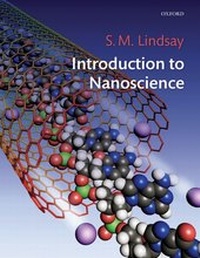
Introduction to Nanoscience
Published on 22. October 2009
Book
Paperback/Softback
480 pages
978-0-19-954421-9 (ISBN)
Description
Nanoscience is not physics, chemistry, engineering or biology. It is all of them, and it is time for a text that integrates the disciplines. This is such a text, aimed at advanced undergraduates and beginning graduate students in the sciences. The consequences of smallness and quantum behaviour are well known and described Richard Feynman's visionary essay 'There's Plenty of Room at the Bottom' (which is reproduced in this book). Another, critical, but thus far neglected, aspect of nanoscience is the complexity of nanostructures. Hundreds, thousands or hundreds of thousands of atoms make up systems that are complex enough to show what is fashionably called 'emergent behaviour'. Quite new phenomena arise from rare configurations of the system. Examples are the Kramer's theory of reactions (Chapter 3), the Marcus theory of electron transfer (Chapter 8), and enzyme catalysis, molecular motors, and fluctuations in gene expression and splicing, all covered in the final Chapter on Nanobiology.
The book is divided into three parts. Part I (The Basics) is a self-contained introduction to quantum mechanics, statistical mechanics and chemical kinetics, calling on no more than basic college calculus. A conceptual approach and an array of examples and conceptual problems will allow even those without the mathematical tools to grasp much of what is important. Part II (The Tools) covers microscopy, single molecule manipulation and measurement, nanofabrication and self-assembly. Part III (Applications) covers electrons in nanostructures, molecular electronics, nano-materials and nanobiology. Each chapter starts with a survey of the required basics, but ends by making contact with current research literature.
The book is divided into three parts. Part I (The Basics) is a self-contained introduction to quantum mechanics, statistical mechanics and chemical kinetics, calling on no more than basic college calculus. A conceptual approach and an array of examples and conceptual problems will allow even those without the mathematical tools to grasp much of what is important. Part II (The Tools) covers microscopy, single molecule manipulation and measurement, nanofabrication and self-assembly. Part III (Applications) covers electrons in nanostructures, molecular electronics, nano-materials and nanobiology. Each chapter starts with a survey of the required basics, but ends by making contact with current research literature.
Reviews / Votes
The book covers a lot of ground and combines a thoroughness of treatment with a lightness of touch. It is attractive for both undergraduate students seeking clear explanations and graduate students wanting depth. * Stephen Blundell, Oxford University *More details
Language
English
Place of publication
Oxford
United Kingdom
Target group
College/higher education
Illustrations
4pp colour plates, 280 b/w line drawings and halftones
Dimensions
Height: 246 mm
Width: 189 mm
Thickness: 25 mm
Weight
894 gr
ISBN-13
978-0-19-954421-9 (9780199544219)
Copyright in bibliographic data and cover images is held by Nielsen Book Services Limited or by the publishers or by their respective licensors: all rights reserved.
Schweitzer Classification
Other editions
Additional editions
Lindsay
Introduction to Nanoscience
Book
10/2009
Oxford University Press
€93.00
Article exhausted; check different version
Person
Stuart Martin Lindsay
Nadine and Edward Carson Professor of Physics and Chemistry
Biodesign Institute
Arizona State University
Career Highlights:
Assistant Professor, Physics, Arizona State University, 1979
Co-Founder Molecular Imaging Corporation, 1993 (now part of Agilent Technologies)
Edward and Nadine Carson Presidential Chair in Physics, 2002 -
Professor of Chemistry, 2003 -
Consultant, Agilent Technologies, 2005 -
Administrative positions
Director Center for Singe Molecule Biophysics ($1M state budget, $3M external funding)
Vice President, R&D, Molecular Imaging Corporation, 1994-2000
Interim Director, Center for Solid State Physics, 1991-1992
Associate Chair, Department of Physics, 1985 - 1989
Honors and awards:
Fellow of the American Association for the Advancement of Science, 2003.
Fellow of the American Physical Society, 1990.
R&D 100 Award, 2004
Arizona Innovator of the Year (shared) 1999.
Humbolt Senior Scientist Research Award (1993).
ASU Awards: Outstanding Graduate Mentor (1990), Faculty Distinguished Achievement Award (2007)
Nadine and Edward Carson Professor of Physics and Chemistry
Biodesign Institute
Arizona State University
Career Highlights:
Assistant Professor, Physics, Arizona State University, 1979
Co-Founder Molecular Imaging Corporation, 1993 (now part of Agilent Technologies)
Edward and Nadine Carson Presidential Chair in Physics, 2002 -
Professor of Chemistry, 2003 -
Consultant, Agilent Technologies, 2005 -
Administrative positions
Director Center for Singe Molecule Biophysics ($1M state budget, $3M external funding)
Vice President, R&D, Molecular Imaging Corporation, 1994-2000
Interim Director, Center for Solid State Physics, 1991-1992
Associate Chair, Department of Physics, 1985 - 1989
Honors and awards:
Fellow of the American Association for the Advancement of Science, 2003.
Fellow of the American Physical Society, 1990.
R&D 100 Award, 2004
Arizona Innovator of the Year (shared) 1999.
Humbolt Senior Scientist Research Award (1993).
ASU Awards: Outstanding Graduate Mentor (1990), Faculty Distinguished Achievement Award (2007)
Content
PART I: THE BASICS ; PART II: TOOLS ; PART III: APPLICATIONS