

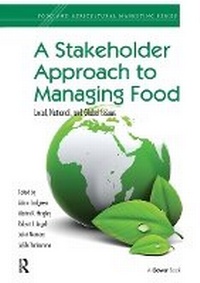
A Stakeholder Approach to Managing Food
Local, National, and Global Issues
1st Edition
Published on 24. June 2024
Book
Paperback/Softback
364 pages
978-1-032-83718-5 (ISBN)
Description
This research anthology explores the concept of food production and supply, from farm gate to plate, bringing together contemporary thinking and research on local, national, and global issues from a stakeholder perspective.
A Stakeholder Approach to Managing Food includes a number of sections to represent these challenges, opportunities, conflicts, and cohesions affecting relevant stakeholder groups within food production and supply and their reaction to, engagement with, and co-creation of the food environment. For some, local, national, and global interests may seem at odds. We are in an era of growing and pervasive multi-national corporations, and these corporations have significant influence at all levels. Rapidly growing economies such as China are a focus for the global brand, but is this a scenario of adaptation or homogenization of food?
Alongside this trend toward national and global development in food, this volume presents the counter-reaction that is taking place (especially in developed countries) toward local speciality and culturally bound foods, with emphasis on the importance of the inter-connection of local communities and agri-food culture and economy. With an in-depth analysis of agricultural businesses, this book shows that the entrepreneurial spirit is alive and well in rural communities with often renewed and engaged connection with consumers and imaginative use of new media.
This book will be of interest to students, researchers and policy-makers concerned with agriculture, food production and economics, cultural studies.
A Stakeholder Approach to Managing Food includes a number of sections to represent these challenges, opportunities, conflicts, and cohesions affecting relevant stakeholder groups within food production and supply and their reaction to, engagement with, and co-creation of the food environment. For some, local, national, and global interests may seem at odds. We are in an era of growing and pervasive multi-national corporations, and these corporations have significant influence at all levels. Rapidly growing economies such as China are a focus for the global brand, but is this a scenario of adaptation or homogenization of food?
Alongside this trend toward national and global development in food, this volume presents the counter-reaction that is taking place (especially in developed countries) toward local speciality and culturally bound foods, with emphasis on the importance of the inter-connection of local communities and agri-food culture and economy. With an in-depth analysis of agricultural businesses, this book shows that the entrepreneurial spirit is alive and well in rural communities with often renewed and engaged connection with consumers and imaginative use of new media.
This book will be of interest to students, researchers and policy-makers concerned with agriculture, food production and economics, cultural studies.
More details
Series
Language
English
Place of publication
London
United Kingdom
Publishing group
Taylor & Francis Ltd
Target group
Professional and scholarly
Professional Practice & Development
Dimensions
Height: 246 mm
Width: 174 mm
Weight
720 gr
ISBN-13
978-1-032-83718-5 (9781032837185)
Copyright in bibliographic data and cover images is held by Nielsen Book Services Limited or by the publishers or by their respective licensors: all rights reserved.
Schweitzer Classification
Other editions
Additional editions
Adam Lindgreen | Martin K. Hingley | Robert J. Angell
A Stakeholder Approach to Managing Food
Local, National, and Global Issues
Book
08/2016
1st Edition
Routledge
€207.20
Shipment within 10-20 days
Adam Lindgreen | Martin K. Hingley | Robert J. Angell
A Stakeholder Approach to Managing Food
Local, National, and Global Issues
E-Book
08/2016
Routledge
€48.49
Available for download
Adam Lindgreen | Martin K. Hingley | Robert J. Angell
A Stakeholder Approach to Managing Food
Local, National, and Global Issues
E-Book
08/2016
Routledge
€48.49
Available for download
Persons
Dr Adam Lindgreen is Professor of Marketing at Copenhagen Business School, Denmark.
Dr Martin K. Hingley is Professor of Strategic Marketing at Lincoln Business School, UK.
Dr Robert J. Angell is a lecturer at Cardiff Business School, UK.
Dr Juliet Memery is Professor of Marketing at Bournemouth University, UK.
Dr Joelle Vanhamme is Professor of Marketing at Edhec Business School, France.
Dr Martin K. Hingley is Professor of Strategic Marketing at Lincoln Business School, UK.
Dr Robert J. Angell is a lecturer at Cardiff Business School, UK.
Dr Juliet Memery is Professor of Marketing at Bournemouth University, UK.
Dr Joelle Vanhamme is Professor of Marketing at Edhec Business School, France.
Content
Contents
Part 1: Food Product and Channel Development
1. Multi-stakeholder Initiative for Sustainable Beef Production Standards
Luciana M. Vieira, Alexia Hoppe, and Luis C. Schneider
2. Managing the Quality of Potatoes: Enacting a Mundane Product from Field to Shop
Lars Esbjerg
3. How does Industry Convergence Affect Suppliers and Consumers? An Analysis of the Emerging Sectors of Functional Foods and Biopolymers
Stefanie Broering, Felix Andreae, and Nina Preschitschek
4. Novel Non-Thermal Food Preservation Technology: The Science and Industrial Implementation of High Pressure, Pulsed Electric Field and Cold Plasma
Amar Aouzelleg
5. Chia: From Tribute to Superfood
Vanessa Fonseca
Part 2: Food Policy, Regulation, Labelling, and Consumption
6. Conflicting Interests and Regulatory Systems of New Food Technologies: The Case of Nanotechnology
Valaria Sodano and Martin K. Hingley
7. Food Manufacturers?EUR? Adoption of Eco-Labels: Motives, Barriers, and Pressures
Andrea Insch and Alicia Collier
8. Consumer Understanding of and Potential for Eco-Labelling of Food
Claire May
9. Understanding Attitudes toward and Consumption of Functional Food
Robert J. Angell, Zaklina Stojanovi??, Jelena Filipovi??, and Matthew Gorton
10. Trying to Lose Weight in an ?EUR?Obesogenic?EUR? Environment: Strategies, Temptations, and Implications
Suzan Burton and Daniela Spanjaard
11. A Stakeholder Approach to Improving Compliance with Established Food Safety Practices by Workers in the Food Industry
Ewen C. D. Todd
Part 3: Sustainable Food Supply Chain
12. Changes in the Market Environment and Implications for the Supply Chain: The Case of Scottish Beef
Philip Leat and Cesar Revoredo-Giha
13. Barriers to Supply Chain Integration in the Australian Seafood Industry
David Byrom, Meredith Lawley, and Michael Clements
14. Spatial-Structural Change in Food Retailing in the UK
Leigh Sparks
15. Collaborating for Sustainability in Food Logistics and Distribution
Carlos Mena, Denyse Julien, and Vahid Mirzabeiki
16. Challenges in Power-Imbalanced Food Supply: The UK Case of Small, Specialist, and Niche Fresh Produce Relationships
Martin K. Hingley, Alan Revill, and Adam Lindgreen
17. Quality as a Competitive Advantage for the Rural Food Industry
Egil Petter Straete
18. Food Retailing in Remote Areas: Lessons from the French Polynesia Case Study
Anne-Flore Maman Larraufie and Tarek Talbi
Part 4: Socially Responsible Food
19. Sharing Values Inside/Outside the Food System: Sustainable Food Initiatives in the Netherlands
Erik de Bakker and Hans Dagevos
20. Managing Sustainability in the Seafood Supply Chain: The Confused or Ambivalent Consumer
Meredith Lawley, Dawn Birch, and Jane Craig
21. Corporate Social Responsibility Practices in Indian Food Industry: A Content Analysis
Sharad Agarwal and Ramendra Singh
22. Stores, Edible Food Waste, and Social Redistribution
Christoph Teller, Christina Holweg, and Herbert Kotzab
Part 1: Food Product and Channel Development
1. Multi-stakeholder Initiative for Sustainable Beef Production Standards
Luciana M. Vieira, Alexia Hoppe, and Luis C. Schneider
2. Managing the Quality of Potatoes: Enacting a Mundane Product from Field to Shop
Lars Esbjerg
3. How does Industry Convergence Affect Suppliers and Consumers? An Analysis of the Emerging Sectors of Functional Foods and Biopolymers
Stefanie Broering, Felix Andreae, and Nina Preschitschek
4. Novel Non-Thermal Food Preservation Technology: The Science and Industrial Implementation of High Pressure, Pulsed Electric Field and Cold Plasma
Amar Aouzelleg
5. Chia: From Tribute to Superfood
Vanessa Fonseca
Part 2: Food Policy, Regulation, Labelling, and Consumption
6. Conflicting Interests and Regulatory Systems of New Food Technologies: The Case of Nanotechnology
Valaria Sodano and Martin K. Hingley
7. Food Manufacturers?EUR? Adoption of Eco-Labels: Motives, Barriers, and Pressures
Andrea Insch and Alicia Collier
8. Consumer Understanding of and Potential for Eco-Labelling of Food
Claire May
9. Understanding Attitudes toward and Consumption of Functional Food
Robert J. Angell, Zaklina Stojanovi??, Jelena Filipovi??, and Matthew Gorton
10. Trying to Lose Weight in an ?EUR?Obesogenic?EUR? Environment: Strategies, Temptations, and Implications
Suzan Burton and Daniela Spanjaard
11. A Stakeholder Approach to Improving Compliance with Established Food Safety Practices by Workers in the Food Industry
Ewen C. D. Todd
Part 3: Sustainable Food Supply Chain
12. Changes in the Market Environment and Implications for the Supply Chain: The Case of Scottish Beef
Philip Leat and Cesar Revoredo-Giha
13. Barriers to Supply Chain Integration in the Australian Seafood Industry
David Byrom, Meredith Lawley, and Michael Clements
14. Spatial-Structural Change in Food Retailing in the UK
Leigh Sparks
15. Collaborating for Sustainability in Food Logistics and Distribution
Carlos Mena, Denyse Julien, and Vahid Mirzabeiki
16. Challenges in Power-Imbalanced Food Supply: The UK Case of Small, Specialist, and Niche Fresh Produce Relationships
Martin K. Hingley, Alan Revill, and Adam Lindgreen
17. Quality as a Competitive Advantage for the Rural Food Industry
Egil Petter Straete
18. Food Retailing in Remote Areas: Lessons from the French Polynesia Case Study
Anne-Flore Maman Larraufie and Tarek Talbi
Part 4: Socially Responsible Food
19. Sharing Values Inside/Outside the Food System: Sustainable Food Initiatives in the Netherlands
Erik de Bakker and Hans Dagevos
20. Managing Sustainability in the Seafood Supply Chain: The Confused or Ambivalent Consumer
Meredith Lawley, Dawn Birch, and Jane Craig
21. Corporate Social Responsibility Practices in Indian Food Industry: A Content Analysis
Sharad Agarwal and Ramendra Singh
22. Stores, Edible Food Waste, and Social Redistribution
Christoph Teller, Christina Holweg, and Herbert Kotzab