

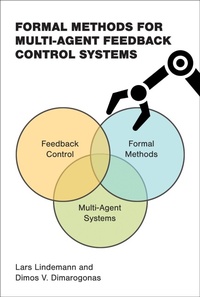
Formal Methods for Multi-Agent Feedback Control Systems
Published on 29. April 2025
Book
Paperback/Softback
328 pages
978-0-262-04971-9 (ISBN)
Description
"This book will be the first to bridge the gap between the field of formal methods and safety-critical control in cyber-physical systems"--
More details
Language
English
Place of publication
Cambridge (Massachusetts)
United States
Publishing group
MIT Press Ltd
Illustrations
87 BLACK AND WHITE ILLUS.
Dimensions
Height: 226 mm
Width: 150 mm
Thickness: 23 mm
Weight
376 gr
ISBN-13
978-0-262-04971-9 (9780262049719)
Copyright in bibliographic data and cover images is held by Nielsen Book Services Limited or by the publishers or by their respective licensors: all rights reserved.
Schweitzer Classification
Other editions
Additional editions
Lars Lindemann | Dimos V. Dimarogonas
Formal Methods for Multi-Agent Feedback Control Systems
E-Book
04/2025
MIT Press
€88.49
Available for download
Persons
Lars Lindemann is Assistant Professor in the Thomas Lord Department of Computer Science within the School of Advanced Computing at the University of Southern California.
Dimos V. Dimarogonas is Professor of Automatic Control and Head of Division at the Division of Decision and Control Systems within the School of Electrical Engineering and Computer Science at KTH Royal Institute of Technology.
Dimos V. Dimarogonas is Professor of Automatic Control and Head of Division at the Division of Decision and Control Systems within the School of Electrical Engineering and Computer Science at KTH Royal Institute of Technology.
Content
Preface ix
I Foundations 1
1 Introduction 3
1.1 Multi-Agent Control Systems...................... 3
1.2 Formal Methods for Multi-Agent Control Systems.......... 5
1.3 Outlook.................................. 6
1.4 Notes and References........................... 7
1.5 Notation.................................. 8
2 Multi-Agent Systems and Control Theory 11
2.1 Dynamical Systems............................ 12
2.2 Selected Topics from Nonlinear Control Theory............ 27
2.3 Multi-Agent Control Systems...................... 39
2.4 Notes and References........................... 42
3 Formal Methods and Spatiotemporal Logics 45
3.1 Formal Methods............................. 46
3.2 Spatiotemporal Logics.......................... 54
3.3 Timed Automata Theory........................ 64
3.4 Notes and References........................... 72
II Multi-Agent Control Barrier Functions for Spatiotemporal
Constraints 75
4 Centralized Time-Varying Control Barrier Functions 77
4.1 Time-Varying Control Barrier Functions................ 78
4.2 Encoding Signal Temporal Logic.................... 80
4.3 Control Laws based on Time-Varying Control Barrier Functions... 86
4.4 Constructing Valid Time-Varying Control Barrier Functions..... 93
4.5 Unicycle Models and Unknown Dynamics............... 102
4.6 Notes and References........................... 105
4.7 Additional Proofs............................. 106
5 Decentralized Time-Varying Control Barrier Functions 109
5.1 Decentralized Collaborative Control.................. 110
5.2 Decentralized Control under Conflicting Local Specifications..... 120
5.3 Notes and References........................... 129
5.4 Additional Proofs............................. 131
III Multi-Agent Funnel Control for Spatiotemporal Constraints
137
6 Centralized Funnel Control 139
6.1 Encoding Signal Temporal Logic.................... 141
6.2 Control Laws based on a Single Funnel................. 145
6.3 Control Laws based on Multiple Funnels................ 151
6.4 Notes and References........................... 160
6.5 Additional Proofs............................. 162
7 Decentralized Funnel Control 165
7.1 Decentralized Collaborative Funnel Control.............. 166
7.2 Decentralized Funnel Control under Conflicting Local Specifications 170
7.3 Experiments and Practical Considerations............... 178
7.4 Notes and References........................... 183
IV Planning under Spatiotemporal Logic Specifications 185
8 Timed Automata-based Planning 187
8.1 Encoding Signal Interval Temporal Logic............... 188
8.2 Timed Abstraction of Dynamical Control Systems.......... 194
8.3 Dynamically Feasible Plan Synthesis.................. 197
8.4 Notes and References........................... 200
V Moving Forward 203
9 Outlook and Open Problems 205
Bibliography 212
Index 240
I Foundations 1
1 Introduction 3
1.1 Multi-Agent Control Systems...................... 3
1.2 Formal Methods for Multi-Agent Control Systems.......... 5
1.3 Outlook.................................. 6
1.4 Notes and References........................... 7
1.5 Notation.................................. 8
2 Multi-Agent Systems and Control Theory 11
2.1 Dynamical Systems............................ 12
2.2 Selected Topics from Nonlinear Control Theory............ 27
2.3 Multi-Agent Control Systems...................... 39
2.4 Notes and References........................... 42
3 Formal Methods and Spatiotemporal Logics 45
3.1 Formal Methods............................. 46
3.2 Spatiotemporal Logics.......................... 54
3.3 Timed Automata Theory........................ 64
3.4 Notes and References........................... 72
II Multi-Agent Control Barrier Functions for Spatiotemporal
Constraints 75
4 Centralized Time-Varying Control Barrier Functions 77
4.1 Time-Varying Control Barrier Functions................ 78
4.2 Encoding Signal Temporal Logic.................... 80
4.3 Control Laws based on Time-Varying Control Barrier Functions... 86
4.4 Constructing Valid Time-Varying Control Barrier Functions..... 93
4.5 Unicycle Models and Unknown Dynamics............... 102
4.6 Notes and References........................... 105
4.7 Additional Proofs............................. 106
5 Decentralized Time-Varying Control Barrier Functions 109
5.1 Decentralized Collaborative Control.................. 110
5.2 Decentralized Control under Conflicting Local Specifications..... 120
5.3 Notes and References........................... 129
5.4 Additional Proofs............................. 131
III Multi-Agent Funnel Control for Spatiotemporal Constraints
137
6 Centralized Funnel Control 139
6.1 Encoding Signal Temporal Logic.................... 141
6.2 Control Laws based on a Single Funnel................. 145
6.3 Control Laws based on Multiple Funnels................ 151
6.4 Notes and References........................... 160
6.5 Additional Proofs............................. 162
7 Decentralized Funnel Control 165
7.1 Decentralized Collaborative Funnel Control.............. 166
7.2 Decentralized Funnel Control under Conflicting Local Specifications 170
7.3 Experiments and Practical Considerations............... 178
7.4 Notes and References........................... 183
IV Planning under Spatiotemporal Logic Specifications 185
8 Timed Automata-based Planning 187
8.1 Encoding Signal Interval Temporal Logic............... 188
8.2 Timed Abstraction of Dynamical Control Systems.......... 194
8.3 Dynamically Feasible Plan Synthesis.................. 197
8.4 Notes and References........................... 200
V Moving Forward 203
9 Outlook and Open Problems 205
Bibliography 212
Index 240