

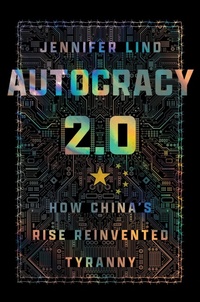
Autocracy 2.0
How China's Rise Reinvented Tyranny
Published on 15. November 2025
Book
Hardback
244 pages
978-1-5017-8414-9 (ISBN)
Description
In Autocracy 2.0, Jennifer Lind reveals how China's leaders defied expectations and propelled the country to innovation-superpower status - and what that means for the balance of power and global struggle between democracy and authoritarianism.
In 2008, the world watched in awe as 2,008 men pounded Fou drums in unison at the Beijing Olympics opening ceremony - a spectacle that heralded China's arrival as a global powerhouse. Yet even as China's economy skyrocketed, skeptics scoffed at its ability to lead in tech, arguing that its authoritarian institutions smother true innovation. Lind dismantles this assumption, showing that China has not just kept pace; it has, in fact, surged ahead.
Coupling hard data with razor-sharp analysis, Lind shows that China's ascent was fueled by what she calls "smart authoritarianism": a model of governance in which autocratic leaders temper tight political control with inclusive economic measures. By balancing proinnovation policies with tools of repression, China's leaders have obtained political control and economic growth. These smart authoritarians, Lind observes, are not the brass-knuckled dictators of the past - they are their polished Savile Row-clad progeny, and they are found not only in China but also in authoritarian regimes worldwide.
Compelling and incisive, Autocracy 2.0 is a must-read for anyone seeking to understand China's meteoric rise and how today's autocrats are reshaping the technological frontier, governance, and the global balance of power.
In 2008, the world watched in awe as 2,008 men pounded Fou drums in unison at the Beijing Olympics opening ceremony - a spectacle that heralded China's arrival as a global powerhouse. Yet even as China's economy skyrocketed, skeptics scoffed at its ability to lead in tech, arguing that its authoritarian institutions smother true innovation. Lind dismantles this assumption, showing that China has not just kept pace; it has, in fact, surged ahead.
Coupling hard data with razor-sharp analysis, Lind shows that China's ascent was fueled by what she calls "smart authoritarianism": a model of governance in which autocratic leaders temper tight political control with inclusive economic measures. By balancing proinnovation policies with tools of repression, China's leaders have obtained political control and economic growth. These smart authoritarians, Lind observes, are not the brass-knuckled dictators of the past - they are their polished Savile Row-clad progeny, and they are found not only in China but also in authoritarian regimes worldwide.
Compelling and incisive, Autocracy 2.0 is a must-read for anyone seeking to understand China's meteoric rise and how today's autocrats are reshaping the technological frontier, governance, and the global balance of power.
Reviews / Votes
"In Autocracy 2.0: How China's Rise Reinvented Tyranny, [Lind] argues that China's model of growth - what she calls smart authoritarianism - is gaining global appeal because it delivers the benefits of modernization while maintaining the ability to control its citizens. For Washington and its allies, that's a troubling combination." - BloombergMore details
Series
Language
English
Place of publication
Ithaca
United States
Product notice
Paper over boards
Illustrations
3 graphs - 3 Graphs
Dimensions
Height: 237 mm
Width: 166 mm
Thickness: 22 mm
Weight
480 gr
ISBN-13
978-1-5017-8414-9 (9781501784149)
Copyright in bibliographic data and cover images is held by Nielsen Book Services Limited or by the publishers or by their respective licensors: all rights reserved.
Schweitzer Classification
Other editions
Additional editions
E-Book
11/2025
Cornell University Press
€20.49
Available for download
Person
Jennifer Lind researches the international relations of East Asia and US foreign policy toward the region. She is Associate Professor of Government at Dartmouth College and a fellow at Chatham House, London, and at Harvard University's Reischauer Institute of Japanese Studies.