

Uncertainty
Experiments in Making from the Chinese Countryside
Will be published approx. on 10. June 2022
Book
Paperback/Softback
216 pages
978-1-954081-18-5 (ISBN)
Description
Working in rural China is unlike other countryside: it is full of contradiction, neither rural nor urban, both traditional and modern, abandoned in some areas and yet others are becoming cities overnight. It is in fact a laboratory for new ways of living. And it has become our laboratory for new ways of making architecture. Whereas contemporary architecture since the advent of modernism has developed increasingly controlled, prototypical, and standardised mechanisms for building, our experiments embrace the opposite: a lack of control, taking place within the flux of political, social and economic uncertainties.
The experiments presented here are examples taken from a series of design and build projects conducted from the Department of Architecture at the University of Hong Kong over the past 10 years. They are remarkable in their diffuse explorations and situations. Some were urgent post-earthquake reconstructions, often adapting to extreme topographies or taking place in the midst of major urbanising transformations, whereas other experiments occurred in forgotten villages with left-behind craftspeople and their disappearing building cultures. These forays and what can be best described as adventures in building, left us with varied and novel (sometimes failed) experiments with structure and program. But they are presented here for the trait they have in common: an exploration of the limits of material, geometry, construction methods, and even historical context.
The diversity manifested in this collection of projects is a direct reflection of the incredible diversity of climates, locations, and conditions that underlie the ongoing Chinese urbanisation experiment. The focus here is not on the what but the how, as each project engages with its own set of limiting factors or unideal conditions. They are stories of design, overcoming and even embracing adverse situations in order to discover some hidden advantage. Each chapter explores a different attempt to revert seemingly challenging limitations (particularly those which the architect cannot exert control over) and turn these into novel building approaches.
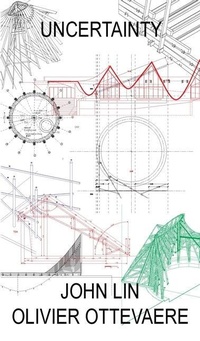
As often occurs for architects working in a foreign landscape, the differences in language and culture have proven to be a source of constant miscommunication and surprising discovery. The lack of a common spoken language-these remote areas speak their own dialects-has placed an emphasis on drawing as another means of communication. Through drawing we have explored a means of design and a means of building. Therefore, this is also a book about ways of drawing that represent ways of control and, inversely perhaps, what not to control.
The experiments presented here are examples taken from a series of design and build projects conducted from the Department of Architecture at the University of Hong Kong over the past 10 years. They are remarkable in their diffuse explorations and situations. Some were urgent post-earthquake reconstructions, often adapting to extreme topographies or taking place in the midst of major urbanising transformations, whereas other experiments occurred in forgotten villages with left-behind craftspeople and their disappearing building cultures. These forays and what can be best described as adventures in building, left us with varied and novel (sometimes failed) experiments with structure and program. But they are presented here for the trait they have in common: an exploration of the limits of material, geometry, construction methods, and even historical context.
The diversity manifested in this collection of projects is a direct reflection of the incredible diversity of climates, locations, and conditions that underlie the ongoing Chinese urbanisation experiment. The focus here is not on the what but the how, as each project engages with its own set of limiting factors or unideal conditions. They are stories of design, overcoming and even embracing adverse situations in order to discover some hidden advantage. Each chapter explores a different attempt to revert seemingly challenging limitations (particularly those which the architect cannot exert control over) and turn these into novel building approaches.
As often occurs for architects working in a foreign landscape, the differences in language and culture have proven to be a source of constant miscommunication and surprising discovery. The lack of a common spoken language-these remote areas speak their own dialects-has placed an emphasis on drawing as another means of communication. Through drawing we have explored a means of design and a means of building. Therefore, this is also a book about ways of drawing that represent ways of control and, inversely perhaps, what not to control.
More details
Language
English
Place of publication
San Rafael
United States
Product notice
Paperback (trade)
Unsewn / adhesive bound
Dimensions
Height: 206 mm
Width: 119 mm
Thickness: 18 mm
Weight
476 gr
ISBN-13
978-1-954081-18-5 (9781954081185)
Copyright in bibliographic data and cover images is held by Nielsen Book Services Limited or by the publishers or by their respective licensors: all rights reserved.
Schweitzer Classification
Persons
John Lin is an associate professor at the University of Hong Kong and the director of Rural Urban Framework (RUF), a research and design platform dedicated to developing sustainable prototypes for rapidly urbanising areas. The approach combines research into large scale processes of urbanisation and the integration of local construction practices with contemporary technology in built projects.
Olivier Ottevaere is an associate professor of practice at the University of Hong Kong. He is the director of Double (o) studio, an architecture practice focusing on the design integration of active structural principles, properties of materials, and procedures of construction.
Donn Holohan is a designer, maker, and founding partner of multidisciplinary design studio Superposition and is based in Hong Kong and Ireland. His work is focused on the potentials of emerging technology not only as it relates to the practice of architecture, but also to the question social and environmental sustainability.
Olivier Ottevaere is an associate professor of practice at the University of Hong Kong. He is the director of Double (o) studio, an architecture practice focusing on the design integration of active structural principles, properties of materials, and procedures of construction.
Donn Holohan is a designer, maker, and founding partner of multidisciplinary design studio Superposition and is based in Hong Kong and Ireland. His work is focused on the potentials of emerging technology not only as it relates to the practice of architecture, but also to the question social and environmental sustainability.