

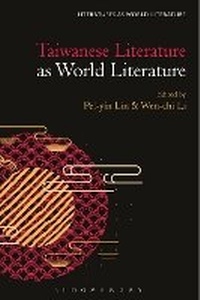
Taiwanese Literature as World Literature
Published on 25. July 2024
Book
Paperback/Softback
232 pages
978-1-5013-8138-6 (ISBN)
Description
Owing to Taiwan's multi-ethnic nature and palimpsestic colonial past, Taiwanese literature is naturally multilingual. Although it can be analyzed through frameworks of Japanophone literature and Chinese literature, and the more provocative Sinophone literature, only through viewing Taiwanese literature as world literature can we redress the limits of national identity and fully examine writers' transculturation practice, globally minded vision, and the politics of its circulation.
Throughout the colonial era, Taiwanese writers gained inspiration from global literary trends mainly but not exclusively through the medium of Japanese and Chinese. Modernism was the mainstream literary style in 1960s Taiwan, and since the 1980s Taiwanese literature has demonstrated a unique trajectory shaped jointly by postmodernism and postcolonialism. These movements exhibit Taiwanese writers' creative adaptations of world literary thought as a response to their local and trans-national reality. During the postwar years Taiwanese literature began to be more systematically introduced to world readers through translation. Over the past few decades, Taiwanese authors and their translated works have participated in global conversations, such as those on climate change, the "post-truth" era, and ethnic and gender equality.
Bringing together scholars and translators from Europe, North America, and East Asia, the volume focuses on three interrelated themes - the framing and worlding ploys of Taiwanese literature, Taiwanese writers' experience of transculturation, and politics behind translating Taiwanese literature. The volume stimulates new ways of conceptualizing Taiwanese literature, demonstrates remarkable cases of Taiwanese authors' co-option of world trends in their Taiwan-concerned writing, and explores its readership and dissemination.
Throughout the colonial era, Taiwanese writers gained inspiration from global literary trends mainly but not exclusively through the medium of Japanese and Chinese. Modernism was the mainstream literary style in 1960s Taiwan, and since the 1980s Taiwanese literature has demonstrated a unique trajectory shaped jointly by postmodernism and postcolonialism. These movements exhibit Taiwanese writers' creative adaptations of world literary thought as a response to their local and trans-national reality. During the postwar years Taiwanese literature began to be more systematically introduced to world readers through translation. Over the past few decades, Taiwanese authors and their translated works have participated in global conversations, such as those on climate change, the "post-truth" era, and ethnic and gender equality.
Bringing together scholars and translators from Europe, North America, and East Asia, the volume focuses on three interrelated themes - the framing and worlding ploys of Taiwanese literature, Taiwanese writers' experience of transculturation, and politics behind translating Taiwanese literature. The volume stimulates new ways of conceptualizing Taiwanese literature, demonstrates remarkable cases of Taiwanese authors' co-option of world trends in their Taiwan-concerned writing, and explores its readership and dissemination.
Reviews / Votes
Offering a fascinating range of topics and perspectives, this volume engages with the linguistic, ethnic, social, and historical complexities that make Taiwanese literature an ever-challenging field of inquiry. * Henning Kloeter, Professor of Modern Chinese Languages and Literatures, Humboldt-Universitaet zu Berlin, Germany * Taiwanese Literature as World Literature brings together East Asian Studies and World Literature to challenge literary studies in the 21st century. It asks questions about the categories we use to define our literary subjects and the methods we apply to them. Taiwanese literature - in its unique trajectory of development within the entangled contexts of contemporary Sinophone, East Asia, and world - offers us opportunities to reflect on positions, perspectives, and methods of these literary fields, and, at the same time, showcases its worldliness, its rich multifarious heritage, and its unique voices. * Wen-Chin Ouyang, Professor of Arabic and Comparative Literature, SOAS University of London, UK *More details
Series
Language
English
Place of publication
New York
United States
Publishing group
Bloomsbury Publishing Plc
Target group
College/higher education
Dimensions
Height: 228 mm
Width: 150 mm
Thickness: 16 mm
Weight
340 gr
ISBN-13
978-1-5013-8138-6 (9781501381386)
Copyright in bibliographic data and cover images is held by Nielsen Book Services Limited or by the publishers or by their respective licensors: all rights reserved.
Schweitzer Classification
Other editions
Additional editions
Pei-yin Lin | Wen-chi Li
Taiwanese Literature as World Literature
E-Book
12/2022
1st Edition
Bloomsbury Academic USA
€33.99
Available for download
Pei-yin Lin | Wen-chi Li
Taiwanese Literature as World Literature
E-Book
12/2022
1st Edition
Bloomsbury Academic USA
€33.99
Available for download
Persons
Pei-yin Lin is Associate Professor in the School of Chinese at the University of Hong Kong, Hong Kong. She is author or editor of multiple books, most recently Gender and Ethnicity in Taiwanese Literature: Japanese Colonial Era to Present Day (2021) and Positioning Taiwan in a Global Context: Being and Becoming (2019, co-edited with Bi-yu Chang).
Wen-chi Li is Susan Manning Fellow at the Institute for Advanced Studies in Humanities, University of Edinburgh, UK. A translator of Taiwanese literature, he won first prize in the 2018 John Dryden Translation Competition.
Wen-chi Li is Susan Manning Fellow at the Institute for Advanced Studies in Humanities, University of Edinburgh, UK. A translator of Taiwanese literature, he won first prize in the 2018 John Dryden Translation Competition.
Content
Editorial Notes
Foreword
Karen Thornber (Harvard University, USA)
Introduction: Framing Taiwanese Literature as World Literature
Pei-yin Lin (University of Hong Kong, Hong Kong) and Wen-chi Li (University of Edinburgh, UK)
Part I. Bridging Taiwan and the World: Framework and Tactics
1. Taiwanese Literature in Two Transnational Contexts: Sinophone Literature and World Literature
Kuei-fen Chiu (National Chung Hsing University, Taiwan)
2. Worlding Taiwan: Taiwanese Literature's Contingent Constructions
Carlos Rojas (Duke University, USA)
3. Worlding Modalities of Taiwanese Literature: Family Saga, Autobiographical Narrative, and Bildungsroman
Pei-yin Lin (University of Hong Kong, Hong Kong)
Part II. Bringing the World Home: Transcultural Practice in Taiwanese Literature
4. Reading Taiwan through Japanese and French Literatures: The Surrealism of Le Moulin Poetry Society
Yi-chen Liu (Meiji University, Japan) (translated by Blake Brownrigg)
5. Responsible Primitivism: Wu Ming-yi's The Man with the Compound Eyes as Indigenous-Themed Environmental World Literature
Darryl Sterk (Lingnan University, Hong Kong)
6. The Foreign at Home: World Literature, Viral Postmodernism, and Notes of a Desolate Man
Nicholas A. Kaldis (Binghamton University, SUNY, USA)
Part III. Bringing Taiwan to the World: Taiwanese Literature in Translation
7. Anthologizing Taiwan: Taiwanese Literature toward the Anglophone World
John Balcom (Middlebury Institute of International Studies, USA)
8. Settling in the World Republic of Letters: Taiwanese Literature in French
Gwennael Gaffric (Jean Moulin University-Lyon 3, France)
9. Voices from Alternative Literary Fields: Translating Taiwanese Literature into Italian
Federica Passi (Ca' Foscari University of Venice, Italy)
10. From Taiwan's Literature to Taiwanese Literature: A Paradigm Shift in Japanese Translation
Ying-che Huang (Aichi University, Japan) (translated by Sherlon Chi-yin Ip)
11. Made in Taiwan: Reading Chiu Miao-chin's Lesbian Tales as World Literature
Wen-chi Li (University of Edinburgh, UK)
12. Translation Matters: The Case of The Butcher's Wife in English
Sheng-chi Hsu (University of Warwick, UK)
Notes on Contributors
Acknowledgments
Index
Foreword
Karen Thornber (Harvard University, USA)
Introduction: Framing Taiwanese Literature as World Literature
Pei-yin Lin (University of Hong Kong, Hong Kong) and Wen-chi Li (University of Edinburgh, UK)
Part I. Bridging Taiwan and the World: Framework and Tactics
1. Taiwanese Literature in Two Transnational Contexts: Sinophone Literature and World Literature
Kuei-fen Chiu (National Chung Hsing University, Taiwan)
2. Worlding Taiwan: Taiwanese Literature's Contingent Constructions
Carlos Rojas (Duke University, USA)
3. Worlding Modalities of Taiwanese Literature: Family Saga, Autobiographical Narrative, and Bildungsroman
Pei-yin Lin (University of Hong Kong, Hong Kong)
Part II. Bringing the World Home: Transcultural Practice in Taiwanese Literature
4. Reading Taiwan through Japanese and French Literatures: The Surrealism of Le Moulin Poetry Society
Yi-chen Liu (Meiji University, Japan) (translated by Blake Brownrigg)
5. Responsible Primitivism: Wu Ming-yi's The Man with the Compound Eyes as Indigenous-Themed Environmental World Literature
Darryl Sterk (Lingnan University, Hong Kong)
6. The Foreign at Home: World Literature, Viral Postmodernism, and Notes of a Desolate Man
Nicholas A. Kaldis (Binghamton University, SUNY, USA)
Part III. Bringing Taiwan to the World: Taiwanese Literature in Translation
7. Anthologizing Taiwan: Taiwanese Literature toward the Anglophone World
John Balcom (Middlebury Institute of International Studies, USA)
8. Settling in the World Republic of Letters: Taiwanese Literature in French
Gwennael Gaffric (Jean Moulin University-Lyon 3, France)
9. Voices from Alternative Literary Fields: Translating Taiwanese Literature into Italian
Federica Passi (Ca' Foscari University of Venice, Italy)
10. From Taiwan's Literature to Taiwanese Literature: A Paradigm Shift in Japanese Translation
Ying-che Huang (Aichi University, Japan) (translated by Sherlon Chi-yin Ip)
11. Made in Taiwan: Reading Chiu Miao-chin's Lesbian Tales as World Literature
Wen-chi Li (University of Edinburgh, UK)
12. Translation Matters: The Case of The Butcher's Wife in English
Sheng-chi Hsu (University of Warwick, UK)
Notes on Contributors
Acknowledgments
Index