

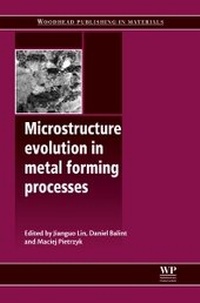
Microstructure Evolution in Metal Forming Processes
Published on 9. July 2012
Book
Hardback
416 pages
978-0-85709-074-4 (ISBN)
Description
Monitoring and control of microstructure evolution in metal processing is essential in developing the right properties in a metal. Microstructure evolution in metal forming processes summarises the wealth of recent research on the mechanisms, modelling and control of microstructure evolution during metal forming processes.
Part one reviews the general principles involved in understanding and controlling microstructure evolution in metal forming. Techniques for modelling microstructure and optimising processes are explored, along with recrystallisation, grain growth, and severe plastic deformation. Microstructure evolution in the processing of steel is the focus of part two, which reviews the modelling of phase transformations in steel, unified constitutive equations and work hardening in microalloyed steels. Part three examines microstructure evolution in the processing of other metals, including ageing behaviour in the processing of aluminium and microstructure control in processing nickel, titanium and other special alloys.
With its distinguished editors and international team of expert contributors, Microstructure evolution in metal forming processes is an invaluable reference tool for metal processors and those using steels and other metals, as well as an essential guide for academics and students involved in fundamental metal research.
Part one reviews the general principles involved in understanding and controlling microstructure evolution in metal forming. Techniques for modelling microstructure and optimising processes are explored, along with recrystallisation, grain growth, and severe plastic deformation. Microstructure evolution in the processing of steel is the focus of part two, which reviews the modelling of phase transformations in steel, unified constitutive equations and work hardening in microalloyed steels. Part three examines microstructure evolution in the processing of other metals, including ageing behaviour in the processing of aluminium and microstructure control in processing nickel, titanium and other special alloys.
With its distinguished editors and international team of expert contributors, Microstructure evolution in metal forming processes is an invaluable reference tool for metal processors and those using steels and other metals, as well as an essential guide for academics and students involved in fundamental metal research.
Reviews / Votes
"...gives a rounded picture of the current state of the science...comprehensive and up-to-date, with practical examples of application and a wealth of references."--International Journal of Environmental Studies, Vol 70, Issue 1-13This book should find a place on the bookshelf of every materials department library 10/10., Materials World
More details
Series
Language
English
Place of publication
Cambridge
United Kingdom
Publishing group
Elsevier Science & Technology
Target group
College/higher education
Dimensions
Height: 234 mm
Width: 156 mm
Weight
760 gr
ISBN-13
978-0-85709-074-4 (9780857090744)
Copyright in bibliographic data and cover images is held by Nielsen Book Services Limited or by the publishers or by their respective licensors: all rights reserved.
Schweitzer Classification
Other editions
Additional editions
Microstructure Evolution in Metal Forming Processes
Modelling and Applications
E-Book
07/2012
Woodhead Publishing Ltd
€185.00
Available for download
Persons
Jianguo Lin is Professor of Mechanics of Materials in the Department of Mechanical Engineering at Imperial College London, UK. Daniel Balint is a Lecturer in the Department of Mechanical Engineering at Imperial College London, UK. Maciej Pietrzyk is Professor of Metallurgy and Materials Science and Head of the Department of Applied Computational Science and Modelling at the AGH University of Science and Technology, Poland.
Content
Contributor contact details
Part I: General principles
Chapter 1: Understanding and controlling microstructural evolution in metal forming: an overview
Chapter 2: Techniques for modelling microstructure in metal forming processes
Chapter 3: Modelling techniques for optimizing metal forming processes
Chapter 4: Recrystallisation and grain growth in hot working of steels
Chapter 5: Severe plastic deformation for grain refinement and enhancement of properties
Part II: Microstructure evolution in the processing of steel
Chapter 6: Modelling phase transformations in steel
Chapter 7: Determining unified constitutive equations for modelling hot forming of steel
Chapter 8: Modelling phase transformations in hot stamping and cold die quenching of steels
Chapter 9: Modelling microstructure evolution and work hardening in conventional and ultrafine-grained microalloyed steels
Part III: Microstructure evolution in the processing of other metals
Chapter 10: Aging behavior and microstructure evolution in the processing of aluminum alloys
Chapter 11: Microstructure control in creepaEUR"age forming of aluminium panels
Chapter 12: Microstructure control in processing nickel, titanium and other special alloys
Index
Part I: General principles
Chapter 1: Understanding and controlling microstructural evolution in metal forming: an overview
Chapter 2: Techniques for modelling microstructure in metal forming processes
Chapter 3: Modelling techniques for optimizing metal forming processes
Chapter 4: Recrystallisation and grain growth in hot working of steels
Chapter 5: Severe plastic deformation for grain refinement and enhancement of properties
Part II: Microstructure evolution in the processing of steel
Chapter 6: Modelling phase transformations in steel
Chapter 7: Determining unified constitutive equations for modelling hot forming of steel
Chapter 8: Modelling phase transformations in hot stamping and cold die quenching of steels
Chapter 9: Modelling microstructure evolution and work hardening in conventional and ultrafine-grained microalloyed steels
Part III: Microstructure evolution in the processing of other metals
Chapter 10: Aging behavior and microstructure evolution in the processing of aluminum alloys
Chapter 11: Microstructure control in creepaEUR"age forming of aluminium panels
Chapter 12: Microstructure control in processing nickel, titanium and other special alloys
Index