

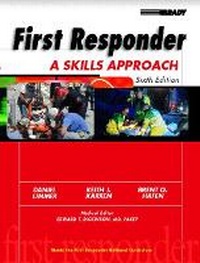
First Responder
A Skills Approach
6th Edition
Published on 5. December 2003
Book
Paperback/Softback
600 pages
978-0-13-098272-8 (ISBN)
Description
For First Responder courses.
The most comprehensive first responder book/multimedia package available. Featuring an easy-to-read, step-by-step format that has made the text a student favorite for over a decade, it goes well beyond the national standards set by the U.S. government to fully cover the D.O.T. Curriculum, offers expanded coverage of common medical emergencies not covered in the D.O.T. curriculum, and includes a variety of "enrichment" materials.
The most comprehensive first responder book/multimedia package available. Featuring an easy-to-read, step-by-step format that has made the text a student favorite for over a decade, it goes well beyond the national standards set by the U.S. government to fully cover the D.O.T. Curriculum, offers expanded coverage of common medical emergencies not covered in the D.O.T. curriculum, and includes a variety of "enrichment" materials.
More details
Edition
6th edition
Language
English
Place of publication
United States
Publishing group
Pearson Education (US)
Target group
Professional and scholarly
Dimensions
Height: 275 mm
Width: 210 mm
Thickness: 20 mm
Weight
1252 gr
ISBN-13
978-0-13-098272-8 (9780130982728)
Copyright in bibliographic data and cover images is held by Nielsen Book Services Limited or by the publishers or by their respective licensors: all rights reserved.
Schweitzer Classification
Other editions
New editions
Book
12/2006
7th Edition
Pearson
€94.11
Article is exhausted; no reprint
Previous edition

Book
10/1997
5th Edition
BradyGames
€59.62
Article exhausted; check for reprint
Content
MODULE 1.
1. Introduction to the EMS System.
2. The Well-Being of the First Responder.
3. Legal and Ethical Issues.
4. The Human Body.
5. Lifting and Moving Patients.
MODULE 2.
6. Airway.
MODULE 3.
7. Circulation.
8. Automated External Defibrillation.
MODULE 4.
9. Scene Size-up.
10. Patient Assessment Principles.
11. Assessment of Medical and Trauma Patients.
12. Communication and Documentation.
MODULE 5.
13. Cardiac and Respiratory Emergencies.
14. Medical Emergencies.
15. Environmental Emergencies.
16. Psychological Emergencies and Crisis Intervention.
17. Bleeding and Shock.
18. Soft-Tissue Injuries.
19. Injuries to the Chest, Abdomen, and Genitalia.
20. Burn Emergencies.
21. Agricultural and Industrial Emergencies.
22. Injuries to the Head, Face, and Neck.
23. Injuries to the Spine.
24. Musculoskeletal Injuries.
MODULE 6.
25. Childbirth.
26. Infants and Children.
27. Geriatric Patients.
MODULE 7.
28. EMS Operations.
29. Hazardous Material Incidents and Emergencies.
30. Multiple Casualty Incidents and Incident Command.
31. Water Emergencies.
32. Vehicle Stabilization and Patient Extrications.
33. Special Rescue Situations.
1. Introduction to the EMS System.
2. The Well-Being of the First Responder.
3. Legal and Ethical Issues.
4. The Human Body.
5. Lifting and Moving Patients.
MODULE 2.
6. Airway.
MODULE 3.
7. Circulation.
8. Automated External Defibrillation.
MODULE 4.
9. Scene Size-up.
10. Patient Assessment Principles.
11. Assessment of Medical and Trauma Patients.
12. Communication and Documentation.
MODULE 5.
13. Cardiac and Respiratory Emergencies.
14. Medical Emergencies.
15. Environmental Emergencies.
16. Psychological Emergencies and Crisis Intervention.
17. Bleeding and Shock.
18. Soft-Tissue Injuries.
19. Injuries to the Chest, Abdomen, and Genitalia.
20. Burn Emergencies.
21. Agricultural and Industrial Emergencies.
22. Injuries to the Head, Face, and Neck.
23. Injuries to the Spine.
24. Musculoskeletal Injuries.
MODULE 6.
25. Childbirth.
26. Infants and Children.
27. Geriatric Patients.
MODULE 7.
28. EMS Operations.
29. Hazardous Material Incidents and Emergencies.
30. Multiple Casualty Incidents and Incident Command.
31. Water Emergencies.
32. Vehicle Stabilization and Patient Extrications.
33. Special Rescue Situations.