

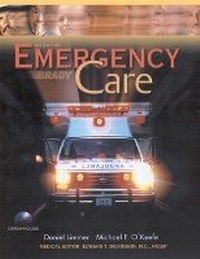
Emergency Care w/CD-ROM (Cloth Version)
10th Edition
Published on 26. May 2005
Book
Hardback
1104 pages
978-0-13-114231-2 (ISBN)
Description
For EMT Basic courses. Emergency Care, 10/E has prepared more students to pass state and/or the National Registry Exam than any other text on the market with well-organized, clearly presented content, thorough coverage of patient assessment, an accessible reading level, high quality artwork, and outstanding skill scans of equipment and procedures. Case studies and practical tips from the field tie chapter concepts to real world applications. Each chapter sends students to the Companion Website where there are links to EMS-related sites. A new in-text CD provides extra information to help students master concepts.
Reviews / Votes
"I am an Emergency Medicine Physician, fellowship trained in Emergency Medical Services. I have reviewed the airway chapter in the 10th edition of Emergency Care, for an EMT-B course for which I am serving as Medical Director. The chapter is excellent. It clearly states the goals, and objectives, and covers the subject with a great balance of concisely written text, pictures, and diagrams." - Ron Crafton, MD, Medical Director, EMS Academy of LouisvilleMore details
Edition
10th edition
Language
English
Place of publication
United States
Publishing group
Pearson Education (US)
Target group
Professional and scholarly
Dimensions
Height: 284 mm
Width: 225 mm
Thickness: 46 mm
Weight
2500 gr
ISBN-13
978-0-13-114231-2 (9780131142312)
Copyright in bibliographic data and cover images is held by Nielsen Book Services Limited or by the publishers or by their respective licensors: all rights reserved.
Schweitzer Classification
Other editions
New editions
Book
09/2008
11th Edition
Pearson
€53.40
Article exhausted; check for reprint
Content
I. PREPARATORY.
1. Introduction to Emergency Medical Care.
2. The Well-Being of the EMT-Basic.
3. Medical/Legal and Ethical Issues.
4. The Human Body.
5. Lifting and Moving Patients.
II. AIRWAY.
6. Airway Management.
III. PATIENT ASSESSMENT.
7. Scene Size-up.
8. The Initial Assessment.
9. Vital Signs and SAMPLE History.
10. Assessment of the Trauma Patient.
11. Assessment of the Medical Patient.
12. Ongoing Assessment.
13. Communications.
14. Documentation.
IV. MEDICAL EMERGENCIES.
15. General Pharmacology.
16. Respiratory Emergencies.
17. Cardiac Emergencies.
18. Acute Abdominal Emergencies.
19. Diabetic Emergencies and Altered Mental Status.
20. Allergic Reactions.
21. Poisoning and Overdose Emergencies.
22. Environmental Emergencies.
23. Behavioral Emergencies.
24. Obstetrics and Gynecological Emergencies.
25. Putting It All Together for the Medical Patient.
V. TRAUMA.
26. Bleeding and Shock.
27. Soft-Tissue Injuries.
28. Musculoskeletal Injuries.
29. Injuries to the Head and Spine.
30. Putting It All Together for the Trauma Patient.
VI. YOUNGER AND OLDER PATIENTS.
31. Infants and Children.
32. Geriatric Patients.
VII. OPERATIONS.
33. Ambulance Operations.
34. Gaining Access and Rescue Operations.
35. Special Operations.
36. EMS Response to Terrorism.
VIII. ADVANCED AIRWAY MANAGEMENT.
37. Advanced Airway Management.
APPENDICES.
Appendix A: ALS-Assist Skills.
Appendix B: National Registry Skill Sheets.
Appendix C: Basic Cardiac Life Support Review.
REFERENCE SECTION.
Anatomy and Physiology Illustrations.
Atlas of Injuries.
Medical Terminology.
Glossary.
Index.
1. Introduction to Emergency Medical Care.
2. The Well-Being of the EMT-Basic.
3. Medical/Legal and Ethical Issues.
4. The Human Body.
5. Lifting and Moving Patients.
II. AIRWAY.
6. Airway Management.
III. PATIENT ASSESSMENT.
7. Scene Size-up.
8. The Initial Assessment.
9. Vital Signs and SAMPLE History.
10. Assessment of the Trauma Patient.
11. Assessment of the Medical Patient.
12. Ongoing Assessment.
13. Communications.
14. Documentation.
IV. MEDICAL EMERGENCIES.
15. General Pharmacology.
16. Respiratory Emergencies.
17. Cardiac Emergencies.
18. Acute Abdominal Emergencies.
19. Diabetic Emergencies and Altered Mental Status.
20. Allergic Reactions.
21. Poisoning and Overdose Emergencies.
22. Environmental Emergencies.
23. Behavioral Emergencies.
24. Obstetrics and Gynecological Emergencies.
25. Putting It All Together for the Medical Patient.
V. TRAUMA.
26. Bleeding and Shock.
27. Soft-Tissue Injuries.
28. Musculoskeletal Injuries.
29. Injuries to the Head and Spine.
30. Putting It All Together for the Trauma Patient.
VI. YOUNGER AND OLDER PATIENTS.
31. Infants and Children.
32. Geriatric Patients.
VII. OPERATIONS.
33. Ambulance Operations.
34. Gaining Access and Rescue Operations.
35. Special Operations.
36. EMS Response to Terrorism.
VIII. ADVANCED AIRWAY MANAGEMENT.
37. Advanced Airway Management.
APPENDICES.
Appendix A: ALS-Assist Skills.
Appendix B: National Registry Skill Sheets.
Appendix C: Basic Cardiac Life Support Review.
REFERENCE SECTION.
Anatomy and Physiology Illustrations.
Atlas of Injuries.
Medical Terminology.
Glossary.
Index.