

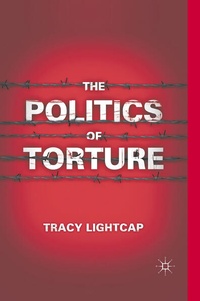
The Politics of Torture
Published on 9. August 2011
Book
Paperback/Softback
XI, 211 pages
978-1-349-29552-4 (ISBN)
Description
Why did it happen? Why did the United States begin to torture detainees during the War on Terror? Instead of an indictment, this book presents an explanation. Crises produce rare opportunities for overcoming the domestic and foreign policylogjams facing political leaders. But what if the projects used to address the crisis and provide cover for their domestic policy initiatives come under serious threat from clandestine opponents? Then the restraints on interrogation can be overwhelmed, leading to the creation ofinformal institutions that allow the official establishment of torture. These ideas are tested using comparative historical narratives drawn from two cases where torture was adopted - the War on Terror and the Stalinist Terror - and one where it was not - the Mexican War. The book concludes with some thoughts about how the United States can avoid the legal establishment of torture in the future.
Reviews / Votes
'Tracy Lightcap's analysis of comparative case studies of interrogation policy is a sophisticated work of scholarship, which is well written, well organized, and carefully sourced. His use of the framework of political time provides valuable analytical leverage in understanding the use of interrogation policy in different political regimes and in different historical eras.' - James P. Pfiffner, George Mason University, USA, and author of Torture as Public Policy
More details
Edition
1st ed. 2011
Language
English
Place of publication
New York
United States
Target group
Professional and scholarly
Illustrations
XI, 211 p.
Dimensions
Height: 229 mm
Width: 152 mm
Thickness: 13 mm
Weight
332 gr
ISBN-13
978-1-349-29552-4 (9781349295524)
DOI
10.1057/9780230339224
Schweitzer Classification
Other editions
Additional editions
Person
TRACY LIGHTCAP
Professor of Political Science and Chairman of the Department of Political Science at LaGrange College, USA.
Content
1. Introduction 2. Questions, Designs, and Mechanisms A. Appendix One: Methods Used for Table 1.1 4. Crisis and Opportunity in the United States and the Soviet Union 5. The Mechanism Fails: The United States and the Mexican War 6. Torture and Leadership Projects B. Appendix Two: Personality and Leadership 7. Conclusions