

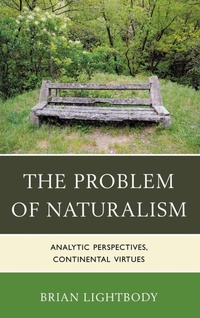
The Problem of Naturalism
Analytic Perspectives, Continental Virtues
Published on 9. May 2013
Book
Hardback
146 pages
978-0-7391-6483-9 (ISBN)
Description
Philosophers often use the term "naturalism' in order to describe their work. It is commonplace to see a metaphysical, epistemological and/or ethical position self-described and described by others as one that is "naturalized." But what, if anything, does the term naturalized add--or subtract---to the position being articulated? I demonstrate in The Problem of Naturalism: Analytic and Continental Perspectives, that the term naturalism connotes such a broad meaning that it is difficult to demarcate naturalism from philosophy itself.
Still, many philosophers have tried to provide non-trivial and non-vacuous definitions of the term. My book, by and large, argues that such attempts are unsuccessful. Instead, I argue that naturalism is an attitude and neither a methodology nor a substantive position. I then articulate the guidelines the naturalist needs to follow, as well as the virtues he or she needs to practice, in order for the term naturalism to do any meaningful work.
Much of the book explains and then critiques the various attempts to define naturalism in the Anglo-American secondary literature. Some of the criticisms I raise seem to emanate from the internal logic of the naturalistic position being expressed. However, others have emerged from gleaning the work of such Continental thinkers as: Nietzsche, Husserl, Heidegger and Foucault. I use these thinkers in order to expose the unjustified implicit and sometimes explicit assumptions that many naturalistic philosophers presume to hold when they attempt to render a clear, distinct and robust naturalist position.
Still, many philosophers have tried to provide non-trivial and non-vacuous definitions of the term. My book, by and large, argues that such attempts are unsuccessful. Instead, I argue that naturalism is an attitude and neither a methodology nor a substantive position. I then articulate the guidelines the naturalist needs to follow, as well as the virtues he or she needs to practice, in order for the term naturalism to do any meaningful work.
Much of the book explains and then critiques the various attempts to define naturalism in the Anglo-American secondary literature. Some of the criticisms I raise seem to emanate from the internal logic of the naturalistic position being expressed. However, others have emerged from gleaning the work of such Continental thinkers as: Nietzsche, Husserl, Heidegger and Foucault. I use these thinkers in order to expose the unjustified implicit and sometimes explicit assumptions that many naturalistic philosophers presume to hold when they attempt to render a clear, distinct and robust naturalist position.
Reviews / Votes
Blending analytic and continental traditions, Brian Lightbody offers a wonderfully clear and comprehensive exploration of the struggle to be thoroughly naturalistic. While extolling the attitudes of naturalistic philosophers who dare to unearth metaphysical assumptions in others, Lightbody warns us of the more difficult task: to ferret out our own ideological baggage, to be mindful, especially, of the circularity inherent in the knower and the known. -- Malcolm Murray, University of Prince Edward IslandMore details
Language
English
Place of publication
United States
Publishing group
Bloomsbury Publishing Plc
Target group
Professional and scholarly
Dimensions
Height: 235 mm
Width: 157 mm
Thickness: 13 mm
Weight
373 gr
ISBN-13
978-0-7391-6483-9 (9780739164839)
Copyright in bibliographic data and cover images is held by Nielsen Book Services Limited or by the publishers or by their respective licensors: all rights reserved.
Schweitzer Classification
Other editions
Additional editions
E-Book
05/2013
1st Edition
Lexington Books
€78.49
Available for download
E-Book
05/2013
1st Edition
Lexington Books
€78.49
Available for download
Person
Brian Lightbody is associate professor of philosophy at Brock University in Ontario, Canada. He is the author of Philosophical Genealogy and co-editor of The Logic ofIncarnation. He has authored numerous articles and book chapters on such thinkers as: Nietzsche, Foucault, Haack and Marcuse.
Content
Introduction
Chapter One: What is Naturalism?
Chapter Two: Methodological Naturalism
Chapter Three: Substance Naturalism
Chapter Four: Varieties of Naturalism: Ontological Naturalism
Chapter Five: Varieties of Naturalism: Epistemological Naturalism
Chapter Six: Varieties of Naturalism: Ethical Naturalism
Conclusion
Endnotes
Bibliography
Chapter One: What is Naturalism?
Chapter Two: Methodological Naturalism
Chapter Three: Substance Naturalism
Chapter Four: Varieties of Naturalism: Ontological Naturalism
Chapter Five: Varieties of Naturalism: Epistemological Naturalism
Chapter Six: Varieties of Naturalism: Ethical Naturalism
Conclusion
Endnotes
Bibliography