

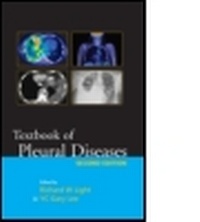
Textbook of Pleural Diseases Second Edition
2nd Edition
Published on 25. April 2008
Book
Hardback
672 pages
978-0-340-94017-4 (ISBN)
Description
This internationally renowned reference work is a fully updated and expanded second edition of the most comprehensive title available on pleural diseases.
Building on the many strengths of the highly respected first edition, the book features a detailed yet lucid basic science section to support understanding of the physiological and pathophysiological mechanisms that underlie diseases of the pleura. This is followed by a wide-ranging series of clinical chapters, discussing both familiar and less common aspects of pleural diseases.
Chapters in the clinical section are written in an accessible and uniform style, making extensive use of illustrative material and covering definition, incidence and epidemiology, etiology and pathogenesis, clinical presentation, investigations, treatments, possible complications and directions for future development. State-of-the-art scientific knowledge is presented at an appropriate level for the practicing clinician, and published management guidelines are included where relevant. Each chapter concludes with a summary of its 'key points', highlighting practical messages regarding patient management for the reader.
Textbook of Pleural Diseases is an indispensable reference for pulmonary physicians and trainees worldwide.
Building on the many strengths of the highly respected first edition, the book features a detailed yet lucid basic science section to support understanding of the physiological and pathophysiological mechanisms that underlie diseases of the pleura. This is followed by a wide-ranging series of clinical chapters, discussing both familiar and less common aspects of pleural diseases.
Chapters in the clinical section are written in an accessible and uniform style, making extensive use of illustrative material and covering definition, incidence and epidemiology, etiology and pathogenesis, clinical presentation, investigations, treatments, possible complications and directions for future development. State-of-the-art scientific knowledge is presented at an appropriate level for the practicing clinician, and published management guidelines are included where relevant. Each chapter concludes with a summary of its 'key points', highlighting practical messages regarding patient management for the reader.
Textbook of Pleural Diseases is an indispensable reference for pulmonary physicians and trainees worldwide.
Reviews / Votes
"This is a clearly presented multi-author textbook of pleural diseases ... This book offers an encyclopaedic coverage of pleural disease, and should find a place in every respiratory department."British Journal of Hospital Medicine
More details
Edition
2nd New edition
Language
English
Place of publication
London
United Kingdom
Publishing group
Taylor & Francis Ltd
Target group
Professional and scholarly
Edition type
New edition
Illustrations
78 s/w Zeichnungen, 58 Farbfotos bzw. farbige Rasterbilder, 239 s/w Photographien bzw. Rasterbilder, 58 farbige Abbildungen, 317 s/w Abbildungen
78 b/w line, 239 b/w halftone, 58 color plates; 78 Line drawings, black and white; 58 Halftones, color; 239 Halftones, black and white; 58 Illustrations, color; 317 Illustrations, black and white
Dimensions
Height: 279 mm
Width: 219 mm
Weight
1814 gr
ISBN-13
978-0-340-94017-4 (9780340940174)
Copyright in bibliographic data and cover images is held by Nielsen Book Services Limited or by the publishers or by their respective licensors: all rights reserved.
Schweitzer Classification
Other editions
Previous edition
Richard W. Light | Y. C. Gary Lee
Textbook of Pleural Diseases
Book
05/2003
1st Edition
Hodder Arnold
€225.80
Article exhausted; check for reprint
Persons
Richard W Light MD FCCP Professor of Medicine, Vanderbilt University, Nashville, TN, USA
YC Gary Lee MBChB PhD FRACP FCCP Consultant Chest Physician and Senior Lecturer, Oxford Centre for Respiratory Medicine and University of Oxford, Oxford, UK; Research Team Leader, Centre for Respiratory Research, University College London, London, UK; and Associate Professor (Honorary), University of Western Australia, Perth, Australia
YC Gary Lee MBChB PhD FRACP FCCP Consultant Chest Physician and Senior Lecturer, Oxford Centre for Respiratory Medicine and University of Oxford, Oxford, UK; Research Team Leader, Centre for Respiratory Research, University College London, London, UK; and Associate Professor (Honorary), University of Western Australia, Perth, Australia
Content
1 Pleural disease: historic perspective
PART ONE: Basic Science
2 Anatomy of the pleura
3 Mesothelial cells
4 Normal physiological fluid and cellular contents
5 Physiology: fluid and solute exchange in normal physiological states
6 Physiology: changes with pleural effusion and pneumothorax
7 Pleural inflammation and infection
8 Immunology
9 Pleural fibrosis
10 Pleural reaction to mineral dusts
11 Genetic alterations in mesothelioma pathogenesis
12 Proteomics in pleural disease
13 Pleural pharmacokinetics
14 Experimental models: pleural disease other than mesothelioma
15 Experimental models: mesothelioma
PART TWO: Clinical Science
16 Approach to patients with pleural diseases
17 Pleural fluid analysis
18 Pleural manometry
19 Radiology: diagnostic
20 Radiology: interventional
21 Radiology: pleural ultrasound
22 Pathology: histology
23 Pathology: cytology
EFFUSIONS
24 Effusions from cardiac diseases
25 Effusions from malignancy
26 Effusions from infections: parapneumonic effusions and empyema
27 Effusions from infections: tuberculosis
28 Effusions from infections: atypical infections
29 Effusions from lymphatic disruptions
30 Effusions from vascular causes
31 Effusions in immunocompromised hosts
32 Effusions from connective tissue diseases
33 Effusions caused by drugs
34 Effusions after surgery
35 Hepatic hydrothorax
36 Effusions caused by gastrointestinal disease
37 Effusions of obstetric or gynecological origin
38 Benign fibrous tumor of the pleura
39 Undiagnosed pleural effusions
ASBESTOS-RELATED DISEASES
40 Asbestos-related pleural diseases
41 Malignant mesothelioma
PNEUMOTHORAX
42 Spontaneous pneumothorax
43 Non-spontaneous pneumothorax
PEDIATRIC CONSIDERATIONS
44 Pediatric pleural diseases
INTERVENTION PROCEDURES
45 Drainage techniques
46 Pleurodesis
47 Medical thoracoscopy
48 Surgery for pleural diseases
49 Gene therapy in pleural diseases
CONCLUSION
50 Future directions
PART ONE: Basic Science
2 Anatomy of the pleura
3 Mesothelial cells
4 Normal physiological fluid and cellular contents
5 Physiology: fluid and solute exchange in normal physiological states
6 Physiology: changes with pleural effusion and pneumothorax
7 Pleural inflammation and infection
8 Immunology
9 Pleural fibrosis
10 Pleural reaction to mineral dusts
11 Genetic alterations in mesothelioma pathogenesis
12 Proteomics in pleural disease
13 Pleural pharmacokinetics
14 Experimental models: pleural disease other than mesothelioma
15 Experimental models: mesothelioma
PART TWO: Clinical Science
16 Approach to patients with pleural diseases
17 Pleural fluid analysis
18 Pleural manometry
19 Radiology: diagnostic
20 Radiology: interventional
21 Radiology: pleural ultrasound
22 Pathology: histology
23 Pathology: cytology
EFFUSIONS
24 Effusions from cardiac diseases
25 Effusions from malignancy
26 Effusions from infections: parapneumonic effusions and empyema
27 Effusions from infections: tuberculosis
28 Effusions from infections: atypical infections
29 Effusions from lymphatic disruptions
30 Effusions from vascular causes
31 Effusions in immunocompromised hosts
32 Effusions from connective tissue diseases
33 Effusions caused by drugs
34 Effusions after surgery
35 Hepatic hydrothorax
36 Effusions caused by gastrointestinal disease
37 Effusions of obstetric or gynecological origin
38 Benign fibrous tumor of the pleura
39 Undiagnosed pleural effusions
ASBESTOS-RELATED DISEASES
40 Asbestos-related pleural diseases
41 Malignant mesothelioma
PNEUMOTHORAX
42 Spontaneous pneumothorax
43 Non-spontaneous pneumothorax
PEDIATRIC CONSIDERATIONS
44 Pediatric pleural diseases
INTERVENTION PROCEDURES
45 Drainage techniques
46 Pleurodesis
47 Medical thoracoscopy
48 Surgery for pleural diseases
49 Gene therapy in pleural diseases
CONCLUSION
50 Future directions