

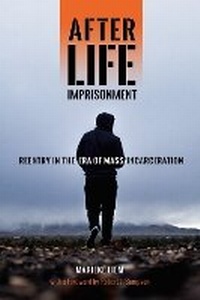
After Life Imprisonment
Reentry in the Era of Mass Incarceration
Published on 20. September 2016
Book
Hardback
288 pages
978-1-4798-0692-8 (ISBN)
Description
One out of every ten prisoners in the United States is serving a life sentence-roughly 130,000 people. While some have been sentenced to life in prison without parole, the majority of prisoners serving 'life' will be released back into society. But what becomes of those people who reenter the everyday world after serving life in prison?
In After Life Imprisonment, Marieke Liem carefully examines the experiences of "lifers" upon release. Through interviews with over sixty homicide offenders sentenced to life but granted parole, Liem tracks those able to build a new life on the outside and those who were re-incarcerated. The interviews reveal prisoners' reflections on being sentenced to life, as well as the challenges of employment, housing, and interpersonal relationships upon release. Liem explores the increase in handing out of life sentences, and specifically provides a basis for discussions of the goals, costs, and effects of long-term imprisonment, ultimately unpacking public policy and discourse surrounding long-term incarceration. A profound criminological examination, After Life Imprisonment reveals the untold, lived experiences of prisoners before and after their life sentences.
In After Life Imprisonment, Marieke Liem carefully examines the experiences of "lifers" upon release. Through interviews with over sixty homicide offenders sentenced to life but granted parole, Liem tracks those able to build a new life on the outside and those who were re-incarcerated. The interviews reveal prisoners' reflections on being sentenced to life, as well as the challenges of employment, housing, and interpersonal relationships upon release. Liem explores the increase in handing out of life sentences, and specifically provides a basis for discussions of the goals, costs, and effects of long-term imprisonment, ultimately unpacking public policy and discourse surrounding long-term incarceration. A profound criminological examination, After Life Imprisonment reveals the untold, lived experiences of prisoners before and after their life sentences.
Reviews / Votes
"Considering the enormity of the sanction, it is remarkable how little we know about the lives of those who survive life imprisonment. With the powerful narratives in this ground-breaking book, Marieke Liem brings their perspectives into new light and asks & when is enough, enough? in terms of the punitive state." - Shadd Maruna,co-author of Making Good: How Ex-Convicts Reform and Rebuild Their Lives "Of interest to both criminological researchers and policymakers, After Life Imprisonment deserves careful reading.A fascinating work of original and creative research." - from the Foreword by Robert Sampson,author of Great American City: Chicago and the Enduring Neighborhood EffectMore details
Series
Language
English
Place of publication
New York
United States
Target group
Professional and scholarly
Product notice
Trade binding
Illustrations
19 black and white illustrations
Dimensions
Height: 229 mm
Width: 152 mm
Weight
567 gr
ISBN-13
978-1-4798-0692-8 (9781479806928)
Copyright in bibliographic data and cover images is held by Nielsen Book Services Limited or by the publishers or by their respective licensors: all rights reserved.
Schweitzer Classification
Persons
Marieke Liem is Senior Researcher and chair of the Violence Research Initiative at Leiden University and a Marie Curie Fellow at the Harvard Kennedy School.
Robert J. Sampson is Henry Ford II Professor of the Social Sciences at Harvard University and Director of the Boston Area Research Initiative. He is the author of several books, including Great American City: Chicago and the Enduring Neighborhood Effect.
Robert J. Sampson is Henry Ford II Professor of the Social Sciences at Harvard University and Director of the Boston Area Research Initiative. He is the author of several books, including Great American City: Chicago and the Enduring Neighborhood Effect.