

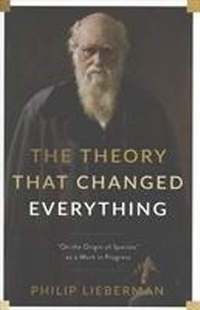
The Theory That Changed Everything
"On the Origin of Species" as a Work in Progress
Published on 7. November 2017
Book
Hardback
232 pages
978-0-231-17808-2 (ISBN)
Description
Few people have done as much to change how we view the world as Charles Darwin. Yet On the Origin of Species is more cited than read. Some of it is considered outdated; in some ways, it has been consigned to the nineteenth century. In The Theory That Changed Everything, the renowned cognitive scientist Philip Lieberman demonstrates that there is no better guide to the world's living things than Darwin, as the phenomena that he observed are still being explored at the frontiers of science. In a wide-ranging voyage from Darwin's transformative trip aboard the Beagle to Lieberman's own sojourns in the remotest regions of the Himalayas, this book relates contemporary findings to the major concepts of Darwinian theory. Drawing on his own research into the evolution of human linguistic and cognitive abilities, Lieberman explains the paths that adapted human anatomy to language, the acrobatics of the lungs and larynx and a tongue that facilitates speech at the cost of the peril of choking.
He demystifies the role of recently identified transcriptional and epigenetic factors encoded in DNA, explaining how nineteenth-century Swedish famines alternating with years of plenty caused survivors' grandchildren to die many years short of their life expectancy. Lieberman is equally at home decoding supermarket shelves and climbing with the Sherpas as he discusses how natural selection explains features from lactose tolerance to ease of breathing at Himalayan altitudes. With conversational clarity and memorable examples, Lieberman relates the insights that led to groundbreaking discoveries in both Darwin's time and our own while asking provocative questions about what Darwin would have made of controversial issues today.
He demystifies the role of recently identified transcriptional and epigenetic factors encoded in DNA, explaining how nineteenth-century Swedish famines alternating with years of plenty caused survivors' grandchildren to die many years short of their life expectancy. Lieberman is equally at home decoding supermarket shelves and climbing with the Sherpas as he discusses how natural selection explains features from lactose tolerance to ease of breathing at Himalayan altitudes. With conversational clarity and memorable examples, Lieberman relates the insights that led to groundbreaking discoveries in both Darwin's time and our own while asking provocative questions about what Darwin would have made of controversial issues today.
Reviews / Votes
An awesome accompanying book for anyone who reads On the Origin of Species. -- Rob DeSalle, curator of entomology at the American Museum of Natural History Strikes a balance between the historical context in which Darwin made his remarkable contributions to science and contemporary scientific work. -- Christina Behme, Brandon UniversityMore details
Language
English
Place of publication
New York
United States
Target group
Professional and scholarly
Product notice
Trade binding
Illustrations
10 b&w illustrations
Dimensions
Height: 223 mm
Width: 144 mm
Thickness: 21 mm
Weight
396 gr
ISBN-13
978-0-231-17808-2 (9780231178082)
Copyright in bibliographic data and cover images is held by Nielsen Book Services Limited or by the publishers or by their respective licensors: all rights reserved.
Schweitzer Classification
Other editions
Additional editions
Book
05/2019
Columbia University Press
€27.28
Shipment within 10-20 days
E-Book
07/2018
1st Edition
Columbia University Press
from
€34.56
Available for download
Person
Philip Lieberman is George Hazard Crooker University Professor Emeritus in the Department of Cognitive, Linguistic, and Psychological Sciences at Brown University. He is the author of Human Language and Our Reptilian Brain: The Subcortical Bases of Speech, Syntax, and Thought (2002); Toward an Evolutionary Biology of Language (2006); and The Unpredictable Species: What Makes Humans Unique (2013), among others.
Content
Preface
Acknowledgments
1. Strawberries
2. No Cats, No Flowers
3. Grandfather Erasmus
4. Crafting the Human Brain
5. What Would Darwin Think About . . .
Notes
Bibliography
Index
Acknowledgments
1. Strawberries
2. No Cats, No Flowers
3. Grandfather Erasmus
4. Crafting the Human Brain
5. What Would Darwin Think About . . .
Notes
Bibliography
Index