

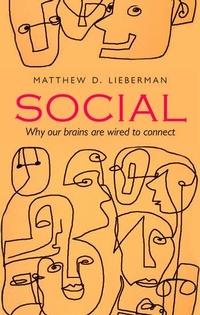
Social
Why our brains are wired to connect
Published on 16. July 2015
Book
Paperback/Softback
384 pages
978-0-19-874381-1 (ISBN)
Description
Why are we influenced by the behaviour of complete strangers? Why does the brain register similar pleasure when I perceive something as 'fair' or when I eat chocolate? Why can we be so profoundly hurt by bereavement? What are the evolutionary benefits of these traits? The young discipline of 'social cognitive neuroscience' has been exploring this fascinating interface between brain science and human behaviour since the late 1990s.
Now one of its founding pioneers, Matthew D. Lieberman, presents the discoveries that he and fellow researchers have made. Using fMRI scanning and a range of other techniques, they have been able to see that the brain responds to social pain and pleasure the same way as physical pain and pleasure; and that unbeknown to ourselves, we are constantly 'mindreading' other people so that we can fit in with them. It is clear that our brains are designed respond to and be influenced by others. For good evolutionary reasons, he argues, we are wired to be social.
The implications are numerous and profound. Do we have to rethink what we understand by identity, and free will? How can managers improve the way their teams relate and perform? Could we organize large social institutions in ways that would work far better? And could there be whole new methods of education?
Now one of its founding pioneers, Matthew D. Lieberman, presents the discoveries that he and fellow researchers have made. Using fMRI scanning and a range of other techniques, they have been able to see that the brain responds to social pain and pleasure the same way as physical pain and pleasure; and that unbeknown to ourselves, we are constantly 'mindreading' other people so that we can fit in with them. It is clear that our brains are designed respond to and be influenced by others. For good evolutionary reasons, he argues, we are wired to be social.
The implications are numerous and profound. Do we have to rethink what we understand by identity, and free will? How can managers improve the way their teams relate and perform? Could we organize large social institutions in ways that would work far better? And could there be whole new methods of education?
More details
Language
English
Place of publication
Oxford
United Kingdom
Dimensions
Height: 195 mm
Width: 126 mm
Thickness: 27 mm
Weight
286 gr
ISBN-13
978-0-19-874381-1 (9780198743811)
Copyright in bibliographic data and cover images is held by Nielsen Book Services Limited or by the publishers or by their respective licensors: all rights reserved.
Schweitzer Classification
Person
Matthew D. Lieberman is Professor at the Social Cognitive Neuroscience Laboratory at the University of California, Los Angeles.
Content
PREFACE; PART ONE: BEGINNINGS; PART TWO: CONNECTION; PART THREE: MINDREADING; PART FOUR: HARMONIZING; PART FIVE: SMARTER, HAPPIER, MORE PRODUCTIVE; EPILOGUE