

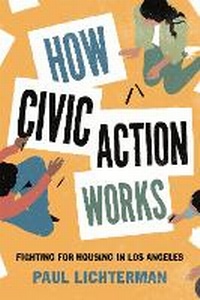
How Civic Action Works
Fighting for Housing in Los Angeles
Published on 15. December 2020
Book
Paperback/Softback
352 pages
978-0-691-17751-9 (ISBN)
Description
The ways that social advocates organize to fight unaffordable housing and homelessness in Los Angeles, illuminated by a new conceptual framework for studying collective action
How Civic Action Works renews the tradition of inquiry into collective, social problem solving. Paul Lichterman follows grassroots activists, nonprofit organization staff, and community service volunteers in three coalitions and twelve organizations in Los Angeles as they campaign for affordable housing, develop new housing, or address homelessness. Lichterman shows that to understand how social advocates build their campaigns, craft claims, and choose goals, we need to move beyond well-established thinking about what is strategic.
Lichterman presents a pragmatist-inspired sociological framework that illuminates core tasks of social problem solving, both contentious and noncontentious, by grassroots and professional advocates alike. He reveals that advocates' distinct styles of collective action produce different understandings of what is strategic, and generate different dilemmas for advocates because each style accommodates varying social and institutional pressures. We see, too, how patterns of interaction create a cultural filter that welcomes some claims about housing problems while subordinating or delegitimating others. These cultural patterns help solve conceptual and practical puzzles, such as why coalitions fragment when members agree on many things, and what makes advocacy campaigns separate housing from homelessness or affordability from environmental sustainability. Lichterman concludes by turning this action-centered framework toward improving dialogue between social advocates and researchers.
Using extensive ethnography enriched by archival evidence, How Civic Action Works explains how advocates meet the relational and rhetorical challenges of collective action.
How Civic Action Works renews the tradition of inquiry into collective, social problem solving. Paul Lichterman follows grassroots activists, nonprofit organization staff, and community service volunteers in three coalitions and twelve organizations in Los Angeles as they campaign for affordable housing, develop new housing, or address homelessness. Lichterman shows that to understand how social advocates build their campaigns, craft claims, and choose goals, we need to move beyond well-established thinking about what is strategic.
Lichterman presents a pragmatist-inspired sociological framework that illuminates core tasks of social problem solving, both contentious and noncontentious, by grassroots and professional advocates alike. He reveals that advocates' distinct styles of collective action produce different understandings of what is strategic, and generate different dilemmas for advocates because each style accommodates varying social and institutional pressures. We see, too, how patterns of interaction create a cultural filter that welcomes some claims about housing problems while subordinating or delegitimating others. These cultural patterns help solve conceptual and practical puzzles, such as why coalitions fragment when members agree on many things, and what makes advocacy campaigns separate housing from homelessness or affordability from environmental sustainability. Lichterman concludes by turning this action-centered framework toward improving dialogue between social advocates and researchers.
Using extensive ethnography enriched by archival evidence, How Civic Action Works explains how advocates meet the relational and rhetorical challenges of collective action.
Reviews / Votes
"An eloquent work of major significance and deep import, written by a scholar working at the height of their craft."---Benjamin Abrams, American Journal of SociologyMore details
Series
Language
English
Place of publication
New Jersey
United States
Target group
College/higher education
Professional and scholarly
Product notice
Paperback (trade)
Illustrations
3 tables.
Dimensions
Height: 235 mm
Width: 155 mm
ISBN-13
978-0-691-17751-9 (9780691177519)
Copyright in bibliographic data and cover images is held by Nielsen Book Services Limited or by the publishers or by their respective licensors: all rights reserved.
Schweitzer Classification
Other editions
Additional editions
E-Book
03/2021
1st Edition
Princeton University Press
€35.99
Available for download
Person
Paul Lichterman is professor of sociology and religion at the University of Southern California. He is author of the award-winning books Elusive Togetherness (Princeton) and The Search for Political Community, and the coeditor of The Civic Life of American Religion.