

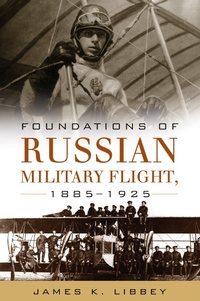
Foundations of Russian Military Flight, 1885-1925
Will be published approx. on 27. June 2019
Book
Hardback
264 pages
978-1-68247-423-5 (ISBN)
Description
Foundations of Russian Military Flight focuses on the early use by armed forces of balloons and aircraft. While France invented lighter-than-air craft, it was a French pilot who caught Russia's attention to airplanes in 1909. Understandably, as the Great War began major Russian manufacturers tended to produce French aircraft under license. Moreover, most Russian aircraft were powered by French motors imported or built by French companies in the empire. The best Russian aircraft included flying boats designed by Dimitrii Grigorovich and large reconnaissance-bombers created by Igor Sikorsky.
As war began, the Imperial Russian Navy accepted the use of aircraft more quickly than the army. Indeed the navy established a precursor to the aircraft carrier. The Imperial Russian Army came to respect over time the work of aircraft that evolved from reconnaissance and bomber to fighter planes. Over 250 army pilots during the war received awards of high distinction for their wartime flights. The 1917 Russian Revolution eventually impacted the functioning of military aircraft. Unlike ground forces that virtually ceased to battle, the enemy naval and army air forces continued to attack German and Turkish troops and ships. Revolutionary collapse of the Russian economy and political leadership ended all military action by the fall. The last air battles were conducted by naval pilots. Formation of a Soviet government under Lenin led to an armistice and peace with the Central Powers. Anti-Soviet Whites formed in Southeast Russia a Volunteer Army that opposed the Soviet Reds. Both Whites and Reds created air forces that embattled each other.
Meanwhile, Whites expanded their position with units on Russia's periphery in Siberia North Russia and Estonia. Allied countries like Great Britain supplied arms and aircraft to the Whites. In key battles of 1919, Whites suffered defeat at the hands of a larger Red Army and Red Air Force. Thanks to a conflict between Soviet Russia and Poland a smaller White force with aircraft occupied the Crimea in 1920. Armistice between Poland and Soviet Russia allowed the Reds to massively attack and defeat the Whites in November 1920. Meanwhile, the Soviets had begun rebuilding aircraft production and the training of pilots. Late in 1918 the new Soviet government established the Central Institute for Aero-Hydrodynamics that conducted aeronautical research. It resulted in supporting a series of important aeronautical designers. Additionally the Soviet government used funds from trade as well as gold to purchase aircraft from the Netherlands.
Finally, Soviet Russia negotiated with Germany agreements that allowed Germany to violate the Treaty of Versailles by building military aircraft and training German military pilots in Soviet Russia. The process enabled Soviet Russia to gain the technology and methodology of constructing a series of all-metal aircraft. Finally unlike other countries Soviet Russia created the Society of Friends of the Air Force and enlisted hundreds of thousands of civilian members who donated money to build combat aircraft.
As war began, the Imperial Russian Navy accepted the use of aircraft more quickly than the army. Indeed the navy established a precursor to the aircraft carrier. The Imperial Russian Army came to respect over time the work of aircraft that evolved from reconnaissance and bomber to fighter planes. Over 250 army pilots during the war received awards of high distinction for their wartime flights. The 1917 Russian Revolution eventually impacted the functioning of military aircraft. Unlike ground forces that virtually ceased to battle, the enemy naval and army air forces continued to attack German and Turkish troops and ships. Revolutionary collapse of the Russian economy and political leadership ended all military action by the fall. The last air battles were conducted by naval pilots. Formation of a Soviet government under Lenin led to an armistice and peace with the Central Powers. Anti-Soviet Whites formed in Southeast Russia a Volunteer Army that opposed the Soviet Reds. Both Whites and Reds created air forces that embattled each other.
Meanwhile, Whites expanded their position with units on Russia's periphery in Siberia North Russia and Estonia. Allied countries like Great Britain supplied arms and aircraft to the Whites. In key battles of 1919, Whites suffered defeat at the hands of a larger Red Army and Red Air Force. Thanks to a conflict between Soviet Russia and Poland a smaller White force with aircraft occupied the Crimea in 1920. Armistice between Poland and Soviet Russia allowed the Reds to massively attack and defeat the Whites in November 1920. Meanwhile, the Soviets had begun rebuilding aircraft production and the training of pilots. Late in 1918 the new Soviet government established the Central Institute for Aero-Hydrodynamics that conducted aeronautical research. It resulted in supporting a series of important aeronautical designers. Additionally the Soviet government used funds from trade as well as gold to purchase aircraft from the Netherlands.
Finally, Soviet Russia negotiated with Germany agreements that allowed Germany to violate the Treaty of Versailles by building military aircraft and training German military pilots in Soviet Russia. The process enabled Soviet Russia to gain the technology and methodology of constructing a series of all-metal aircraft. Finally unlike other countries Soviet Russia created the Society of Friends of the Air Force and enlisted hundreds of thousands of civilian members who donated money to build combat aircraft.
Reviews / Votes
"James K. Libbey has selected one of the most overlooked components of early military aviation and done it with his usual comprehensive, competent style. Two revolutions were occurring at the same time, that of military aviation and the creation of the Soviet Union. Libbey's excellent research shows how a new industry was born when government backing was not only uncertain, but often counter-productive. This is one for everybody's private library!" - Walter J. Boyne, Col, USAF; designated nuclear test pilot, former Director of National Air & Space Museum, founder of Air & Space Magazine and the Military Channel, and author of 61 books.More details
Language
English
Place of publication
Annopolis
United States
Target group
Professional and scholarly
Product notice
Cloth over boards
Illustrations
12 b-w photos, 7 maps
Dimensions
Height: 236 mm
Width: 159 mm
Thickness: 27 mm
Weight
579 gr
ISBN-13
978-1-68247-423-5 (9781682474235)
Copyright in bibliographic data and cover images is held by Nielsen Book Services Limited or by the publishers or by their respective licensors: all rights reserved.
Schweitzer Classification
Other editions
Additional editions
James K. Libbey
Foundations of Russian Military Flight, 1885-1925
E-Book
05/2019
Naval Institute Press
€38.99
Available for download
Person
James K. Libbey has four college degrees and is professor emeritus at Embry-Riddle Aeronautical University where he taught Aviation History and Russian-American Relations. His numerous publications include articles in such journals as Aviation History, American Aviation Historical Society Journal, and Russian History, as well as aviation related entries in reference, works such as Air Warfare. Six of Libbey's seven previous books deal with Russian personalities or the economic and political relations between the United States and Russia.