

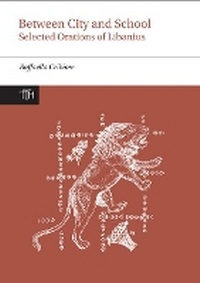
Between City and School
Selected Orations of Libanius
Published on 4. January 2016
Book
Paperback/Softback
320 pages
978-1-78138-253-0 (ISBN)
Description
This book is a collection of twelve important but little-read orations of the fourth-century sophist Libanius, providing an English translation for each with a thorough introduction and copious notes. In spite of Libanius' influence during his lifetime, he has until recently been neglected by scholars since his Greek is often intricate and difficult to approach.
Libanius lived in Antioch (Syria) where he was a teacher of rhetoric: His school was the most important in the East and students flocked there from many countries. Some of the orations in this collection, like his correspondence, illuminate his relations with his students as well as his methods of teaching rhetoric, a discipline for which he had the highest regard. These orations also show that Libanius was a major figure in his city, in frequent contact with influential officials and governors, and that he even had a close relationship with the Emperor Julian. Oration 37 reveals that there were rumours that Julian had contributed to the death of his wife by asking a court doctor to poison her, while Oration 63 indicates that Libanius, usually considered to be a thorough-going pagan, was bequeathed the patrimony of a Christian friend, even though the latter's brother was bishop of Antioch.
Fascinating and thought-provoking, this essential collection of translations of Libanius' orations will be invaluable to scholars of the fourth century.
Libanius lived in Antioch (Syria) where he was a teacher of rhetoric: His school was the most important in the East and students flocked there from many countries. Some of the orations in this collection, like his correspondence, illuminate his relations with his students as well as his methods of teaching rhetoric, a discipline for which he had the highest regard. These orations also show that Libanius was a major figure in his city, in frequent contact with influential officials and governors, and that he even had a close relationship with the Emperor Julian. Oration 37 reveals that there were rumours that Julian had contributed to the death of his wife by asking a court doctor to poison her, while Oration 63 indicates that Libanius, usually considered to be a thorough-going pagan, was bequeathed the patrimony of a Christian friend, even though the latter's brother was bishop of Antioch.
Fascinating and thought-provoking, this essential collection of translations of Libanius' orations will be invaluable to scholars of the fourth century.
Reviews / Votes
Reviews'In addition to the excellent translation, the virtues of this contribution include a thorough attention to secondary literature, a current bibliography, and a graceful style. Libanius, I think, would be pleased.'
David Neal Greenwood, Religious Studies Review 'This is a successful addition to previous translations, and makes a valuable contribution.'
Raphael Brendel, Alte Geschichte
More details
Series
Language
English
Place of publication
Liverpool
United Kingdom
Target group
College/higher education
Dimensions
Height: 210 mm
Width: 147 mm
ISBN-13
978-1-78138-253-0 (9781781382530)
Copyright in bibliographic data and cover images is held by Nielsen Book Services Limited or by the publishers or by their respective licensors: all rights reserved.
Schweitzer Classification
Persons
Raffaella Cribiore was Professor of Classics at New York University.
Content
Acknowledgements
A Note on Abbreviations and English Translations
Introduction
Orations in Chronological Order:
1. Oration 61 (358 CE)
2. Oration 37 (after 365)
3. Oration 40 (366)
4. Oration 55 (early)
5. Oration 53 (380-384)
6. Oration 41 (382-387)
7. Oration 39 (before 384)
8. Oration 35 (388)
9. Oration 51 (388)
10. Oration 52 (388)
11. Oration 63 (388-389)
12. Oration 38 (after 388)
Glossary
Select Bibliography
Index
A Note on Abbreviations and English Translations
Introduction
Orations in Chronological Order:
1. Oration 61 (358 CE)
2. Oration 37 (after 365)
3. Oration 40 (366)
4. Oration 55 (early)
5. Oration 53 (380-384)
6. Oration 41 (382-387)
7. Oration 39 (before 384)
8. Oration 35 (388)
9. Oration 51 (388)
10. Oration 52 (388)
11. Oration 63 (388-389)
12. Oration 38 (after 388)
Glossary
Select Bibliography
Index