

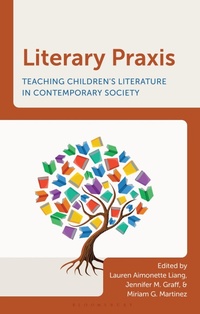
Literary Praxis
Teaching Children's Literature in Contemporary Society
Will be published approx. on 29. October 2026
Book
Paperback/Softback
264 pages
979-8-8818-0532-6 (ISBN)
Description
In recent years an ever-broadening range of theoretical perspectives have been used to explore issues related to children's literature. In this edited volume, scholars teaching children's literature courses discuss the theoretical frames they draw on and how these frames shape their course and their students who are educators, librarians, and media specialists. Each chapter includes a discussion of the theory shaping the course as well as a theory-to-practice approach section. Student vignettes offer additional testimony to the success of the theoretical approach used for the course.
Chapters are organized into four sections aligned by course type: Children's Literature Survey Courses; Children's Literature Survey Courses with a Special Emphasis; Children's Literature Courses with Specialized Focus; and Education Courses with a Children's Literature's Foundation.
Chapters are organized into four sections aligned by course type: Children's Literature Survey Courses; Children's Literature Survey Courses with a Special Emphasis; Children's Literature Courses with Specialized Focus; and Education Courses with a Children's Literature's Foundation.
Reviews / Votes
This book is essential reading for anyone teaching children's literature in a university setting. The authors highlight the multiple complicated purposes served by these courses, grounding each chapter in a theoretical framework and providing concrete examples of how this theory drives their instruction. Their in-depth descriptions of the major engagements and texts used in their courses along with student voices provide rich examples of meaningful connections between readers and books. Both general and specialized children's literature courses are included as frames for instructional strategies to engage students in exploring themes and issues, along with genres and formats, of high-quality diverse literature. This rich resource is one that instructors will consult over and over to strengthen their teaching and deepen their understandings of the potentials of children's literature in lives and classrooms. -- Kathy G. Short * Regents Professor, College of Education, University of Arizona * This edited volume provides a comprehensive view of how children's literature is taught to both pre-and in-service teachers across the United States. With chapters written by well-respected scholars in the field, the book serves as a valuable resource for those teaching children's literature. It includes theoretical frameworks as well as specific learning experiences and instructional strategies. A special feature of the book highlights the perspectives and reflections of students in the courses that are described. -- Evelyn B. Freeman * professor emerita, The Ohio State University * Reading Literary Praxis made me not only want to experience each of the children's literature classes so vividly described but to immediately apply their theoretical frameworks and pedagogical strategies to my own teaching of pre-service and in-service teachers. In the current landscape where literacy instruction is heavily regimented and scrutinized, book bans and censorship are increasing, and children's literature courses are being eliminated from teacher preparation programs, this text offers compelling arguments for the value of preparing early childhood and elementary teachers to prioritize the inclusion of high-quality, diverse children's books in their classrooms. Each chapter, written by renowned children's literature scholars and educators, provides a blueprint for approaching the teaching of children's literature in fresh, innovative, and engaging ways. -- April Whatley Bedford * Ph.D., professor, Provost and Senior Vice President for Academic Affairs, Brooklyn College * Teaching children's literature at the university level today is a balancing act between appreciating the "magic" of stories and meeting the rigorous, often rigid, demands of modern educational mandates and standards. Whether in a physical classroom or a digital space, the goal remains the same-equip future and current educators with the critical knowledge and tools to experience the transformative power of story. This engaging text, with chapters from well-known scholars in the field, provides book titles, instructional strategies, reader response prompts, and student generated projects that will guide the design, teaching, or revision of children's literature courses. -- Cyndi Giorgis * Ph.D., author, Mary Lou Fulton College for Teaching and Learning Innovation, Division for Advancing Education Policy, Practice, and Leadership, Arizona State University * This engaging collection includes extensive, detailed activities for educators to foster critical responses to and teaching about children's literature, with detailed references to descriptions of a wide range of specific children's literature texts. The book also provides readers with methods for designing curriculum and instruction aligned with reader-response instruction and social/critical race theories to foster connections between students' lives and children's and young adult literary texts. Chapters also provide detailed, engaging activities for responding to and teaching nonfiction, picture books, graphic novels, and texts on immigration, as well as strategies for coping with censorship challenges, working with ESL students, and providing preservice education instruction on teaching children's literature in teacher education programs. -- Richard Beach * professor emeritus of Literacy Education, University of Minnesota *More details
Language
English
Place of publication
London
United Kingdom
Publishing group
Bloomsbury Publishing PLC
Target group
Professional and scholarly
Product notice
Paperback (trade)
Unsewn / adhesive bound
Dimensions
Height: 25 mm
Width: 25 mm
Thickness: 25 mm
Weight
454 gr
ISBN-13
979-8-8818-0532-6 (9798881805326)
Copyright in bibliographic data and cover images is held by Nielsen Book Services Limited or by the publishers or by their respective licensors: all rights reserved.
Schweitzer Classification
Persons
Lauren Aimonette Liang, PhD, is an Associate Professor in Literacy, Language, and Learning in the Department of Educational Psychology. Her research focuses on the selection and educational use of children's literature, particularly as related to student comprehension, engagement, and social and emotional growth. She has had leadership roles in the Children's Literature Assembly of NCTE, the American Library Association, the International Literacy Association, and the United States Board of Books for Young People.
Jennifer M. Graff, PhD, is an Associate Professor of Literacies and Children's Literature in the Department of Language and Literacy Education at the University of Georgia. Her research interests include critical content analysis of diverse children's literature, pedagogical opportunities with nonfiction children's literature in early childhood education, and sociocultural contexts of youths' reading preferences and practices. She has served in multiple leadership positions for the Children's Literature Assembly of NCTE and the United States Board of Books for Young People (USBBY) chapter of the International Board of Books for Young People (IBBY).
Miriam Martinez, PhD, is Professor Emerita at the University of Texas at San Antonio where she taught children's literature for more than 40 years. Her research focuses on diverse formats of children's literature, the nature of children's literary responses, and instructional strategies to support children's reading of literature. She has served on the board of the United States Board of Books for Young People, and has served as co-editor of the Journal of Children's Literature and the Journal of Literacy Research.
Jennifer M. Graff, PhD, is an Associate Professor of Literacies and Children's Literature in the Department of Language and Literacy Education at the University of Georgia. Her research interests include critical content analysis of diverse children's literature, pedagogical opportunities with nonfiction children's literature in early childhood education, and sociocultural contexts of youths' reading preferences and practices. She has served in multiple leadership positions for the Children's Literature Assembly of NCTE and the United States Board of Books for Young People (USBBY) chapter of the International Board of Books for Young People (IBBY).
Miriam Martinez, PhD, is Professor Emerita at the University of Texas at San Antonio where she taught children's literature for more than 40 years. Her research focuses on diverse formats of children's literature, the nature of children's literary responses, and instructional strategies to support children's reading of literature. She has served on the board of the United States Board of Books for Young People, and has served as co-editor of the Journal of Children's Literature and the Journal of Literacy Research.
Content
Introduction: Teaching Children's Literature: A Changing Landscape
Miriam Martinez, Jennifer M. Graff, and Lauren Aimonette Liang
Section I: Children's Literature Survey Courses
Chapter 1. Text Formats and Textual Response: Preparing EC-6 Educators as Readers and Teachers of Children Literature
Miriam Martinez and Rebecca Stortz, The University of Texas at San Antonio
Chapter 2. Preparing Teachers to Be Curriculum Designers in Literature Based Instruction
Xenia Hadjioannou, The Pennsylvania State University-Berks and Erika Thulin Dawes, Lesley University
Chapter 3. Finding our Footing: Children's Literature as a Foundation for Effective Practice
Mary-Kate Sableski and Jacqualine M. Arnold, University of Dayton
Section II: Children's Literature Survey Courses with a Special Emphasis
Chapter 4. Becoming Purposeful: Understanding Text Selection for Use in Schools and Libraries through an International Children's Literature Course
Lauren Aimonette Liang, University of Utah and Elizabeth Thackeray Nelson, Utah Valley University
Chapter 5. Fostering Social Justice and Navigating Censorship with Children's Literature in a (Re)Designed Undergraduate Course
Adam Crawley, University of Colorado-Boulder
Chapter 6. Teaching Graphic Novels from Transnational Perspectives
Rene M. Rodriguez-Astacio, Fresno State University and Suriati Abas, State University of New York-Oneonta
Chapter 7. Immigrant Conversations: Discussions in the Children's Literature Curriculum
Ruth McKoy Lowery, University of North Texas and Cheryl Logan, Ohio State University, Mansfield
Section III: Children's Literature Courses with Specialized Focus
Chapter 8. The Often-Overlooked Genre: Exploring Nonfiction Across the Curriculum K-12
Mary Ann Cappiello, Lesley University
Chapter 9. Exploring Complexity & Criticality through Multimodal Apprenticeships: Picturebook Courses for Educators
Jennifer M. Graff, University of Georgia
Chapter 10. Critical Race Theory and the Black Arts Movement as Theoretical Underpinnings for a Course on African American Children's Literature
Jonda McNair, The Ohio State University
Section IV: Education Courses with a Children's Literature Foundation
Chapter 11. Processing and Planning: Using Immigrant and Refugee Children's Literature for Informational and Liberatory Lesson Plan Writing
Grace Enriquez and Victoria Gill, Lesley University
Chapter 12. Engaging Families: Children's Literature in the Community
Denise Davila, The University of Texas at Austin
Chapter 13. Exploring Global Perspectives Through Children's Literature: An ESL Teacher's Journey in Argentina
Angela Wiseman, North Carolina State University, Mary Michaels Estrada, North Carolina State University, Michael P. Cook, Auburn University, Kevin M. Oliver, North Carolina State University, and Meredith Melragon, Durham County Public Schools
About the Editors
About the Author
Miriam Martinez, Jennifer M. Graff, and Lauren Aimonette Liang
Section I: Children's Literature Survey Courses
Chapter 1. Text Formats and Textual Response: Preparing EC-6 Educators as Readers and Teachers of Children Literature
Miriam Martinez and Rebecca Stortz, The University of Texas at San Antonio
Chapter 2. Preparing Teachers to Be Curriculum Designers in Literature Based Instruction
Xenia Hadjioannou, The Pennsylvania State University-Berks and Erika Thulin Dawes, Lesley University
Chapter 3. Finding our Footing: Children's Literature as a Foundation for Effective Practice
Mary-Kate Sableski and Jacqualine M. Arnold, University of Dayton
Section II: Children's Literature Survey Courses with a Special Emphasis
Chapter 4. Becoming Purposeful: Understanding Text Selection for Use in Schools and Libraries through an International Children's Literature Course
Lauren Aimonette Liang, University of Utah and Elizabeth Thackeray Nelson, Utah Valley University
Chapter 5. Fostering Social Justice and Navigating Censorship with Children's Literature in a (Re)Designed Undergraduate Course
Adam Crawley, University of Colorado-Boulder
Chapter 6. Teaching Graphic Novels from Transnational Perspectives
Rene M. Rodriguez-Astacio, Fresno State University and Suriati Abas, State University of New York-Oneonta
Chapter 7. Immigrant Conversations: Discussions in the Children's Literature Curriculum
Ruth McKoy Lowery, University of North Texas and Cheryl Logan, Ohio State University, Mansfield
Section III: Children's Literature Courses with Specialized Focus
Chapter 8. The Often-Overlooked Genre: Exploring Nonfiction Across the Curriculum K-12
Mary Ann Cappiello, Lesley University
Chapter 9. Exploring Complexity & Criticality through Multimodal Apprenticeships: Picturebook Courses for Educators
Jennifer M. Graff, University of Georgia
Chapter 10. Critical Race Theory and the Black Arts Movement as Theoretical Underpinnings for a Course on African American Children's Literature
Jonda McNair, The Ohio State University
Section IV: Education Courses with a Children's Literature Foundation
Chapter 11. Processing and Planning: Using Immigrant and Refugee Children's Literature for Informational and Liberatory Lesson Plan Writing
Grace Enriquez and Victoria Gill, Lesley University
Chapter 12. Engaging Families: Children's Literature in the Community
Denise Davila, The University of Texas at Austin
Chapter 13. Exploring Global Perspectives Through Children's Literature: An ESL Teacher's Journey in Argentina
Angela Wiseman, North Carolina State University, Mary Michaels Estrada, North Carolina State University, Michael P. Cook, Auburn University, Kevin M. Oliver, North Carolina State University, and Meredith Melragon, Durham County Public Schools
About the Editors
About the Author