


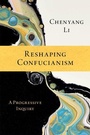
Reshaping Confucianism
A Progressive Inquiry
Published on 18. December 2023
Book
Hardback
344 pages
978-0-19-765762-1 (ISBN)
Description
As a living and evolving tradition, Confucianism has been continuously defined and redefined in response to the changing political and social context of China's history. Extending this effort in reconstructing Confucianism, philosopher Chenyang Li critically analyzes and develops a series of core ideas that originated from classic Confucian texts and does so in the context of contemporary scholarly discourse. These core ideas include he (dynamic harmony), ren (care-centered virtue), li (ritual propriety), xiao (filial care), bie (gender equilibrium), you (friendship), shou (longevity), sheng (sagehood), ziyou (freedom), ping (equality), zheng (politics), and jiao (civic education). Li combines in-depth analysis of historical teachings with systematic deliberation on their contemporary significance, reflecting the current state of the field of research.
Each chapter shows how seminal ideas in Confucianism were conceived and developed by ancient thinkers and how these ideas can be reconstructed and aligned in a sensible Confucian philosophy that responds to contemporary challenges. Over the course of its survey of Confucian philosophy, the book raises and investigates fundamental questions: How central is harmony as a Confucian value? Can Confucian sages be wrong? Is Xunzi's philosophy of filial care more progressive than Confucius' and hence more suitable in contemporary society? What is the best form of Confucian gender equality today? Is the model of "politics without politicians" a viable way for realizing the Confucian political ideal of the good society? Study questions are provided for each chapter to assist students to comprehend key points and develop their own views.
Each chapter shows how seminal ideas in Confucianism were conceived and developed by ancient thinkers and how these ideas can be reconstructed and aligned in a sensible Confucian philosophy that responds to contemporary challenges. Over the course of its survey of Confucian philosophy, the book raises and investigates fundamental questions: How central is harmony as a Confucian value? Can Confucian sages be wrong? Is Xunzi's philosophy of filial care more progressive than Confucius' and hence more suitable in contemporary society? What is the best form of Confucian gender equality today? Is the model of "politics without politicians" a viable way for realizing the Confucian political ideal of the good society? Study questions are provided for each chapter to assist students to comprehend key points and develop their own views.
Reviews / Votes
It invites readers to imagine and think, encouraging them to keep up with the times and experience Confucianism anew. It refreshes our conceptions of Confucianism and tries to readjust the Confucianism of ancient China to the contemporary world and people's daily lives today. * Xiaoyang Zhang . Wei Xiao, Springer *More details
Language
English
Place of publication
New York
United States
Target group
College/higher education
Dimensions
Height: 156 mm
Width: 235 mm
Thickness: 23 mm
Weight
617 gr
ISBN-13
978-0-19-765762-1 (9780197657621)
Copyright in bibliographic data is held by Nielsen Book Services Limited or its licensors: all rights reserved.
Schweitzer Classification
Other editions
Additional editions
Book
11/2023
Oxford University Press Inc
€38.00
Shipment within 15-20 days
E-Book
09/2023
OUP eBook
€22.49
Available for download
E-Book
09/2023
OUP eBook
€22.49
Available for download
Person
Chenyang Li is Professor of philosophy at Nanyang Technological University, Singapore, where he founded the philosophy program.
Content
Acknowledgements
Introduction: Progressive Confucianism
I. Foundational Concepts
Chapter 1: Dynamic Harmony
Chapter 2: Care-Centered Virtue
Chapter 3: Ritual as Cultural Grammar
II. Self and Others
Chapter 4: Filial Care
Chapter 5: Differentiated Gender Equilibrium
Chapter 6: Friendship
Chapter 7: Virtuous Life and Longevity
Interlude:
Chapter 8: Can Sages be Wrong?
III. Socio-Political Reconstructions
Chapter 9: Freedom through Choosing
Chapter 10: Two Forms of Equality
Chapter 11: Kingliness without Kings
Chapter 12: Education for Humanity
References
Index
Introduction: Progressive Confucianism
I. Foundational Concepts
Chapter 1: Dynamic Harmony
Chapter 2: Care-Centered Virtue
Chapter 3: Ritual as Cultural Grammar
II. Self and Others
Chapter 4: Filial Care
Chapter 5: Differentiated Gender Equilibrium
Chapter 6: Friendship
Chapter 7: Virtuous Life and Longevity
Interlude:
Chapter 8: Can Sages be Wrong?
III. Socio-Political Reconstructions
Chapter 9: Freedom through Choosing
Chapter 10: Two Forms of Equality
Chapter 11: Kingliness without Kings
Chapter 12: Education for Humanity
References
Index