

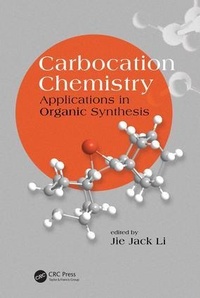
Carbocation Chemistry
Applications in Organic Synthesis
1st Edition
Published on 13. October 2016
Book
Hardback
208 pages
978-1-4987-2908-6 (ISBN)
Description
Carbocation chemistry is not only fundamental to the advancement of organic chemistry, it also has found widespread applications in organic synthesis. It is not an exaggeration to say that carbocation chemistry is part of the foundation of organic chemistry. Carbocation Chemistry: Applications in Organic Synthesis provides a panoramic view of carbocation chemistry with an emphasis on synthetic applications.
This book is an invaluable tool for organic, medicinal and analytical chemists, including those working in biochemistry as well as the petroleum, plastics and pharmaceutical industries. It is also suitable for upper level undergraduates and graduates in organic chemistry, biochemistry and medicinal chemistry.
This book is an invaluable tool for organic, medicinal and analytical chemists, including those working in biochemistry as well as the petroleum, plastics and pharmaceutical industries. It is also suitable for upper level undergraduates and graduates in organic chemistry, biochemistry and medicinal chemistry.
More details
Series
Language
English
Place of publication
Bosa Roca
United States
Publishing group
Taylor & Francis Inc
Target group
College/higher education
Product notice
sewn/stitched
Cloth over boards
Illustrations
379 s/w Abbildungen
379 Illustrations, black and white
Dimensions
Height: 234 mm
Width: 157 mm
Thickness: 15 mm
Weight
431 gr
ISBN-13
978-1-4987-2908-6 (9781498729086)
Copyright in bibliographic data and cover images is held by Nielsen Book Services Limited or by the publishers or by their respective licensors: all rights reserved.
Schweitzer Classification
Other editions
Additional editions
Book
12/2019
1st Edition
CRC Press
€102.50
Shipment within 15-20 days
E-Book
10/2016
CRC Press
€104.99
Available for download
E-Book
10/2016
CRC Press
€104.99
Available for download
Person
Jie Jack Li earned his Ph.D. in organic chemistry in 1995 at Indiana University. After a stint as a postdoctoral fellow at MIT, he worked as a medicinal chemist at Pfizer and Bristol-Myers Squibb from 1997 to 2012. Since then he has been an Associate Professor of Chemistry at the University of San Francisco teaching organic and medicinal chemistry. He has published 23 books ranging from organic and medicinal chemistry, to the history of drug discovery.
Content
Chapter 1. Introduction
Nomenclature, Structure, and Stability
Generation of Carbocations
The Non-Classical Ion Controversy
Electrophilic Addition to Alkenes
Electrophilic Aromatic Substitution
Elimination reactions
Rearrangement Reactions of Carbocations
References
Chapter 2. Nucleophilic Aliphatic Substitution - SN1
Introduction
-Activated Alcohols-Bronsted Acids
-Activated Alcohols-Lewis Acids
Alkylation of Aldehydes and Ketones
Glycosylation
Friedel-Crafts Alkylation and Acylation
Electrophilic Fluorination Using Fluoronium Ion
Miscellaneous SN1-related Reactions
References
Chapter 3. Nucleophilic Aliphatic Substitution - SN2
Construction of Quaternary Stereogenic Centers
Sulfur Chemistry
Organometallic Chemistry
Macrocyclization
Glycosylation
Nucleoside Analogues
N-Alkylation
Cyclotetraphosphazenes
Conformationally Locked Tetrahydropyran Ring
The Ionic Liquid Effect
Silver Chemistry
References
Chapter 4. Electrophilic Addition to Alkenes
Introduction
Cyclopropanation
Hydroboration/Oxidation
The Pauson-Khand Reaction
Prins Reaction
Schmidt Reaction
Halogenation
Oxymercuration/Reduction
Epoxidation
Gold-Catalyzed Alkyne Hydration
Conclusion
References
Chapter 5. Electrophilic Aromatic Substitution
Introduction
Nitration
Halogenation
Friedel-Crafts Alkylation
Friedel-Crafts Acylation
Applications of Friedel-Crafts Reaction on Total Synthesis
Miscellaneous Electrophilic Aromatic Substitution Reactions
References
Chapter 6. Fragmentation and Rearrangement Reactions
Claisen Rearrangements
Cope Rearrangements
Cope Rearrangements
Aldehyde (or Ketone) Formation Rearrangements
Carboxylic Acid Formation Rearrangements
Alcohol Formation Rearrangements
Amine Formation Rearrangement
Amides
Hydrocarbon Rearrangements
Oxacyclic, Carbocyclic, Oxazoles, Tetrahydrapuran and Tetrahydropuran Formation Rearrangements
Rearrangements resulting in less common functional groups
Fragmentations
References
Nomenclature, Structure, and Stability
Generation of Carbocations
The Non-Classical Ion Controversy
Electrophilic Addition to Alkenes
Electrophilic Aromatic Substitution
Elimination reactions
Rearrangement Reactions of Carbocations
References
Chapter 2. Nucleophilic Aliphatic Substitution - SN1
Introduction
-Activated Alcohols-Bronsted Acids
-Activated Alcohols-Lewis Acids
Alkylation of Aldehydes and Ketones
Glycosylation
Friedel-Crafts Alkylation and Acylation
Electrophilic Fluorination Using Fluoronium Ion
Miscellaneous SN1-related Reactions
References
Chapter 3. Nucleophilic Aliphatic Substitution - SN2
Construction of Quaternary Stereogenic Centers
Sulfur Chemistry
Organometallic Chemistry
Macrocyclization
Glycosylation
Nucleoside Analogues
N-Alkylation
Cyclotetraphosphazenes
Conformationally Locked Tetrahydropyran Ring
The Ionic Liquid Effect
Silver Chemistry
References
Chapter 4. Electrophilic Addition to Alkenes
Introduction
Cyclopropanation
Hydroboration/Oxidation
The Pauson-Khand Reaction
Prins Reaction
Schmidt Reaction
Halogenation
Oxymercuration/Reduction
Epoxidation
Gold-Catalyzed Alkyne Hydration
Conclusion
References
Chapter 5. Electrophilic Aromatic Substitution
Introduction
Nitration
Halogenation
Friedel-Crafts Alkylation
Friedel-Crafts Acylation
Applications of Friedel-Crafts Reaction on Total Synthesis
Miscellaneous Electrophilic Aromatic Substitution Reactions
References
Chapter 6. Fragmentation and Rearrangement Reactions
Claisen Rearrangements
Cope Rearrangements
Cope Rearrangements
Aldehyde (or Ketone) Formation Rearrangements
Carboxylic Acid Formation Rearrangements
Alcohol Formation Rearrangements
Amine Formation Rearrangement
Amides
Hydrocarbon Rearrangements
Oxacyclic, Carbocyclic, Oxazoles, Tetrahydrapuran and Tetrahydropuran Formation Rearrangements
Rearrangements resulting in less common functional groups
Fragmentations
References