

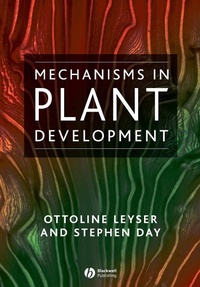
Mechanisms in Plant Development
1st Edition
Published on 30. May 2002
Book
Paperback/Softback
256 pages
978-0-86542-742-6 (ISBN)
Description
Mechanisms in Plant Development
Intended for undergraduate and graduate courses in plant development, this book explains how the cells of a plant acquire and maintain their specific fates. Plant development is a continuous process occurring throughout the life cycle, with similar regulatory mechanisms acting at different stages and in different parts of the plant. Rather than focussing on the life cycle, the book is structured around these underlying mechanisms, using case studies to provide students with a framework to understand the many factors, both environmental and endogenous, that combine to regulate development and generate the enormous diversity of plant forms.
New approach to the study of plant development and a refreshing look at this fast-moving area.
Authors focus their discussion on the basic mechanisms which underpin plant development, tackling the fundamental question of how a single cell becomes a complex flowering plant from a cellular perspective.
An up-to-date, modern text in plant development for advanced level undergraduates and postgraduates in plant science.
Thought-provoking treatment of a difficult subject, the text will satisfy the needs of advanced level undergraduates and postgraduates in plant science.
Experimental case studies throughout.
The artwork from the book is available at www.blackwellpublishing.com/leyser
Intended for undergraduate and graduate courses in plant development, this book explains how the cells of a plant acquire and maintain their specific fates. Plant development is a continuous process occurring throughout the life cycle, with similar regulatory mechanisms acting at different stages and in different parts of the plant. Rather than focussing on the life cycle, the book is structured around these underlying mechanisms, using case studies to provide students with a framework to understand the many factors, both environmental and endogenous, that combine to regulate development and generate the enormous diversity of plant forms.
New approach to the study of plant development and a refreshing look at this fast-moving area.
Authors focus their discussion on the basic mechanisms which underpin plant development, tackling the fundamental question of how a single cell becomes a complex flowering plant from a cellular perspective.
An up-to-date, modern text in plant development for advanced level undergraduates and postgraduates in plant science.
Thought-provoking treatment of a difficult subject, the text will satisfy the needs of advanced level undergraduates and postgraduates in plant science.
Experimental case studies throughout.
The artwork from the book is available at www.blackwellpublishing.com/leyser
Reviews / Votes
'In this new book, Leyser and Day provide a comprehensive overview of plant developmental biology that presents a diversity of developmental strategies whilst carefully distilling the basic principles and mechanisms involved. Its strengths are its breadth, clarity and up to date discussion of developmental studies and concepts. ...Our understanding of the molecular mechanisms controlling plant development has exploded in the last decade, and this book provides an outstanding and much needed review and synthesis. Whilst primarily directed at higher-level undergraduates, it should be accessible and informative to scientists at all levels. Though the field of plant development is rapidly advancing, this book's strength in highlighting fundamental developmental concepts and principles make it a must have for any student of developmental biology.' David Jackson, Cold Spring Harbor, BSDB Newsletter"....worth a library or scientist's investment. It is easy to read, thorough and offers additional points of access to the scientific literature that a student will find useful. It would serve as an excellent supplementary text for a library collection, or as a refresher text for a graduate student in botany." E-Streams, Vol 6, No 1, January 2003
"In each instance the authors employ a number of specific 'case studies' that trace resesarch in the area from the basic anatomy and physiology to more recent molecular investigations. ...The text is clearly written and well referenced. It should be useful to students who are getting started in this dynamic field." Choice, Vol 40, No 8, April 2003
"... a very timely and authoritative documentation of modern plant developmental biology and highly recommend it for advanced graduate and postgraduate students and also scientists interested in this topic." Martin Huelskamp, Universitat Koln, BioEssays, April 2004
"This is a 'must-have' volume for any scientist with even a peripheral interest in plant development. Leyser and Day have provided a welcome addition for anyone looking for an up-to-date book for an upper-level undergraduate or graduate course in plant development." Clive Edwards, Ohio State University for the Quaterly Review of Biology, March-May 2003
More details
Language
English
Place of publication
Hoboken
United Kingdom
Publishing group
John Wiley and Sons Ltd
Target group
College/higher education
Professional and scholarly
Product notice
Paperback (trade)
Unsewn / adhesive bound
Dimensions
Height: 244 mm
Width: 170 mm
Thickness: 14 mm
Weight
448 gr
ISBN-13
978-0-86542-742-6 (9780865427426)
Copyright in bibliographic data and cover images is held by Nielsen Book Services Limited or by the publishers or by their respective licensors: all rights reserved.
Schweitzer Classification
Other editions
New editions

Ottoline Leyser | Stephan Day
Mechanisms in Plant Development
Book
04/2018
2nd Edition
Wiley
€40.31
Shipment within 10-20 days
Additional editions
Ottoline Leyser | Stephen Day
Mechanisms in Plant Development
E-Book
04/2009
Wiley-Blackwell
€62.99
Available for download
Persons
Ottoline Leyser is a reader in plant developmental genetics at the University of York.
Stephen Day is a science writer, also in York.
Stephen Day is a science writer, also in York.
Content
Preface, viii
Introduction, IX
Sources for Figures, xi
Chapter 1: An introduction to flowering plants, 1
Alternation of generations, 1
Gametophyte development, 1
Development of the sporophyte, 3
Further reading, 18
Chapter 2: Characteristics of plant development, 19
Plant cells, 19
Larger patterns, 24
Theoretical framework for the study of developmental mechanisms, 26
Conclusions, 27
Further reading, 27
Chapter 3: Cell-intrinsic information, 29
Lineage, 29
Case study 3.1: Laser ablation of cells in the Arabidopsis root tip, 34
Case study 3.2: Green-white-green periclinal chimeras, 36
Case study 3.3: Mutations affecting division patterns, 39
Relationship between age and position, 43
Case study 3.4: Mutations affecting the rate of leaf initiation in Arabidopsis, 44
Conclusions, 46
Further reading, 46
Chapter 4: Primary axis development, 48
Embryonic axes, 48
Case study 4.1: Longitudinal axis of the Fucus embryo, 49
Case study 4.2: Longitudinal axis of the Arabidopsis embryo, 54
Case study 4.3: Radial axis of the Arabidopsis embryo, 64
Conclusions, 71
Further reading, 71
Chapter 5: Axis development in the leaf and flower, 74
Leaves, 74
Case study 5.1: Adaxial-abaxial axis of the leaf, 75
Case study 5.2: Proximodistal axis of the leaf, 84
Case study 5.3: Determinate nature of leaf development, 87
Flowers, 91
Case study 5.4: Radial axis of the flower, 92
Case study 5.5: Adaxial-abaxial axis of the Antirrhinum flower, 100
Conclusions, 104
Further reading, 105
Chapter 6: Position relative to a particular cell, tissue or organ, 110
Case study 6.1: The pattern of trichomes on the Arabidopsis leaf, 111
Case study 6.2: The pattern of root hairs in Arabidopsis, 116
Case study 6.3: Phyllotaxy, 123
Case study 6.4: Coordination of leaf and vascular development, 131
Conclusions, 134
Further reading, 134
Chapter 7: Light, 138
Light perception, 138
Developmental responses to light, 143
Case study 7.1: Light-induced germination, 143
Case study 7.2: Seedling etiolation and photomorphogenesis, 146
Case study 7.3: Shade escape, 151
Case study 7.4: Phototropism, 154
Case study 7.5: Photoperiodic control of flowering, 156
Conclusions, 161
Further reading, 161
Chapter 8: Environmental information other than light, 165
Case study 8.1: Gravitropism, 165
Case study 8.2: Thigmomorphogenesis, 172
Case study 8.3: Effects of uneven nutrient supply on root development, 177
Case study 8.4: Vernalization, 180
Conclusions, 186
Further reading, 186
Chapter 9: The coordination of development, 190
Case study 9.1: Initiation and maintenance of the shoot apical meristem, 191
Case study 9.2: Transition from embryonic to post-embryonic development, 200
Case study 9.3: Phase transitions in post-germination development, 203
Case study 9.4: Shoot branching, 213
Conclusions, 219
Further reading, 220
Chapter 10: A comparison of plant and animal development, 224
Control of cell fate, 225
Development of pattern, 226
Consequences of autotrophy versus heterotrophy, 229
Conclusions, 230
Further reading, 230
Index, 233
Introduction, IX
Sources for Figures, xi
Chapter 1: An introduction to flowering plants, 1
Alternation of generations, 1
Gametophyte development, 1
Development of the sporophyte, 3
Further reading, 18
Chapter 2: Characteristics of plant development, 19
Plant cells, 19
Larger patterns, 24
Theoretical framework for the study of developmental mechanisms, 26
Conclusions, 27
Further reading, 27
Chapter 3: Cell-intrinsic information, 29
Lineage, 29
Case study 3.1: Laser ablation of cells in the Arabidopsis root tip, 34
Case study 3.2: Green-white-green periclinal chimeras, 36
Case study 3.3: Mutations affecting division patterns, 39
Relationship between age and position, 43
Case study 3.4: Mutations affecting the rate of leaf initiation in Arabidopsis, 44
Conclusions, 46
Further reading, 46
Chapter 4: Primary axis development, 48
Embryonic axes, 48
Case study 4.1: Longitudinal axis of the Fucus embryo, 49
Case study 4.2: Longitudinal axis of the Arabidopsis embryo, 54
Case study 4.3: Radial axis of the Arabidopsis embryo, 64
Conclusions, 71
Further reading, 71
Chapter 5: Axis development in the leaf and flower, 74
Leaves, 74
Case study 5.1: Adaxial-abaxial axis of the leaf, 75
Case study 5.2: Proximodistal axis of the leaf, 84
Case study 5.3: Determinate nature of leaf development, 87
Flowers, 91
Case study 5.4: Radial axis of the flower, 92
Case study 5.5: Adaxial-abaxial axis of the Antirrhinum flower, 100
Conclusions, 104
Further reading, 105
Chapter 6: Position relative to a particular cell, tissue or organ, 110
Case study 6.1: The pattern of trichomes on the Arabidopsis leaf, 111
Case study 6.2: The pattern of root hairs in Arabidopsis, 116
Case study 6.3: Phyllotaxy, 123
Case study 6.4: Coordination of leaf and vascular development, 131
Conclusions, 134
Further reading, 134
Chapter 7: Light, 138
Light perception, 138
Developmental responses to light, 143
Case study 7.1: Light-induced germination, 143
Case study 7.2: Seedling etiolation and photomorphogenesis, 146
Case study 7.3: Shade escape, 151
Case study 7.4: Phototropism, 154
Case study 7.5: Photoperiodic control of flowering, 156
Conclusions, 161
Further reading, 161
Chapter 8: Environmental information other than light, 165
Case study 8.1: Gravitropism, 165
Case study 8.2: Thigmomorphogenesis, 172
Case study 8.3: Effects of uneven nutrient supply on root development, 177
Case study 8.4: Vernalization, 180
Conclusions, 186
Further reading, 186
Chapter 9: The coordination of development, 190
Case study 9.1: Initiation and maintenance of the shoot apical meristem, 191
Case study 9.2: Transition from embryonic to post-embryonic development, 200
Case study 9.3: Phase transitions in post-germination development, 203
Case study 9.4: Shoot branching, 213
Conclusions, 219
Further reading, 220
Chapter 10: A comparison of plant and animal development, 224
Control of cell fate, 225
Development of pattern, 226
Consequences of autotrophy versus heterotrophy, 229
Conclusions, 230
Further reading, 230
Index, 233