

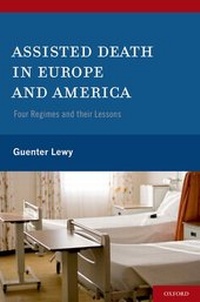
Assisted Death in Europe and America
Four Regimes and Their Lessons
1st Edition
Published on 30. September 2010
Book
Hardback
266 pages
978-0-19-974641-5 (ISBN)
Description
Advances in medical treatment now enable physicians to prolong life to a previously unknown extent, however in many instances these new techniques mean not the saving of life but prolonging the act of dying. In the eyes of many, medical technology has run out of control and contributes to unnecessary suffering. Hence the demand has arisen that patients should be entitled to choose death when pain and physical and mental deterioration have destroyed the possibility of a dignified and meaningful life and that their doctors should help them to realize this endeavor.
At the present time there are seven jurisdictions in the world that, with various restrictions, have legalized the practice of assisted death -- physician-assisted suicide and/or voluntary euthanasia - to wit, the Netherlands, Belgium, Luxembourg, Switzerland in Europe and the states of Oregon, Washington and Montana in the United States. Four of these regimes - in the Netherlands, Belgium, Switzerland and the state of Oregon -- have been functioning for many years, and we have for them a substantial body of data as well as much observational research. This book is based upon this material.
The literature dealing with the moral, legal and social aspects of assisted death is voluminous, but there is a paucity of writing that provides a detailed account of the way these four regimes are actually working. Many partisans, on both sides of the issue, cite existing data selectively or, at times, willfully distort the empirical evidence in order to strengthen their case. Based on the documentary record and interviews with officials and scholars, this book seeks to give the specialist as well as the general interested reader a reliable picture of the way assisted death functions and to draw relevant lessons. While accurate factual information cannot settle a moral debate, it nevertheless is a precondition of any well-founded argument.
'The author speaks authoritatively about the issues he addresses. I think this book does make an important contribution to the field. It will be of interest to students and scholars of PAS as a source of information and reference. I definitely recommend publication.' Stuart Youngner, Department of Bioethics, Case Western Reserve University School of Medicine
'The information collected here makes an important contribution to the literature on PAS because it collects a broad array of relevant information into a single volume. It is interesting and enlightening. This will make the book a valuable resource for anyone interested in the subject and an especially useful resource for academics who study or teach about the issues.' Rosamond Rhodes, Director, Bioethics Education, Mt Sinai School of Medicine
At the present time there are seven jurisdictions in the world that, with various restrictions, have legalized the practice of assisted death -- physician-assisted suicide and/or voluntary euthanasia - to wit, the Netherlands, Belgium, Luxembourg, Switzerland in Europe and the states of Oregon, Washington and Montana in the United States. Four of these regimes - in the Netherlands, Belgium, Switzerland and the state of Oregon -- have been functioning for many years, and we have for them a substantial body of data as well as much observational research. This book is based upon this material.
The literature dealing with the moral, legal and social aspects of assisted death is voluminous, but there is a paucity of writing that provides a detailed account of the way these four regimes are actually working. Many partisans, on both sides of the issue, cite existing data selectively or, at times, willfully distort the empirical evidence in order to strengthen their case. Based on the documentary record and interviews with officials and scholars, this book seeks to give the specialist as well as the general interested reader a reliable picture of the way assisted death functions and to draw relevant lessons. While accurate factual information cannot settle a moral debate, it nevertheless is a precondition of any well-founded argument.
'The author speaks authoritatively about the issues he addresses. I think this book does make an important contribution to the field. It will be of interest to students and scholars of PAS as a source of information and reference. I definitely recommend publication.' Stuart Youngner, Department of Bioethics, Case Western Reserve University School of Medicine
'The information collected here makes an important contribution to the literature on PAS because it collects a broad array of relevant information into a single volume. It is interesting and enlightening. This will make the book a valuable resource for anyone interested in the subject and an especially useful resource for academics who study or teach about the issues.' Rosamond Rhodes, Director, Bioethics Education, Mt Sinai School of Medicine
Reviews / Votes
This is not an ethical analysis but a thoroughly documented treatment of the facts - positive and negative - working from the assumption that, while the facts cammpt settle the ethics, any ethical debate must consider the facts. As such, the book has the potential to make a valuable contribution to readers' understanding of a very important public policy issue * C.D. Kay, CHOICE * This is a stimulating and thought-provoking book that provides accurate, up-to-date and objective information on what is arguably the most sensitive subject in palliative care * John Costello, International Journal of Palliative Nursing *More details
Language
English
Place of publication
New York
United States
Target group
Professional and scholarly
Professors and students of medical ethics in general and those working on assisted death in particular.
Dimensions
Height: 146 mm
Width: 216 mm
Thickness: 20 mm
Weight
414 gr
ISBN-13
978-0-19-974641-5 (9780199746415)
Copyright in bibliographic data and cover images is held by Nielsen Book Services Limited or by the publishers or by their respective licensors: all rights reserved.
Schweitzer Classification
Other editions
Additional editions
E-Book
09/2010
1st Edition
OUP eBook
€52.49
Available for download
E-Book
09/2010
1st Edition
OUP eBook
€52.49
Available for download
Person
Emeritus Professor of Political Science, University of Massachusetts, Amherst
Content
Preface
1. Introduction
Why Assisted Death has Become an Important Public Policy Issue
The Euthanasia and Assisted Suicide Underground
The Aims of this Study
2. Euthanasia and Physician-Assisted Suicide in the Netherlands
The Path to Legalization
The Law of 2002 Decriminalizing Euthanasia and Physician-Assisted Suicide
Empirical Data on the Practice of Euthanasia and Physician-Assisted Suicide:
Who, When, Why, Where and How
Problems in the Practice of Euthanasia and Physician Assisted Suicide:
1. Failure to Report Cases of Euthanasia and Physician-Assisted suicide
2. Ending Life without Explicit Request of the Patient
3. Termination of Life in Pediatric Cases
4. Assisted Death for Patients with Mental Suffering
5. Can Palliative Care Eliminate the Need for Assisted Death?
The Dutch Regime of Euthanasia and Physician-Assisted Suicide Assessed
3. Voluntary Euthanasia in Belgium
How Belgium Legalized Euthanasia
The Law on Euthanasia of May 28, 2002
The Practice of Euthanasia since 2002
4. Assisted Suicide in Switzerland
Exit German Switzerland - Association for a Humane Death
Exit/Association pour le Droit de mourir dans la Dignite/Suisse Romande
Dignitas
Other Right-to-Die Organizations
The Public Debate on Assisted Suicide
5. Physician-Assisted Suicide in Oregon
A Legal Obstacle Course
The Death with Dignity Act (DWDA)
Ten Years of Physician-Assisted Death
Criticism and Problem Areas
6. Assisted Death as a Last Resort
Lessons from Four Regimes of Assisted Death
A Model Statute for Physician-Assisted Suicide
Dilemmas and Promise of Legalized Assisted Death
Appendices
1. Dutch Termination of Life on Request and Assisted Suicide (Review Procedures) Act.
2. Belgian Act on Euthanasia.
3. Swiss Criminal Code, Arts. 114 - 115.
4. Oregon's Death with Dignity Act and Compliance Forms.
Notes
Works Cited
Index
1. Introduction
Why Assisted Death has Become an Important Public Policy Issue
The Euthanasia and Assisted Suicide Underground
The Aims of this Study
2. Euthanasia and Physician-Assisted Suicide in the Netherlands
The Path to Legalization
The Law of 2002 Decriminalizing Euthanasia and Physician-Assisted Suicide
Empirical Data on the Practice of Euthanasia and Physician-Assisted Suicide:
Who, When, Why, Where and How
Problems in the Practice of Euthanasia and Physician Assisted Suicide:
1. Failure to Report Cases of Euthanasia and Physician-Assisted suicide
2. Ending Life without Explicit Request of the Patient
3. Termination of Life in Pediatric Cases
4. Assisted Death for Patients with Mental Suffering
5. Can Palliative Care Eliminate the Need for Assisted Death?
The Dutch Regime of Euthanasia and Physician-Assisted Suicide Assessed
3. Voluntary Euthanasia in Belgium
How Belgium Legalized Euthanasia
The Law on Euthanasia of May 28, 2002
The Practice of Euthanasia since 2002
4. Assisted Suicide in Switzerland
Exit German Switzerland - Association for a Humane Death
Exit/Association pour le Droit de mourir dans la Dignite/Suisse Romande
Dignitas
Other Right-to-Die Organizations
The Public Debate on Assisted Suicide
5. Physician-Assisted Suicide in Oregon
A Legal Obstacle Course
The Death with Dignity Act (DWDA)
Ten Years of Physician-Assisted Death
Criticism and Problem Areas
6. Assisted Death as a Last Resort
Lessons from Four Regimes of Assisted Death
A Model Statute for Physician-Assisted Suicide
Dilemmas and Promise of Legalized Assisted Death
Appendices
1. Dutch Termination of Life on Request and Assisted Suicide (Review Procedures) Act.
2. Belgian Act on Euthanasia.
3. Swiss Criminal Code, Arts. 114 - 115.
4. Oregon's Death with Dignity Act and Compliance Forms.
Notes
Works Cited
Index