


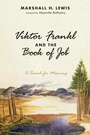
Viktor Frankl and the Book of Job
A Search for Meaning
Published on 2. May 2019
Book
Paperback/Softback
150 pages
978-1-5326-5913-3 (ISBN)
Description
This book accomplishes two distinct tasks. First, it develops the psychological theory of Dr. Viktor E. Frankl as a literary hermeneutic. Second, it applies the hermeneutic by reading the book of Job.
Key issues emerge through three movements. The first movement addresses Frankl's concept of the feeling of meaninglessness and his rejection of reductionism and nihilism. The second movement addresses the dual nature of meaning; an association is revealed between Frankl's understanding of meaning and the Joban understanding of wisdom. The third movement involves an exploration of Frankl's ideas of ultimate meaning and self-transcendence.
As a Holocaust survivor, Frankl had a personal stake in the effectiveness of his approach. He lived the suffering about which he wrote. Because of this, reading the book of Job with a hermeneutic based on Frankl's ideas will present readers with opportunities to discover unique meanings and serve to clarify their attitudes toward pain, guilt, and death. As meaning is discovered through participation with the text, we will see that Job's final response can become a site for transcending suffering.
More details
Language
English
Place of publication
Eugene
United States
Product notice
Paperback (trade)
Unsewn / adhesive bound
Dimensions
Height: 229 mm
Width: 152 mm
Thickness: 9 mm
Weight
228 gr
ISBN-13
978-1-5326-5913-3 (9781532659133)
Copyright in bibliographic data and cover images is held by Nielsen Book Services Limited or by the publishers or by their respective licensors: all rights reserved.
Schweitzer Classification
Other editions
Additional editions
E-Book
05/2019
Wipf and Stock Publishers
€19.49
Available for download
Persons
Marshall H. Lewis is a psychotherapist and logotherapist who has practiced for over thirty years. He is a frequent speaker on Viktor Frankl's theory and serves on the faculty of the Viktor Frankl Institute of Logotherapy. His graduate training in psychology and doctoral training in Bible, culture, and hermeneutics led him to write this book.