

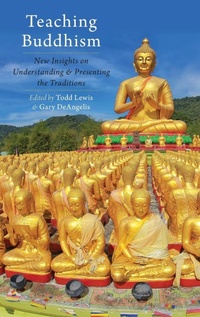
Teaching Buddhism
New Insights on Understanding and Presenting the Traditions
Published on 20. October 2016
Book
Hardback
432 pages
978-0-19-937309-3 (ISBN)
Description
Buddhist studies is a rapidly changing field of research, constantly transforming and adapting to new scholarship. This creates a problem for instructors, both in a university setting and in monastic schools, as they try to develop a curriculum based on a body of scholarship that continually shifts in focus and expands to new areas.
Teaching Buddhism establishes a dialogue between the community of instructors of Buddhism and leading scholars in the field who are updating, revising, and correcting earlier understandings of Buddhist traditions. Each chapter presents new ideas within a particular theme of Buddhist studies and explores how courses can be enhanced with these insights. Contributors in the first section focus on the typical approaches, figures, and traditions in undergraduate courses, such as the role of philosophy in Buddhism, Nagarjuna, Yogacara Buddhism, tantric traditions, and Zen Buddhism. They describe the impact of recent developments-like new studies in the cognitive sciences-on scholarship in those areas. Part Two examines how political engagement and ritual practice have shaped the tradition throughout its history. Focus then shifts to the issues facing instructors of Buddhism-dilemmas for the scholar-practitioner in the academic and monastic classroom, the tradition's possible roles in teaching feminism and diversity, and how to present the tradition in the context of a world religions course. In the final section, contributors offer stories of their own experiences teaching, paying particular attention to the ways in which American culture has impacted them. They discuss the development of courses on American Buddhism; using course material on the family and children; the history and trajectory of a Buddhist-Christian dialog; and Buddhist bioethics, environmentalism, economic development, and social justice. In synthesizing this vast and varied body of research, the contributors in this volume have provided an invaluable service to the field
Teaching Buddhism establishes a dialogue between the community of instructors of Buddhism and leading scholars in the field who are updating, revising, and correcting earlier understandings of Buddhist traditions. Each chapter presents new ideas within a particular theme of Buddhist studies and explores how courses can be enhanced with these insights. Contributors in the first section focus on the typical approaches, figures, and traditions in undergraduate courses, such as the role of philosophy in Buddhism, Nagarjuna, Yogacara Buddhism, tantric traditions, and Zen Buddhism. They describe the impact of recent developments-like new studies in the cognitive sciences-on scholarship in those areas. Part Two examines how political engagement and ritual practice have shaped the tradition throughout its history. Focus then shifts to the issues facing instructors of Buddhism-dilemmas for the scholar-practitioner in the academic and monastic classroom, the tradition's possible roles in teaching feminism and diversity, and how to present the tradition in the context of a world religions course. In the final section, contributors offer stories of their own experiences teaching, paying particular attention to the ways in which American culture has impacted them. They discuss the development of courses on American Buddhism; using course material on the family and children; the history and trajectory of a Buddhist-Christian dialog; and Buddhist bioethics, environmentalism, economic development, and social justice. In synthesizing this vast and varied body of research, the contributors in this volume have provided an invaluable service to the field
Reviews / Votes
Despite the myriad books on Buddhism currently available, this book is a solid contribution to Buddhist studies in general and fills a niche as a pedagogical tool by providing an overview of best practices for the classroom. Lewis and DeAngelis (both, College of the Holy Cross) have brought together respected scholars of Buddhism and perhaps even more important, for the purpose of the book, respected, practicing, classroom educators. The combination of acumen in various subject areas and the "boots on the ground" approach makes this publication a real gem. The contributors provide a welcome international perspective on the various branches of Buddhism with their discussions of various interpretations of the dhamma and practices among its followers...Highly recommended. * CHOICE *More details
Series
Language
English
Place of publication
New York
United States
Target group
College/higher education
Professional and scholarly
Dimensions
Height: 240 mm
Width: 161 mm
Thickness: 28 mm
Weight
810 gr
ISBN-13
978-0-19-937309-3 (9780199373093)
Copyright in bibliographic data and cover images is held by Nielsen Book Services Limited or by the publishers or by their respective licensors: all rights reserved.
Schweitzer Classification
Other editions
Additional editions
Todd Lewis | Gary DeAngelis
Teaching Buddhism
New Insights on Understanding and Presenting the Traditions
E-Book
09/2016
1st Edition
OUP eBook
€56.99
Available for download
Todd Lewis | Gary DeAngelis
Teaching Buddhism
New Insights on Understanding and Presenting the Traditions
E-Book
09/2016
1st Edition
OUP eBook
€73.99
Available for download
Persons
Todd T. Lewis is the Murray Distinguished Professor of Arts and Humanities in the Religious Studies Department at The College of the Holy Cross, where he has taught since 1990. Professor Lewis is one of the world's leading authorities on the religions of the central Himalayan region and the social history of Buddhism.
Gary deAngelis has taught Asian Religions for forty six years at Boston University, Brandeis University, Clark University and for the last twenty nine years at Holy Cross College, also serving as the Associate Director of the Center for Interdisciplinary Studies at Holy Cross. His primary areas of teaching and scholarship have been Chinese and Japanese religions with a particular emphasis on scared space, pilgrimage, and ritual.
Gary deAngelis has taught Asian Religions for forty six years at Boston University, Brandeis University, Clark University and for the last twenty nine years at Holy Cross College, also serving as the Associate Director of the Center for Interdisciplinary Studies at Holy Cross. His primary areas of teaching and scholarship have been Chinese and Japanese religions with a particular emphasis on scared space, pilgrimage, and ritual.
Editor
Lecturer, Associate Director of Special StudiesLecturer, Associate Director of Special Studies, College of the Holy Cross
Murray Distinguished Professor of Arts and Humanities and Professor of World ReligionMurray Distinguished Professor of Arts and Humanities and Professor of World Religion, College of the Holy Cross
Content
Acknowledgments
Editors' Preface
Introduction: Tensions in the Field of Religious and Buddhist Studies - John Strong
Note on Transliteration of Asian Languages
List of Contributors
Part 1: Updating Perennial Course Subjects
1) Teaching Buddhism as Philosophy - Mark Siderits
2) Teaching Nagarjuna - Roger R. Jackson
3) Teaching Yogacara Buddhism Using Cognitive Science - William S. Waldron
4) Teaching Tantric Buddhism in an Undergraduate Classroom Context - David B. Gray
5) Rethinking the Teaching of Zen Buddhism - Steven Heine
Part 2: Reimagining the Content of "Buddhism"
6) In Defense of the Dharma: Buddhists and Politics - Thomas Borchert and Ian Harris
7) Conveying Buddhist Tradition through its Rituals - Todd Lewis
Part 3: Issues in Teaching, Practice, and Connecting Students with the Tradition
8) Teaching Buddhism in the Western Academy - Jan Willis
9) Teaching Buddhist History to Buddhist Practitioners - Rita M. Gross
10) Deconstructing Identity Categories and Cultivating Appreciation for Diversity: Teaching Buddhism and Feminism - Hsiao-Lan Hu
11) Teaching Buddhism in the World Religions Course - Challenges and Promise - Gary DeAngelis
Part 4: Buddhism and the American Context
12) When The Iron Bird Flies: Seeking Western Buddhism in the Classroom - Charles Prebish
13) Conveying Buddhism in the Classroom: Working with Assumptions on Family and Children - Vanessa R. Sasson
14) Teaching Engaged Buddhism in Uncertain Times - Christopher Queen
Part 5: Buddhism in New Academic Fields
15) History of Buddhist-Christian Dialogue - Paul O. Ingram
16) Teaching Buddhist Bioethics - Damien Keown
17) Buddhist Environmentalism - Leslie E. Sponsel and Poranee Natadecha-Sponsel
18) Buddhism and Economic Development - Laszlo Zsolnai
19) "We Can Do No Less:" Buddhism and Social Justice - Anna Brown
Index
Editors' Preface
Introduction: Tensions in the Field of Religious and Buddhist Studies - John Strong
Note on Transliteration of Asian Languages
List of Contributors
Part 1: Updating Perennial Course Subjects
1) Teaching Buddhism as Philosophy - Mark Siderits
2) Teaching Nagarjuna - Roger R. Jackson
3) Teaching Yogacara Buddhism Using Cognitive Science - William S. Waldron
4) Teaching Tantric Buddhism in an Undergraduate Classroom Context - David B. Gray
5) Rethinking the Teaching of Zen Buddhism - Steven Heine
Part 2: Reimagining the Content of "Buddhism"
6) In Defense of the Dharma: Buddhists and Politics - Thomas Borchert and Ian Harris
7) Conveying Buddhist Tradition through its Rituals - Todd Lewis
Part 3: Issues in Teaching, Practice, and Connecting Students with the Tradition
8) Teaching Buddhism in the Western Academy - Jan Willis
9) Teaching Buddhist History to Buddhist Practitioners - Rita M. Gross
10) Deconstructing Identity Categories and Cultivating Appreciation for Diversity: Teaching Buddhism and Feminism - Hsiao-Lan Hu
11) Teaching Buddhism in the World Religions Course - Challenges and Promise - Gary DeAngelis
Part 4: Buddhism and the American Context
12) When The Iron Bird Flies: Seeking Western Buddhism in the Classroom - Charles Prebish
13) Conveying Buddhism in the Classroom: Working with Assumptions on Family and Children - Vanessa R. Sasson
14) Teaching Engaged Buddhism in Uncertain Times - Christopher Queen
Part 5: Buddhism in New Academic Fields
15) History of Buddhist-Christian Dialogue - Paul O. Ingram
16) Teaching Buddhist Bioethics - Damien Keown
17) Buddhist Environmentalism - Leslie E. Sponsel and Poranee Natadecha-Sponsel
18) Buddhism and Economic Development - Laszlo Zsolnai
19) "We Can Do No Less:" Buddhism and Social Justice - Anna Brown
Index