

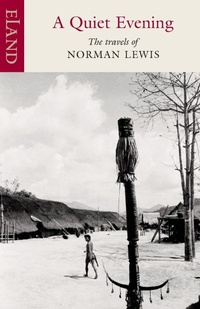
A Quiet Evening
The Travels of Norman Lewis
Published on 16. January 2025
Book
Paperback/Softback
504 pages
978-1-78060-231-8 (ISBN)
Description
Collected here, from a period of nearly five decades, are thirty-six of Norman Lewis s best articles. In each, his writing crackles with poker-faced wit and stylistic brilliance. As a witness to his times the good, the bad and the absurd he was unmatched, and his instinct for important events, and moments, was infallible. His range here includes Ibizan fishermen, an interview with Castro s executioner, the genocide of the South American Indian tribes, a paean to Seville and his meeting with a tragic Ernest Hemingway. That meeting was a shattering experience, Norman wrote to Ian Fleming who had commissioned him, of the kind likely to sabotage ambition. Fortunately it didn t, and the articles assembled between these covers are compulsive, hilarious, tender and beautifully written, at times deeply upsetting and always unforgettable.
Reviews / Votes
Lewis is such a fine and amusing writer and also such an intensely moral and humane one that he can make even the most horrible situations both bearable and instructive.' - William Dalrymple, Sunday TimesMore details
Series
Language
English
Place of publication
London
United Kingdom
Dimensions
Height: 216 mm
Width: 140 mm
Thickness: 30 mm
Weight
707 gr
ISBN-13
978-1-78060-231-8 (9781780602318)
Copyright in bibliographic data and cover images is held by Nielsen Book Services Limited or by the publishers or by their respective licensors: all rights reserved.
Schweitzer Classification
Other editions
Additional editions
E-Book
12/2024
Eland Publishing
€11.99
Available for download
Person
Norman Lewis wrote thirteen novels and thirteen works of non-fiction, mostly travel books, but he regarded his life s major achievement to be the reaction to an article written by him entitled Genocide in Brazil, published in The Sunday Times in 1968. This led to a change in the Brazilian law relating to the treatment of Indians, and to the formation of Survival International, the influential international organisation which campaigns for the rights of tribal peoples.