


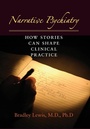
Narrative Psychiatry
How Stories Can Shape Clinical Practice
Published on 26. April 2011
Book
Hardback
240 pages
978-0-8018-9902-7 (ISBN)
Description
Psychiatry has lagged behind many clinical specialties in recognizing the importance of narrative for understanding and effectively treating disease. With this book, Bradley Lewis makes the challenging and compelling case that psychiatrists need to promote the significance of narrative in their practice as well. Narrative already holds a prominent place in psychiatry. Patient stories are the foundation for diagnosis and the key to managing treatment and measuring its effectiveness. Even so, psychiatry has paid scant scholarly attention to the intrinsic value of patient stories. Fortunately, the study of narrative outside psychiatry has grown exponentially in recent years, and it is now possible for psychiatry to make considerable advances in its appreciation of clinical stories. Narrative Psychiatry picks up this intellectual opportunity and develops the tools of narrative for psychiatry. Lewis explores the rise of narrative medicine and looks closely at recent narrative approaches to psychotherapy.
He uses philosophic and fictional writings, such as Anton Chekhov's play Ivanov, to develop key terms in narrative theory (plot, metaphor, character, point of view) and to understand the interpretive dimensions of clinical work. Finally, Lewis brings this material back to psychiatric practice, showing how narrative insights can be applied in psychiatric treatments-including the use of psychiatric medications. Nothing short of a call to rework the psychiatric profession, Narrative Psychiatry advocates taking the inherently narrative-centered patient-psychiatrist relationship to its logical conclusion: making the story a central aspect of treatment.
He uses philosophic and fictional writings, such as Anton Chekhov's play Ivanov, to develop key terms in narrative theory (plot, metaphor, character, point of view) and to understand the interpretive dimensions of clinical work. Finally, Lewis brings this material back to psychiatric practice, showing how narrative insights can be applied in psychiatric treatments-including the use of psychiatric medications. Nothing short of a call to rework the psychiatric profession, Narrative Psychiatry advocates taking the inherently narrative-centered patient-psychiatrist relationship to its logical conclusion: making the story a central aspect of treatment.
Reviews / Votes
"Lewis has captured and articulated a method of working with patients that is at once intuitive to seasoned practitioners, while also directing them to novel areas of thinking about and working with patients." (John Z. Sadler, M.D., author of Values and Psychiatric Diagnosis)"More details
Language
English
Place of publication
Baltimore, MD
United States
Target group
Professional and scholarly
Product notice
Unsewn / adhesive bound
Cloth over boards
With dust jacket
Dimensions
Height: 237 mm
Width: 161 mm
Thickness: 30 mm
Weight
472 gr
ISBN-13
978-0-8018-9902-7 (9780801899027)
DOI
10.1353/book.1841
Copyright in bibliographic data and cover images is held by Nielsen Book Services Limited or by the publishers or by their respective licensors: all rights reserved.
Schweitzer Classification
Other editions
Additional editions
E-Book
04/2011
Johns Hopkins University Press
€39.99
Available for download
Person
Bradley Lewis, M.D., Ph.D., is an associate professor of medical humanities and cultural studies at New York University's Gallatin School of Individualized Study, with affiliated appointments in the Department of Psychiatry and the Center for Bioethics. He is an associate editor for the Journal of Medical Humanities and the author of Moving beyond Prozac, DSM, and the New Psychiatry.
Content
Preface
1. Listening to Chekhov
2. Narrative Medicine
3. Narrative Approaches to Psychotherapy
4. Narrative Approaches to Psychotherapy
5. Mrs. Dutta and the Literary Case
6. Mainstream Stories I: Biopsychiatry, Cognitive Behavioral Therapy, and Psychoanalysis
7. Mainstream Stories II: Interpersonal Therapy, Family Therapy, and Humanistic Therapy
8. Alternative Stories: Spirtual Therapy, Expressive Therapy, and Cultural, Political, and Feminist Therapies
9. Doing Narrative Psychiatry
10. Critical Reflections
Appendix: "Mrs. Dutta Writes a Letter," by Chitra Divakaruni
Notes
References
Index
1. Listening to Chekhov
2. Narrative Medicine
3. Narrative Approaches to Psychotherapy
4. Narrative Approaches to Psychotherapy
5. Mrs. Dutta and the Literary Case
6. Mainstream Stories I: Biopsychiatry, Cognitive Behavioral Therapy, and Psychoanalysis
7. Mainstream Stories II: Interpersonal Therapy, Family Therapy, and Humanistic Therapy
8. Alternative Stories: Spirtual Therapy, Expressive Therapy, and Cultural, Political, and Feminist Therapies
9. Doing Narrative Psychiatry
10. Critical Reflections
Appendix: "Mrs. Dutta Writes a Letter," by Chitra Divakaruni
Notes
References
Index