

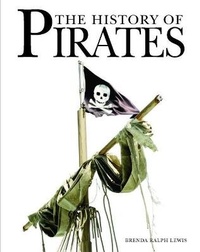
The History of Pirates
Published on 14. April 2017
Book
Paperback/Softback
192 pages
978-1-78274-490-0 (ISBN)
Description
This wide-ranging book looks at the reality of how pirates lived and operated, from the ancient world right up to the pirates of today's cargo ships or luxury yachts in the Indian Ocean and the South China Sea. The History of Pirates also examines the actions and pirate ethics of less famous pirates and their eras, such as the Japanese pirates of the 13th-16th centuries and Zheng Yi and his wife's pirate alliance in 19th century China.
With features on particular pirates such as Blackbeard and William Kidd, and how the unwritten pirate code evolved into today's merchant shipping contracts, The History of Pirates illuminates the broader historical and geographical scope of piracy and provides a fascinating introduction to the reality of life on board a buccaneer ship.
With features on particular pirates such as Blackbeard and William Kidd, and how the unwritten pirate code evolved into today's merchant shipping contracts, The History of Pirates illuminates the broader historical and geographical scope of piracy and provides a fascinating introduction to the reality of life on board a buccaneer ship.
Reviews / Votes
"an engagingly written survey of piracy, from its earliest manifestations to recent times." * H-Caribbean *More details
Series
Language
English
Place of publication
United Kingdom
Publishing group
Amber Books Ltd
Product notice
Unsewn / adhesive bound
Illustrations
Index; Maps; Halftones, black and white; Illustrations, black and white
Dimensions
Height: 240 mm
Width: 189 mm
Thickness: 11 mm
Weight
480 gr
ISBN-13
978-1-78274-490-0 (9781782744900)
Copyright in bibliographic data and cover images is held by Nielsen Book Services Limited or by the publishers or by their respective licensors: all rights reserved.
Schweitzer Classification
Person
Brenda Ralph Lewis has written more than 100 books and hundreds of magazine articles, as well as radio and television documentaries, on subjects including history (both ancient and modern), myth and legend, animal and insect life, archaeology and genealogy. She lives in Buckinghamshire, England.
Content
Introduction
Chapter One: Pirates in Ancient Greece and Rome
From the earliest documented evidence of pirates in the Aegean in the 13th century BC to Thracian pirates in Ancient Greece. In 75BC Julius Caesar was captured by pirates in the Aegean: when they demanded a ransom of 20 pieces of gold, he insisted that they ask for 50. He later had them crucified. Pompey was made responsible for suppressing piracy, and eventually brought many to justice.
Chapter Two: Vikings, Arabs: Pirates in the Dark Ages
From the Viking raids on the British Isles and France to Irish attacks on Britain to Arab raids on the eastern Mediterranean. How the pirates were organized and how they were eventually defeated.
Chapter Three: Piracy in the Far East
Wokou, Japanese pirates, raided Korean and Chinese merchant ships. Peaking in the early 1500s, by the end of the century a combination of factors, including official trade policies and better policing, led to the decline of Wokou.
Chapter Four: Honour Among Thieves
Introduction to the golden age of piracy in the 17th and 18th centuries. What life was like for a pirate crew, and why a code was needed. Few pirate articles have survived, because pirates on the verge of capture or surrender usually burned their articles or threw them overboard, to prevent the papers being used against them at trial.
Chapter Five: Bartholomew Roberts' and Captain John Philips' Articles
The two most famous pirate codes are examined in detail. How did they come about and were they more a set of guidelines? How these codes eventually evolved into the modern merchant shipping contract.
Chapter Six: Tales from the Caribbean
Some of the most famous pirates and their campaigns - looking at how the Code was intepreted and often broken in the violent and dangerous world of the pirate ship.
Chapter Seven: The Brethren of the Coast
Brethren of the Coast were a loose coalition of pirates and privateers active in the seventeenth and eighteenth centuries in the Atlantic Ocean, Caribbean Sea and Gulf of Mexico. They were a syndicate of captains with a written code of conduct. Among famous Brethren members was Henry Morgan. The Code in the Pirates of the Caribbean movies is most closely related to the code of the Brethren.
Chapter Eight: Pirates Today
It's estimated that up to $18 billion are lost each year due to piracy. Current pirate hotspots are in the Horn of Africa, South America, the South China Sea and between Malaysia and Sumatra. More than 200 pirate attacks were reported in 2006. This chapter looks at the links between piracy and organized crime (Mafia, Yakuza etc) and the complex system of loyalties, oaths and bloody reprisals that govern this shady world.
Index
Chapter One: Pirates in Ancient Greece and Rome
From the earliest documented evidence of pirates in the Aegean in the 13th century BC to Thracian pirates in Ancient Greece. In 75BC Julius Caesar was captured by pirates in the Aegean: when they demanded a ransom of 20 pieces of gold, he insisted that they ask for 50. He later had them crucified. Pompey was made responsible for suppressing piracy, and eventually brought many to justice.
Chapter Two: Vikings, Arabs: Pirates in the Dark Ages
From the Viking raids on the British Isles and France to Irish attacks on Britain to Arab raids on the eastern Mediterranean. How the pirates were organized and how they were eventually defeated.
Chapter Three: Piracy in the Far East
Wokou, Japanese pirates, raided Korean and Chinese merchant ships. Peaking in the early 1500s, by the end of the century a combination of factors, including official trade policies and better policing, led to the decline of Wokou.
Chapter Four: Honour Among Thieves
Introduction to the golden age of piracy in the 17th and 18th centuries. What life was like for a pirate crew, and why a code was needed. Few pirate articles have survived, because pirates on the verge of capture or surrender usually burned their articles or threw them overboard, to prevent the papers being used against them at trial.
Chapter Five: Bartholomew Roberts' and Captain John Philips' Articles
The two most famous pirate codes are examined in detail. How did they come about and were they more a set of guidelines? How these codes eventually evolved into the modern merchant shipping contract.
Chapter Six: Tales from the Caribbean
Some of the most famous pirates and their campaigns - looking at how the Code was intepreted and often broken in the violent and dangerous world of the pirate ship.
Chapter Seven: The Brethren of the Coast
Brethren of the Coast were a loose coalition of pirates and privateers active in the seventeenth and eighteenth centuries in the Atlantic Ocean, Caribbean Sea and Gulf of Mexico. They were a syndicate of captains with a written code of conduct. Among famous Brethren members was Henry Morgan. The Code in the Pirates of the Caribbean movies is most closely related to the code of the Brethren.
Chapter Eight: Pirates Today
It's estimated that up to $18 billion are lost each year due to piracy. Current pirate hotspots are in the Horn of Africa, South America, the South China Sea and between Malaysia and Sumatra. More than 200 pirate attacks were reported in 2006. This chapter looks at the links between piracy and organized crime (Mafia, Yakuza etc) and the complex system of loyalties, oaths and bloody reprisals that govern this shady world.
Index