

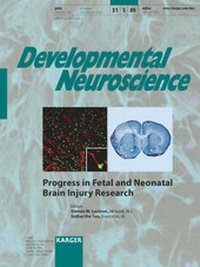
Progress in Fetal and Neonatal Brain Injury Research
Special Topic Issue: Developmental Neuroscience 2009, Vol. 31, No. 5
1st Edition
Published on 8. September 2009
Book
Paperback/Softback
114 pages
978-3-8055-9263-5 (ISBN)
Description
The immature brain is vulnerable to prenatal and postnatal stress, which may produce brain damage leading to neurological dysfunction in survivors. The articles in this special issue provide new insights into the pathophysiology and treatment of developmental brain injuries and functional outcomes. Information obtained using preclinical models as well as data from clinical studies emphasize the influence of hypoxia-ischemia, excitotoxicity, oxidative stress, seizures and inflammatory mediators on the outcome of developmental brain injury and ultimate neurological outcome. Importantly, several papers report preclinical tests of new therapies that show real promise in preventing injury to the developing brain including erythropoietin, melatonin and steroids. This publication will be of interest to both clinicians and basic scientists who are interested in the developing nervous system, its vulnerability to various pathophysiological processes and the eventual consequences for neurologic development.
More details
Other editions
Additional editions
S.W. Levison | S. Tan
Progress in Fetal and Neonatal Brain Injury Research
Special Topic Issue: Developmental Neuroscience 2009, Vol. 31, No. 5
Online / Databases
09/2009
1st Edition
S. Karger
€51.15
Article exhausted; check different version
Content
Reviews; Stress in Pregnancy: A Role for Neuroactive Steroids in Protecting the Fetal and Neonatal Brain: Hirst, J.J.; Walker, D.W.; Yawno, T.; Palliser, H.K.; Does Inflammation after Stroke Affect the Developing Brain Differently than Adult Brain?: Vexler, Z.S.; Yenari, M.A.; Original Papers; Erythropoietin Attenuates Hyperoxia-Induced Cell Death by Modulation of Inflammatory Mediators and Matrix Metalloproteinases: Sifringer, M.; Genz, K.; Brait, D.; Brehmer, F.; Lober, R.; Weichelt, U.; Kaindl, A.M.; Gerstner, B.; Felderhoff-Mueser, U.; Erythropoietin Sustains Cognitive Function and Brain Volume after Neonatal Stroke: Gonzalez, F.F.; Abel, R.; Almli, C.R.; Mu, D.; Wendland, M.; Ferriero, D.M.; Neonatal Medial Frontal Cortex Lesions Disrupt Circadian Activity Patterns: Phillips, C.I.; Smith, V.M.; Antle, M.C.; Dyck, R.H.; Role of Mixed Lineage Kinase Inhibition in Neonatal Hypoxia-Ischemia: Carlsson, Y.; Leverin, A.-L.; Hedtjarn, M.; Wang, X.; Mallard, C.; Hagberg, H.; Expression of MMP-12 after Neonatal Hypoxic-Ischemic Brain Injury in Mice: Svedin, P.; Hagberg, H.; Mallard, C.; Neuroprotective Properties of Melatonin in a Model of Birth Asphyxia in the Spiny Mouse (Acomys cahirinus): Hutton, L.C.; Abbass, M.; Dickinson, H.; Ireland, Z.; Walker, D.W.; HIF-1[alpha]-Deficient Mice Have Increased Brain Injury after Neonatal Hypoxia-Ischemia: Sheldon, R.A.; Osredkar, D.; Lee, C.L.; Jiang, X.; Mu, D.; Ferriero, D.M.; Astrocytic Demise in the Developing Rat and Human Brain after Hypoxic-Ischemic Damage: Gelot, A.; Villapol, S.; Billette de Villemeur, T.; Renolleau, S.; Charriaut-Marlangue, C.