

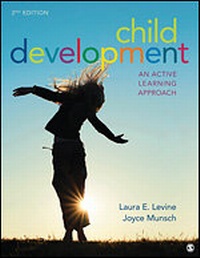
Child Development
An Active Learning Approach
2nd Edition
Published on 11. September 2013
Book
Paperback/Softback
728 pages
978-1-4522-1679-9 (ISBN)
Description
This innovative text engages students by demonstrating the wide range of real-world applications of psychological research to child development. In particular, the distinctive 'active learning' features incorporated throughout the book foster a dynamic and personal learning process for students. The authors cover the latest topics shaping the field of child development - including a focus on neuroscience, diversity and culture - without losing the interest of undergraduate students. The pedagogical features in this text and the accompanying ancillaries package help students discover the excitement of studying child development, enhance their learning, and equip them with tools they can use long after the class ends. This text is geared towards undergraduate courses in child development, child psychology, and developmental psychology.
Reviews / Votes
"Levine and Munsch have made an excellent contribution to the texts available to those of us who teach child and adolescent development - both at the undergraduate and graduate levels. I was excited to use the text when I reviewed it for potential adoption, and after this second review, I am even more excited. I do not see any key weaknesses but do see the many strengths..."-Charles Dickel, Creighton University -- Charles Dickel "The book is great! I would recommend it to anyone teaching a course in Child and Adolescent Development."
-Dan Nyaronga, SUNY Empire State College-Saratoga -- Dan Nyaronga "I really like this book. I love all of the resources, the book itself is clear and provides a lot of information, and I will definitely adopt it again."
-Kelly Cotter, California State University-Sacramento -- Kelly Cotter "The strengths of this text are the topics presented..., the reading level of the text, the resources in the chapters, pictures, charts, Active Learning, Research, etc. I would adopt the [second] edition of the text for all of the above."
-Sharon Carter, Davidson County Community College-Lexington -- Sharon Carter "This is an extremely well written text. The authors can be commended for the depth and scope of the content . . . easily accessible to students."
-Dawn Witt, California State University-Channel Islands -- Dawn Witt "My overall assessment of this text book is that it is well done...it engages the students in the material but [is] also very cost effective. I especially enjoyed how thorough the book was but that it was not too research focused or boring to the reader. In addition, having access to the Extended Journey in Research and SAGE [journal] articles is a major strength."
-Nicole Surething, Christopher Newport University -- Nicole Surething "In their preface, authors Laura Levine and Joyce Munsch emphasize the need for a child development book that enables students to create meaningful learning experiences. This text has succeeded in achieving their goal."
"The many strengths of this text attest to the success of Levine and Munsch in creating a comprehensive and well-written overview of child development."
-Dalia Gefen, Iona College -- Dalia Gefen * Psychology Learning and Teaching *
More details
Edition
2nd Revised edition
Language
English
Place of publication
Thousand Oaks
United States
Target group
College/higher education
Edition type
Revised edition
Dimensions
Height: 279 mm
Width: 216 mm
Weight
1452 gr
ISBN-13
978-1-4522-1679-9 (9781452216799)
Copyright in bibliographic data and cover images is held by Nielsen Book Services Limited or by the publishers or by their respective licensors: all rights reserved.
Schweitzer Classification
Other editions
New editions
Book
05/2017
3rd Edition
SAGE Publications Inc
€124.79
Article is exhausted; no reprint
Book
12/2016
3rd Edition
SAGE Publications Inc
€142.62
Article is exhausted; no reprint
Persons
Laura E. Levine received her PhD in developmental and clinical psychology from the University of Michigan. After working with children and families at the Children's Psychiatric Hospital and in private practice in Ann Arbor for 10 years, she moved to Connecticut and was a stay-at-home mother of her two children for 6 years. She returned to academia in 1994 and taught child psychology and life span development for 20 years at Central Connecticut State University, where she is currently a professor emerita of the Department of Psychological Science. She has received three university teaching awards, and her research on the social development of young children and on the relation between media use and attention difficulties has appeared in journals such as Developmental Psychology, the Journal of Applied Developmental Psychology, Infant Mental Health Journal, Infant and Child Development, Computers and Education, and CyberPsychology, Behavior, and Social Networking.
Dr. Levine has been very active in promoting excellence in college teaching. She was involved in the creation of the Center for Teaching Excellence at Central Connecticut State University and served on the board of the Connecticut Consortium to Enhance Learning and Teaching. She created numerous programs for faculty both at her university and at regional and national conferences. Her work on the scholarship of teaching and learning can be found in New Directions for Teaching and Learning, College Teaching and the International Journal for the Scholarship of Teaching and Learning.
Joyce Munsch received her PhD in human development and family studies from Cornell University. She was a faculty member in human development and family studies at Texas Tech University for 14 years, where she also served as associate dean for research in the College of Human Sciences for 2 years. In 2002, Dr. Munsch went to the California State University at Northridge as the founding chair and professor in the Department of Child and Adolescent Development. She currently is an emeritus professor in the Department.
Dr. Munsch's research has focused on adolescent stress and coping and social network research. Her work has been published in the Journal of School Psychology, Adolescence, The Journal of Early Adolescence, the Journal of Research on Adolescence, and the American Journal of Orthopsychiatry. Throughout her career, Dr. Munsch administered grants that supported community-based programs. She was the codirector of the Early Head Start program at Texas Tech University and co-principal investigator for three Texas Youth Commission (Department of Juvenile Justice) grants. At Cal State Northridge, she administered the Jumpstart program for over 10 years. Her commitment to community service learning was recognized in 2005 when she was awarded the CSUN Visionary Community Service Learning Award. In 2012, her service to the County of Los Angeles was recognized by a commendation from the County Board of Supervisors. At Texas Tech, she was the College of Human Sciences nominee for the Hemphill-Wells New Professor Excellence in Teaching Award, the Barnie E. Rushing Jr. Faculty Distinguished Research Award, the El Paso Energy Foundation Faculty Achievement Award, and the President's Excellence in Teaching Award, and she received the Kathryn Burleson Faculty Service Award and the College of Human Sciences Outstanding Researcher Award.
Dr. Levine has been very active in promoting excellence in college teaching. She was involved in the creation of the Center for Teaching Excellence at Central Connecticut State University and served on the board of the Connecticut Consortium to Enhance Learning and Teaching. She created numerous programs for faculty both at her university and at regional and national conferences. Her work on the scholarship of teaching and learning can be found in New Directions for Teaching and Learning, College Teaching and the International Journal for the Scholarship of Teaching and Learning.
Joyce Munsch received her PhD in human development and family studies from Cornell University. She was a faculty member in human development and family studies at Texas Tech University for 14 years, where she also served as associate dean for research in the College of Human Sciences for 2 years. In 2002, Dr. Munsch went to the California State University at Northridge as the founding chair and professor in the Department of Child and Adolescent Development. She currently is an emeritus professor in the Department.
Dr. Munsch's research has focused on adolescent stress and coping and social network research. Her work has been published in the Journal of School Psychology, Adolescence, The Journal of Early Adolescence, the Journal of Research on Adolescence, and the American Journal of Orthopsychiatry. Throughout her career, Dr. Munsch administered grants that supported community-based programs. She was the codirector of the Early Head Start program at Texas Tech University and co-principal investigator for three Texas Youth Commission (Department of Juvenile Justice) grants. At Cal State Northridge, she administered the Jumpstart program for over 10 years. Her commitment to community service learning was recognized in 2005 when she was awarded the CSUN Visionary Community Service Learning Award. In 2012, her service to the County of Los Angeles was recognized by a commendation from the County Board of Supervisors. At Texas Tech, she was the College of Human Sciences nominee for the Hemphill-Wells New Professor Excellence in Teaching Award, the Barnie E. Rushing Jr. Faculty Distinguished Research Award, the El Paso Energy Foundation Faculty Achievement Award, and the President's Excellence in Teaching Award, and she received the Kathryn Burleson Faculty Service Award and the College of Human Sciences Outstanding Researcher Award.
Content
PART I. UNDERSTANDING DEVELOPMENT: WHY AND HOW WE STUDY CHILDREN AND ADOLESCENTS
Chapter 1. Introduction: Why We Study the Development of Children and Adolescents
Chapter 2. Theories of Development
Chapter 3. How We Study Development
Part II. BEGINNINGS
CHAPTER 4. How Children Develop: Nature Through Nurture
Chapter 5. Prenatal Development, Birth and the Newborn
Part III. Building Blocks of Development: How Children Grow
Chapter 6. Physical Development: The Body and the Brain
Chapter 7. Cognitive Development
Chapter 8. Intelligence and Academic Achievement
Chapter 9. Language Development
Chapter 10. Emotional Development and Attachment
Chapter 11. Identity: The Self, Gender, and Moral Development
Chapter 12. Social Development
PART IV. CONTEXTS FOR DEVELOPMENT
Chapter 13. Families
Chapter 14. Beyond Family and School: Activities, Media and the Natural World
Chapter 15. Health, Well-being and Resilience
Chapter 1. Introduction: Why We Study the Development of Children and Adolescents
Chapter 2. Theories of Development
Chapter 3. How We Study Development
Part II. BEGINNINGS
CHAPTER 4. How Children Develop: Nature Through Nurture
Chapter 5. Prenatal Development, Birth and the Newborn
Part III. Building Blocks of Development: How Children Grow
Chapter 6. Physical Development: The Body and the Brain
Chapter 7. Cognitive Development
Chapter 8. Intelligence and Academic Achievement
Chapter 9. Language Development
Chapter 10. Emotional Development and Attachment
Chapter 11. Identity: The Self, Gender, and Moral Development
Chapter 12. Social Development
PART IV. CONTEXTS FOR DEVELOPMENT
Chapter 13. Families
Chapter 14. Beyond Family and School: Activities, Media and the Natural World
Chapter 15. Health, Well-being and Resilience